

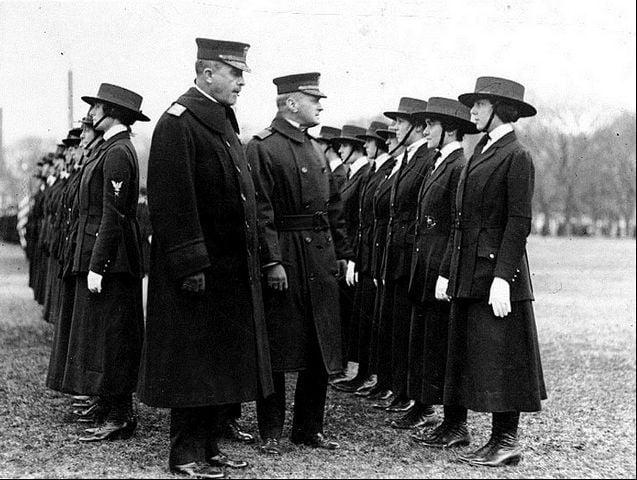
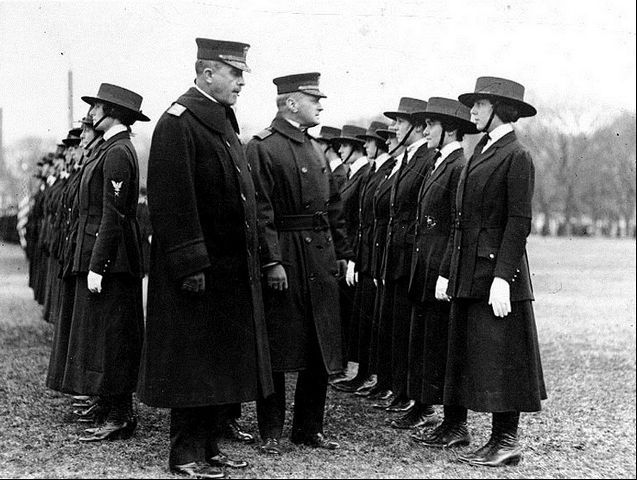
The road to war is one filled with many unforeseen obstacles, but one constant is paperwork. With the United States soon on the way to the trenches in the months leading up to April 1917, a huge clerical shortage at shore facilities around the country led to the birth of the Yeoman (F), also known as Yeoman (Female) or the Yeomanettes.
Prior to 1917, women served in very limited roles in the U.S. military, delegated almost exclusively to nursing and similar support roles, and were never fully equal with their male counterparts. Even carrying women to sea on board Navy vessels without express permission of the secretary of the navy was strictly prohibited by multiple regulations written from 1802 to 1920. However, with the establishment of the Navy Nurse Corps in 1908 and the specter of war on the horizon, that was beginning to change.
Clerical needs exploded with preparations for war underway following German resumption of unrestricted submarine warfare in early 1917. Secretary of the Navy Josephus Daniels was swamped with requests for clerks and stenographers, yet there were no appropriations that allowed for additional civilians to be hired to fill those needs.
"Every bureau and naval establishment appealed for clerks and stenographers," said Daniels, quoted in a July 30, 1942 Navy press release. "How could they be secured at once? The Civil Service Commission could not furnish a tithe of the number required, even if there had been the money to pay them."
Cleverly, Daniels turned to his lawyers to determine whether or not women were forbidden in the Naval Reserve: the law did not specifically state that a "man" must fill those roles, only that they be "persons who may be capable of performing special useful service for coastal defense", and those persons were referred to as "Yeomen".
"Then enroll women in the Naval Reserve as yeomen…" said Daniels, "…and we will have the best clerical assistance the country can provide."
Loretta Walsh was enlisted as the first woman to operate in the United States armed forces in a non-nursing capacity on March 17 1917, and the United States would enter World War I less than a month later on April 6. From there, the Yeomen (F)'s numbers grew exponentially, with over 11,000 by Armistice a year later.
Although the women enlisted as Yeomen (F) were primarily assigned to clerical work in the continental United States close to their homes, some were put to use in the war effort as translators, draftsmen, fingerprint experts, ship camouflage designers and recruiting agents. None were commissioned officers, which would come over two decades later with the institution of the WAVES.
Women in the Navy have been put to use in a wide variety of roles over the years, but it all had to start somewhere. Although they were a while away from serving on submarines, the Yeomen (F) answered the call and played an extremely important role in winning World War I.
"I felt that if I could once get a full-time war job I might turn the world upside down, pronto, and bring back the relaxing, happy days of peace," said Estelle Kemper, from her publication "I Was a Yeoman (F)".