


More than 100 years ago, “Remember the Maine” was a call to war. Today, it is a call to honor and remember the sacrifice and service of those who were lost when the USS Maine was destroyed by a Spanish mine on Feb. 15, 1898.
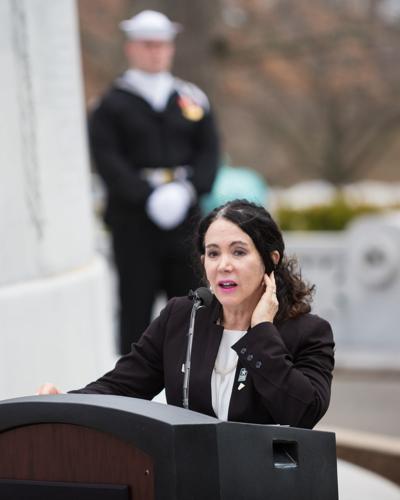
“Remember the Maine became a rallying cry for war, propelling America into the Spanish-American War during which the United States achieved a decisive victory as our nation became an active participant in international affairs and paved the way for the United States to become a superpower in the 20th century,” said Karen Durham-Aguilera, executive director Army National Military Cemeteries.
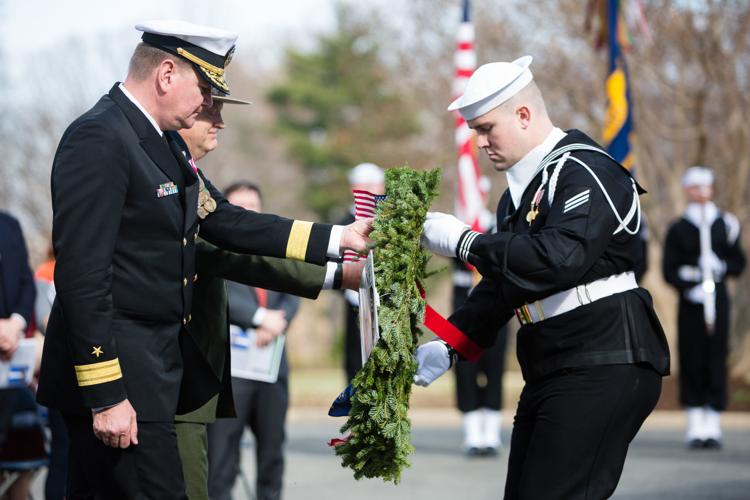
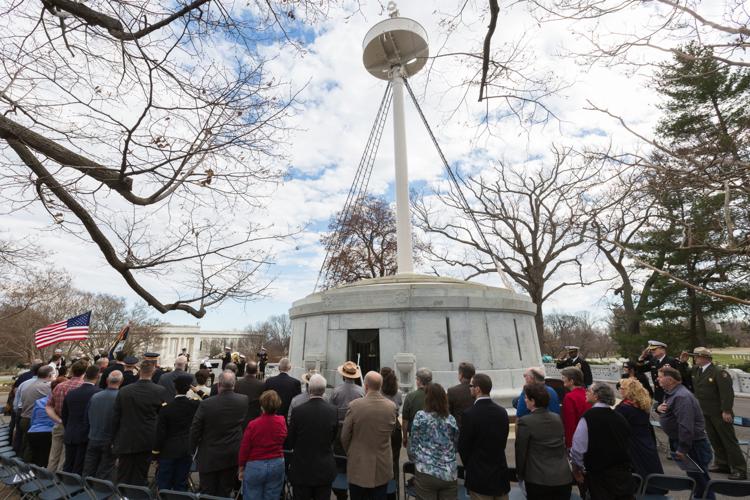
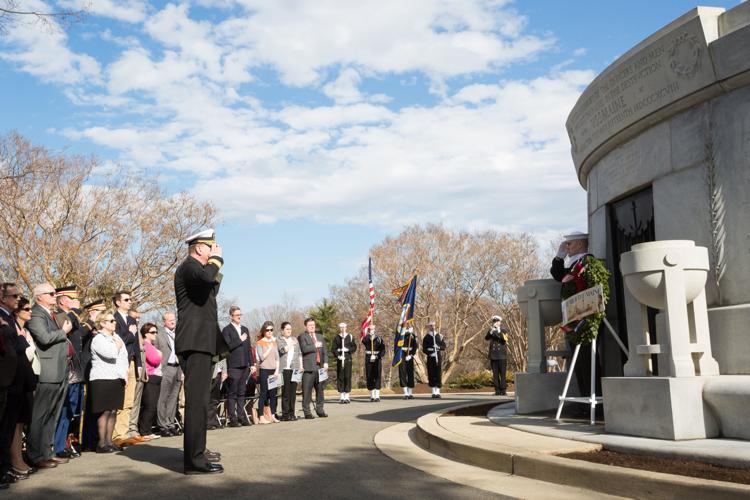
Durham-Aguilera’s comments were made Feb. 22, during the rededication ceremony of the USS Maine mast. She said the Spanish American War also marked the first the federal government repatriated the remains of service members who died overseas.
“Many of those repatriated service members, including the crew of the USS Maine were re-interred at Arlington National Cemetery,” Durham-Aguilera said. “These re-internments caused the cemetery to expand for the first time since its creation in May of 1864 to meet the need for additional space, a challenge that has not gone away with time and one we face today.”
The USS Maine’s crew was interned in Section 24 of the cemetery. The first burials were completed on Dec. 28, 1899, when 165 Sailors and Marines were re-interred at Arlington.
“President William McKinley, his cabinet, Gen. George Dewey, Gen. George Milton Miles and over 25,000 people attended the burial,” said Durham-Aguilera.
The first memorial to the USS Maine victims was built in 1900. On the 10th anniversary of the ship’s explosion, calls to raise it began to be heard in the halls of Congress.
“When the U.S. Army Corps of Engineers salvaged the ship, they recovered 64 more Sailors and Marines who were laid to rest with their brothers here in Section 24,” Durham-Aguilera said.
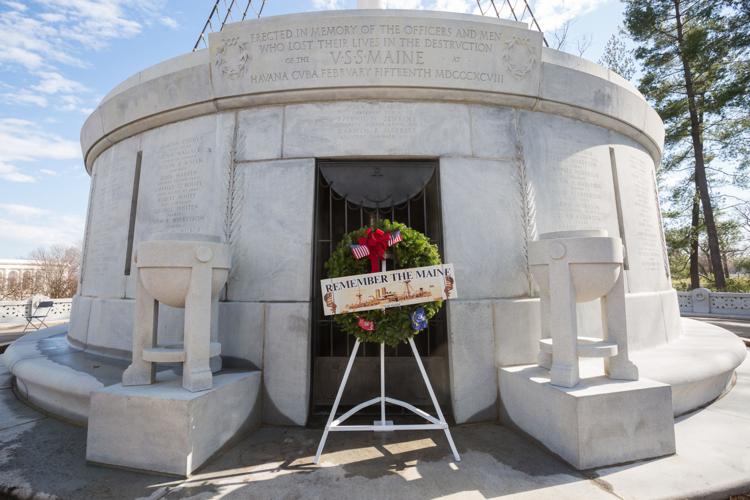
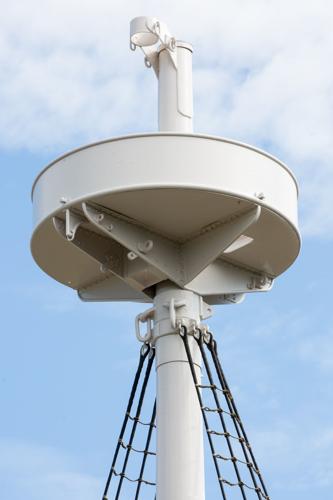
After it was raised from the depths, the ship’s mast was placed at ANC. President Woodrow Wilson dedicated the memorial on Memorial Day, 1915. The memorial itself is a simple one. The mast of the ship is circled by a simple dome structure with the Sailors names and ranks carved into the granite.
Over the years, the elements took a toll on the memorial and in 2006 the Army Corps of Engineers and its partners, including the National Park Service, began to examine the deterioration and develop a restoration plan.
“The rigging has been meticulously wound and spirals up as it did on the USS Maine,” said Durham-Aguilera. “The granite roof pavers have been put back in place, the water permeation corrected and other structural and aesthetic features have returned the mast to its original majesty.”
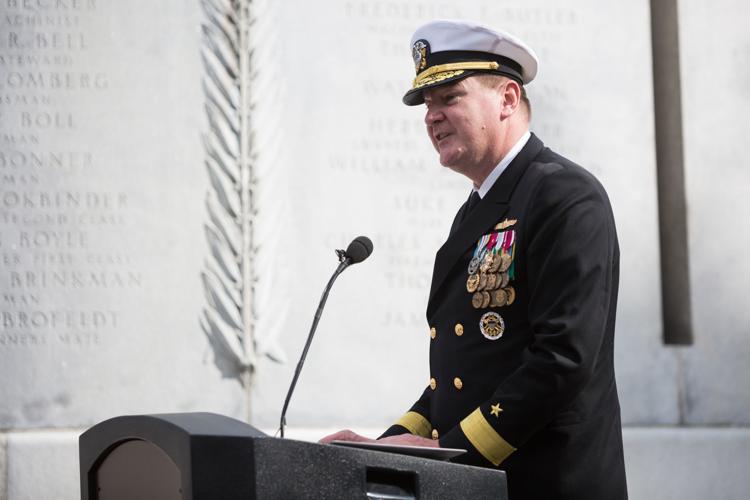
Rear Adm. Charles Brock, commandant of Naval District Washington, said the USS Maine is an important part of the Navy’s history.
“The men aboard the men were young Americans, far from home, who gave their lives in service of their country,” he said. “Today, we remember them. But, I would be remiss standing here at Arlington National Cemetery if I did not also recognize the service of the men and women who have been lost in our nation’s history.”
Brock said the most important part of the cry “Remember the Maine” is the remember part.
“That is why we are here today,” he said.
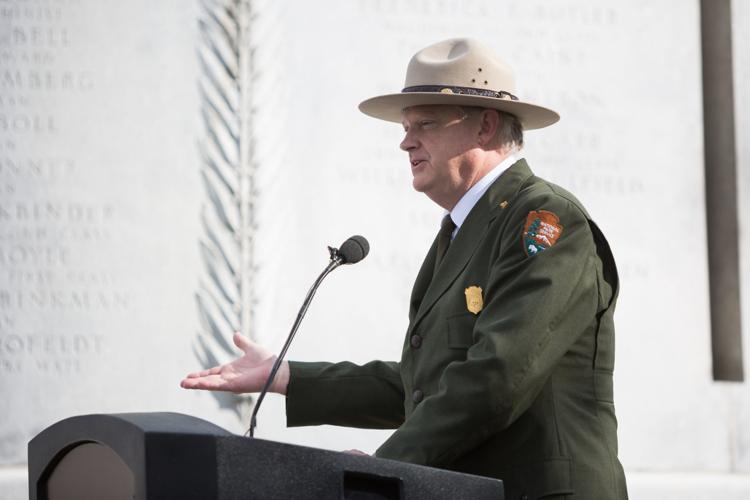
Regional Director of the National Park Service Richard Vogel said forensic techniques were used to determine the causes of the memorials deterioration.
“The 12-year process included extensive research to create measured drawings and physical investigation, including corrosion analysis by architects, engineers and conservators,” he said.
Following that research, the structure was stabilized to prevent further damage. A century’s worth of paint and rust were removed from the mast using modern tools, including lasers, Vogel said. Waterproof concrete was poured to eliminate leaking. All the bronze and brass, including a portion of the original ship’s bell was also repaired.
“It is my heartfelt wish that our work here pay fitting tribute to the fallen and keep them in our memory forever,” Vogel said.
Pentagram Staff Writer Julia LeDoux can be reached at jledoux@dcmilitary.com.