


More than a century ago, the Franco-American Children’s League distributed poppies for the benefit of children in the devastated areas of France and Belgium. After the league was dissolved, Madame Guerin — recognized as the “Poppy Lady from France” — sought the cooperation of the Veterans of Foreign Wars of the U.S. in 1922.
The original poppy movement was inspired by the poem “In Flanders Fields,” written by Col. John McCrae of the Canadian forces before the United States entered World War I.
Keeping the inspiration the same, the VFW looked to build on the idea. The Buddy Poppy program was established in 1924.
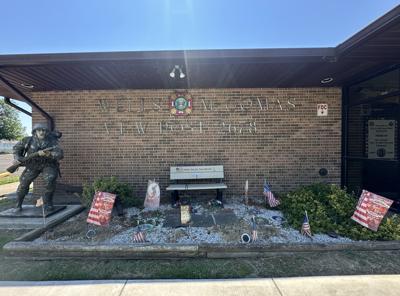
“Buddy Poppy represents the blood shed by our VFW heroes,” VFW Post 2678 Commander Dan Woolfrey said. “We honor them each year by creating displays with poppy flowers to recognize their bravery and ultimate sacrifice.”
After the 1924 campaign, a number of larger VFW departments believed they would stimulate local distribution if the poppies were assembled by disabled veterans in hospitals within their own jurisdictions.
The 1924 VFW Encampment at Atlantic City granted that privilege.
The VFW organized the first nationwide distribution of poppies by a veterans organization in May 1922. Later that year, the poppy was adopted as the official memorial flower of the VFW.
“That symbolizes the monuments of the fallen soldiers who died during World War I,” VFW District 14 Commander Paul M. Blitz said.
Since its founding, the VFW’s Buddy Poppy program has received the endorsement and cooperation of the director of the Veterans Administration, as well as the support of administrators and medical officers of government hospitals.
Currently, VFW Buddy Poppies are assembled by disabled, needy and aging veterans in VA rehabilitation centers.
The majority of proceeds from each campaign are retained locally to provide veteran services and welfare. The cost of Buddy Poppies to VFW posts provides compensation to the veterans who assembled them, funds financial assistance for state and national veterans’ rehabilitation and service programs, and partially supports the VFW National Home for Children — a community of children and families of veterans and active-duty military.
Every year, posts from numerous VFW districts gather for a Buddy Poppy convention during the week of Memorial Day. Each post creates a different display using the Buddy Poppy.
“Each district has a convention room ... everyone’s invited in the convention to stop and visit,” Woolfrey said. “We go to different rooms and we socialize with them. We sit down and share stories.”