
The Grand Design: Strategy and the U.S. Civil War
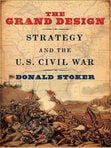
The Grand Design: Strategy and the U.S. Civil War by Donald Stoker. Published by Oxford University Press, New York. 2010, 512 pages.
There are tens of thousands of books on the American Civil War, and finding new ways to write about this conflict becomes ever more challenging. However, picking up Donald Stoker’s book, I found a work totally devoted to the grand strategy of the Union and Confederacy. Stoker teaches Strategy and Policy for the Naval War College’s program at the Naval Post-Graduate School in Monterey, Calif. He traces the evolution and strategic maturation of key leaders on both sides. These were men educated in the works of Carl von Clausewitz, Baron Jomini, as well as the Napoleonic campaigns. However, readers will realize that Union leaders slowly and painfully evolved to apply the lessons of these campaigns with the technologic and industrial innovations that dominated the American Civil War. Confederate leaders’ strategies stagnated to defending the South, with the exception of Confederate General Robert E. Lee. The Confederates immersed themselves in the defense, receiving heavy Union blows. However, at some point, Lee conceived of a strategy of taking the war into the Union. He convinced Confederate President Jefferson Davis that the South could not continue to receive sucha a battering from the Union, leading to an attrition of Confederate forces and resources.
There is a chapter entitled, “Sinews of War,” that talk of the importance of industry, manufacturing, and supply in keeping the army in the field. A hidden aspect of the war was fought in fiscal policies in the Union and Confederate capitals. How to raise hundreds of millions of dollars without wrecking the economy would be an aspect that determined the victor. The book assesses the effectiveness of the Union blockade of southern ports, and argues that the 5 percent of Union forces dedicated to the blockade hastened the economic collapse of Confederate states, and more importantly demonstrated to European capitals, Union resolve to starve its own citizens to preserve the United States.
Editor’s Note: Cmdr. Aboul-Enein is author of “Militant Islamist Ideology: Understanding the Global Threat,” published this year by Naval Institute Press. He lectures part-time at the Industrial College of the Armed Forces and is a consummate student of the American Civil War.