


John Smith and his companions came to the upper Potomac River in 1608 on a matter of survival—the survival of the colony at Jamestown. Without the Indian corn supplied in part by the native residents of this region, the first settlers at Jamestown would have perished.
Three separate groups or tribes—the Dogue (also known as the Taux or Moyumpse), the Patawomeke, and the Piscataway Indians—apparently controlled this section of the Potomac River.
Political developments in England would lead to changes that ultimately disrupted and confused the system of early land grants in Northern Virginia. In 1649, in recognition of services rendered to the Crown, the exiled King Charles II granted to seven of his supporters a vast territory in Virginia that became known as the Northern Neck. This large grant included all of the land between the Potomac and the Rappahannock Rivers. Through marriage and purchase, this vast region came under the ownership of a single titled family—the Fairfaxes. As proprietor, Thomas, Sixth Lord Fairfax, could rent or sell parcels of land, independent of control by Virginia’s colonial government. Because two agencies now were authorized to grant land, many early patents overlapped, and/or their boundaries were inexact. The confusion led later to many legal challenges over the boundaries of these early landgrants.
Despite conflicting land claims, settlement in Northern Virginia accelerated at the end of the Susquehannock Wars. By 1690, all waterfront property that today is included within Fort Belvoir had been patented and subdivided.
William Green’s 1669 patent for 1,150 acres encompassed most of what is now Fort Belvoir’s South Post. Although this property was sub-divided and sold in the early eighteenth century, it was reassembled during the 1730s to create the central portion of William Fairfax’s 2,200-acre plantation of Belvoir Manor.
By the second quarter of the eighteenth century, population in the region north of the Occoquan River had increased sufficiently to justify the formation of a new political jurisdiction, which was carved out of Prince William County. The new county adopted the cost of arms of the house of Fairfax as its insignia.
In about 1750, navigable rivers like the Potomac were the main commercial arteries of the Virginia colony. These eighteenth century highways carried the commodities that established and maintained the great colonial fortunes: tobacco, grain, and slaves. They also wove together the social and political fabric of the colony, for those who lived along and traveled the rivers generally held positions of power.
The Fort Belvoir site was originally the home of William Fairfax, the cousin and land agent of Thomas Fairfax, 6th Lord Fairfax of Cameron the proprietor of the Northern Neck, which once stood on land now on the base. William Fairfax purchased the property in 1738 when his cousin arranged for him to be appointed customs agent (tax collector) for the Potomac River, and William erected an elegant brick mansion overlooking the river, moving in with his family in 1740. Lord Fairfax came to America in 1747 and stayed less than a year at the Belvoir estate before moving to Greenway Court. The Fairfax family lived at Belvoir for over 30 years, but eldest son (and heir) George William Fairfax sailed to England on business in 1773, never to return. The manor home was destroyed by fire in 1783.
The U.S. Army began utilizing the Belvoir peninsula as an engineer training facility in 1915, which they named Camp Belvoir. The facility evolved from the U.S.Army’s Engineer School, which was established in 1866 at Willet’s Point (now Fort Totten), New York. In 1901, the school relocated to Washington Barracks (now Fort McNair) in Washington, D.C. Although Washington Barracks provided ample classroom facilities, that installation lacked adequate field training areas and rifle ranges. As a result, the school was forced to seek additional training space.
In 1912, the Engineer School began conducting summer training exercises on a government-owned parcel in Virginia, located approximately 15 miles south of Washington along the Potomac River. The District of Columbia had acquired the1,500-acre tract on the Belvoir peninsula in 1910 from the Otterback family, for development of a reformatory.
In 1912, Congress transferred the Otterback property to the War Department, following an Army request to use the land as a training site. This site was chosen by the Engineer School because of its proximity to the existing school, its adequate water supply and its challenging terrain. Here, engineer students conducted rifle practice, trained in building ponton bridges, and billeted in temporary Camp Belvoir.
America’s entry into World War I in April 1917 led to the first wave of military construction at the Virginia training site. Construction of the semi-permanent cantonment, named Camp A.A. Humphreys in honor of Civil War commander and former Chief of Engineers (1866-79), Major GeneralAndrew A. Humphreys, began in January 1918 under very difficult conditions.
Several schools operated at Camp A.A. Humphreys during World War I. One of the most vital components of the camp was the Engineer Replacement and Training Camp, where enlisted men were trained. Camp A.A. Humphreys was also active in training officers during the war. The Engineer Officers’ Training Center operated at Camp Humphreys until February 1919.
At war’s end in November 1918, Camp A.A. Humphreys became a demobilization center where troops were prepared for their return to civilian life. By the close of 1919, more than 14,000 men had been demobilized at Camp A.A. Humphreys. The camp retained a small garrison after the war.
Unlike many temporary Army installations established during World War I and closed following the war, Camp A.A. Humphreys remained active and continued to expand. By 1919 the camp had grown from its original 1,500 acres to approximately 6,000 acres.
The outbreak of World War II in Europe in 1939 and Japanese expansion in Asia and the Pacific motivated the United States government to begin preparing for possible involvement in the expanding world conflict. As in World War I, Army engineers would be needed to provide critical support to Allied forces by building roads and bridges, clearing obstacles, providing maps, and engineering demolitions. To prepare engineers adequately for their wartime role, Fort Belvoir once again became one of the Army’s primary engineer training sites.
The demands of the global conflict created personnel shortages, and various strategies were developed to overcome these shortfalls. To remedy the shortage of qualified engineer officers during the early years of the war, an Engineer Officer Candidate School (EOCS) was established at Fort Belvoir in July of 1941. During the course of the war, EOCS commissioned over 22,000 new second lieutenants.
World War II also brought women into the Armed Forces on a regular basis for the first time in American history. The first detachment of Women’s Auxiliary Army Corps (WAAC) personnel arrived at Fort Belvoir in March 1943. Members of the WAAC communications, clerical, and service platoons worked as post office clerks, telephone operators, stenographers and typists, motor vehicle drivers, and mechanics. By April 1943, the 50th Headquarters Company WAAC had become a permanent unit at Fort Belvoir.
At the end of World War II in 1945, Fort Belvoir once again became a demobilization center with facilities designed to ease the transition between military and civilian life. However, the relative calm of the post-war years was short-lived.
Following World War II, the engineer training role at Fort Belvoir waxed and waned according to wartime needs. In 1945, both the Engineer Replacement Training Center and the Engineer Officer Candidate School were phased out; however, both programs were reactivated in the 1950s during the Korean Conflict, and again in the 1960s with the Vietnam build-up. Both conflicts required a reassessment of the installation’s training function and methods, and a revamping of its physical plant.
In general, emphasis at Fort Belvoir in the 1950s began shifting from training to research and development. Throughout the decade, the Engineer Research and Development Laboratories (ERDL) were involved in experimentation with a wide range of technical military applications. The laboratories developed and tested new techniques for electrical power generation; camouflage and deception; methods of handling materials and fuel; bridging, and mine detection. They experimented with portable map copying machines, fungicides for use in tropical environments, and heavy earth-moving equipment. During the 1960s, the primary focus of research at Fort Belvoir shifted to the development of Army vehicles.
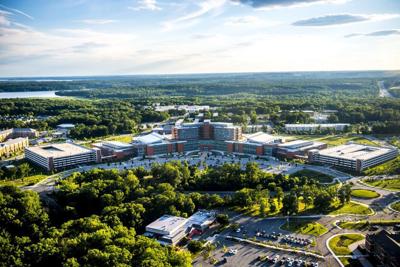
Today, Fort Belvoir continues its historic transformation, expanding its role as a strategic sustaining base for America’s armed forces worldwide. The missions fulfilled here are vital to the success of the goals and objectives of the nation’s defense strategy. Meanwhile, the post continues to be the Army’s installation of choice for Soldiers, Families, Civilians, and Retirees.
Fort Belvoir serves as the headquarters for the Defense Logistics Agency, the Defense Acquisition University, the Defense Contract Audit Agency, the Defense Technical Information Center, the United States Army Intelligence and Security Command, the United States Army Military Intelligence Readiness Command, the Missile Defense Agency, the Defense Threat Reduction Agency, and the National Geospatial-Intelligence Agency.
Fort Belvoir is home to the Virginia National Guard’s 29th Infantry Division (Light) and elements of 10Army Major Commands; 19 different agencies and direct reporting units of the Department of Army; eight elements of the United States Army Reserve and the Army National Guard; and 26 Department of Defense agencies. Also located here are the 249th Engineer Battalion (Prime Power), the Military District of Washington’s 12th Aviation Battalion which provides rotary-wing movement to the DoD and Congress, a Marine Corps detachment, a United States Air Force activity, United States Army Audit Agency, and an agency from the Department of the Treasury. In addition, Fort Belvoir is home to National Reconnaissance Office’s (NRO) Aerospace Data Facility-East (ADF-E).
Visit http://www.belvoir.army.mil/ for more information.