



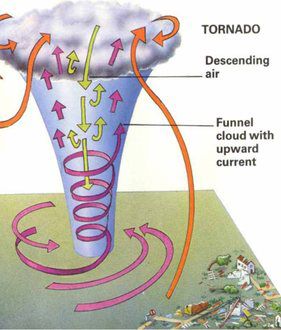
As we have seen across the United States this week, tornadoes can cause tremendous damage, destroy people’s home and tear families apart. We have seen images of devastation for families in the Midwest that lost all their possessions and their loved ones in these storms. As we continue through tornado season, and later into hurricane season, review the following safety tips in the case of severe weather.
Take the time with your family and loved ones to develop a plan for what to do when severe weather hits. If you see a funnel cloud nearby, take shelter immediately. If the tornado is far away, help alert others and report it to the newsroom of a local radio or TV station before taking shelter.
Your shelter plan should include a place where everyone will gather if a tornado is headed your way. In the event of a tornado, seek shelter in a basement or a center hallway, bathroom, or closet on the lowest floor. If you are in a wheelchair, get away from windows and go to an interior room of the house. If possible, seek shelter under a sturdy table or desk. Cover your head with anything available, even your hands.
If you are unable to move from a bed or a chair, and assistance is not available, protect yourself from falling objects by covering up with blankets and pillows. In any location, avoid exterior walls and windows.
If outside, and a tornado is approaching, get into a ditch or gully. If possible, lie flat and cover your head with your arms.
During a tornado, do not go outdoors. Avoid places with wide-span roofs such as auditoriums, cafeterias or wide hallways. If you are in a vehicle, do not try to outrun a tornado, get out of your car immediately and take shelter in a nearby building or lie in a ditch away from vehicles.
Once the tornado has passed, be aware that there may be broken glass or fallen power lines and assume all downed wires are live. Downed wires or any objects that are in contact with them, and if you see downed power lines call and notify the utility company or 911 immediately.
Many injuries can occur in the aftermath of a storm as people come in contact with debris and other hazards. Wear sturdy, hard-soled shoes or boots, long sleeves and gloves when handling or walking near debris to prevent injuries from hazards such as nails and broken glass.
For the latest information on severe weather warnings and watches tune into AM 1610 or check your local weather station. For more information on how to prepare for a severe weather event visit, www.ready.gov.