
Naval Support Facility Dahlgren celebrates African American/Black History Month
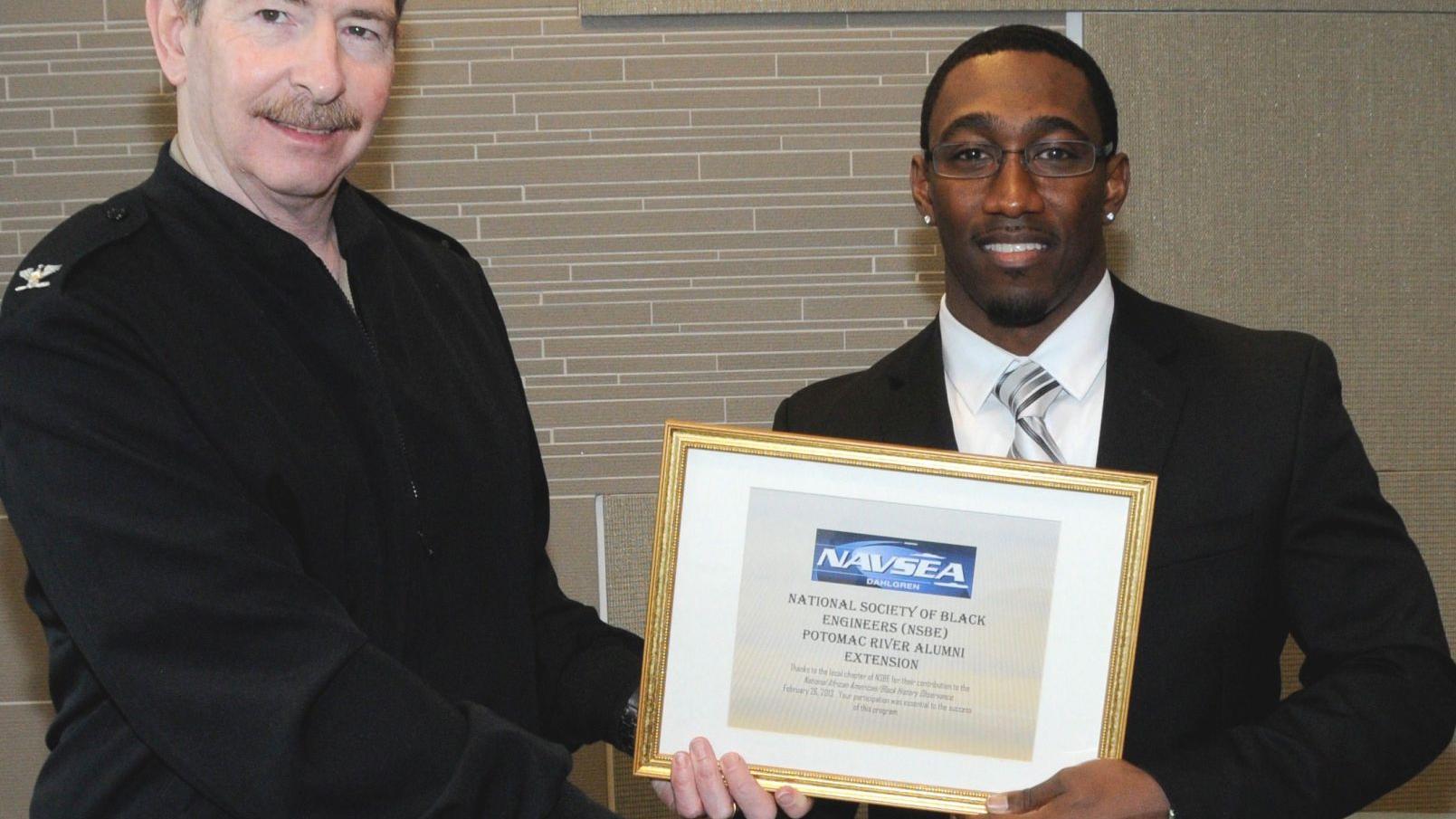
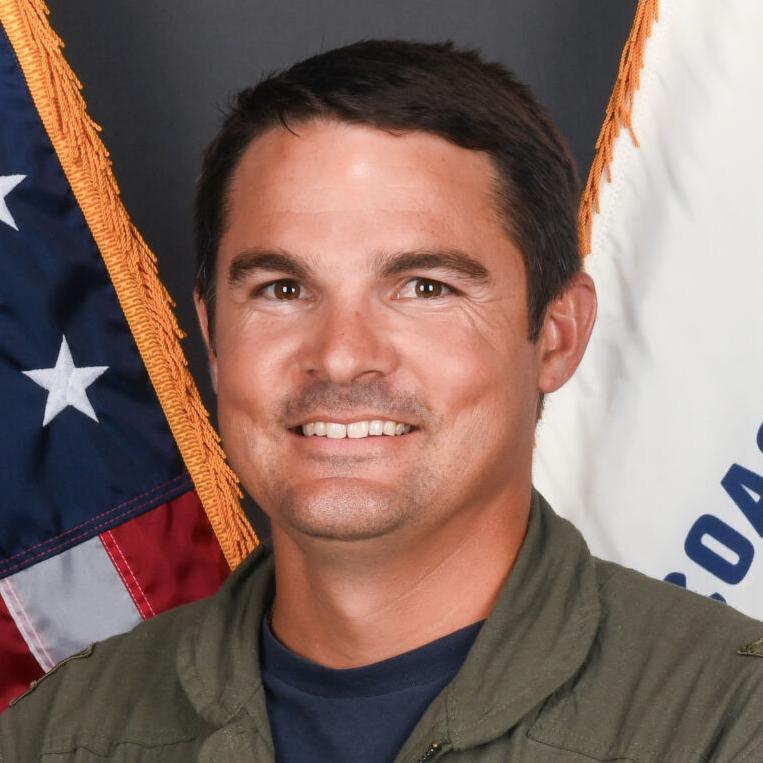
Naval Surface Warfare Center Dahlgren Division Capt. Michael Smith presents NSWCDD engineer Dwayne Nelson with a certificate of appreciation at the command's National African American/Black History Observance at the University of Mary Washington Dahlgren campus Feb. 26. The citation thanked the National Society of Black Engineers Potomac River Alumni Chapter for its contribution to the observance.
The Rev. Lawrence A. Davies spoke to Naval Support Facility Dahlgren military and civilian personnel about this year's African American/Black History Month theme -"At the Crossroads of Freedom and Equality: The Emancipation Proclamation and the March on Washington" - at the University of Mary Washington's Dahlgren campus Feb. 26.
Davies - the former Mayor of Fredericksburg and one of the first two black mayors in Virginia -joined Dahlgren and the nation in celebrating the vibrant history and culture of African American and Black Sailors during the month of February.
African American Sailors have a legacy of honorable service in every major armed conflict since the Revolutionary War. African Americans continue to serve with distinction, now comprising more than 17 percent of the active duty Navy total force end-strength.
Striving for equality at home and blazing a trail for future African American Sailors, Wesley A. Brown became the first African American graduate of the United States Naval Academy in 1949, joining the Navy's Civil Engineer Corps and retiring at the rank of lieutenant commander. He died May 22, 2012 after a distinguished career both in the Navy and in the civilian workforce.
Edna Young, the first African American woman to enlist in the regular Navy and later the first African American woman to achieve the rank of chief petty officer also died in 2012. Young was a World War II veteran who joined the Navy after the passage of the Women's Armed Services Integration Act July 7, 1948.
In 2012, Vice Adm. Michelle Janine Howard became the first African-American woman to receive a third star in flag rank within the Department of Defense when she was promoted Aug. 24. Howard is currently serving as deputy commander for U.S. Fleet Forces Command. This was not Howard's first time in the Navy history books, however. In 1999, she became the first African American woman to command a ship in the U.S. Navy when she took command of USS Rushmore (LSD 47).
Immediately following this year's celebration of African American/Black History Month, Master Chief April Beldo - currently the Naval Education and Training Command Force Master Chief - will make history as the Navy's first female African American Fleet Master Chief. Beldo will become the Manpower, Personnel, Training and Education (MPT&E) Fleet Master Chief in March 2013.
The History Behind Black History Month
Black History Month honors and remembers past and present African-American legends every year. Carter G. Woodson, known as the "Father of Black History" said, "If a race has no history, if it has no worthwhile tradition, it becomes a negligible factor in the thought of the world, and it stands in danger of being exterminated."
Woodson was the son of ex-slaves born in New Canton, Va. At the age of 20, he earned his high school diploma. He then received a Bachelor of Literature in Kentucky, followed by a short time working as a school supervisor in the Republic of the Philippines. The scholar returned to attend the University of Chicago, earning a bachelor's and master's degree. He went on to Harvard University in 1912 becoming the second African American to earn a doctorate degree. The first was William Edward Burghardt (W.E.B.) Du Bois.
Prior to the early 1900s, black history was "overlooked, ignored, and even suppressed by the writers," observed Woodson. Woodson focused his research to bridge this gap. He also founded his own publishing company, Associated Publishers, to write and produce books to help tell African-American history. One of his most successful books was published in 1933, "The Miseducation of the Negro."
In 1915, Woodson, with Rev. Jesse E. Moorland and others, founded the Association for the Study of Negro Life and History, later changed to the Association for the Study of African American Life and History (ASALH). He also created Negro History Week on the second week of February in 1926.
While this week was chosen due to the proximity of the birthdays of President Abraham Lincoln and Frederick Douglass, both pioneers on the emancipation and equality of African Americans, Woodson also used existing traditions to "expand the study of Black history." As early as the 1940s, the week grew into a month-long focus. After Woodson's death, April 3, 1950, the ASALH continued to establish the month of February as Black History Month, with recognition nationally in 1976.
African-American pioneers paved the way for their future and for the future of all that will come after them. These pioneers include agriculturist and 1941 Time magazine's "Black Leonardo" George Washington Carver, boxing Hall of Famer Muhammad Ali, Tuskegee airman Daniel "Chappie" James, Jr., first African-American Oscar winner for "Lilies in the Field" (1963) Sidney Poitier and the President of the United States, Barack Obama.