




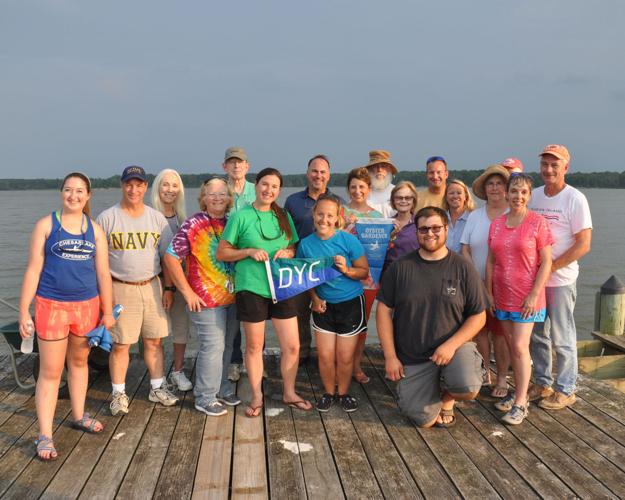
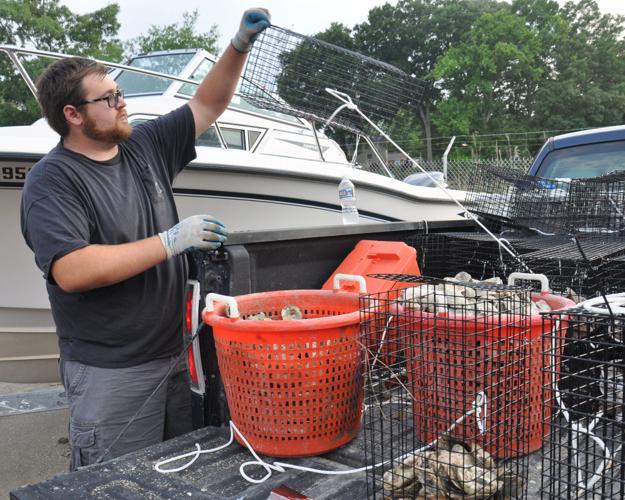
At a meeting of the Dahlgren Yacht Club aboard Naval Support Facility (NSF) Dahlgren on June 14, members gathered to get a lesson in raising oysters, quite a different topic for the group, but an important one for the environment.
A team of experts from the Chesapeake Bay Foundation (CBF) led by Jackie Shannon, the oyster restoration manager for the organization, were on hand to discuss the long-standing tradition of oystering in the Potomac and surrounding bodies of water, including Upper Machodoc Creek, the body of water that the Dahlgren Yacht Club is situated on. The history of the bivalved mollusks and their relationship to the inhabitants of this region reaches back further than the presence of the European settlers. But the numbers of oysters in the bay along the bay and its tributaries declined precipitously over the course of the last century, though the population is slowly rebounding.
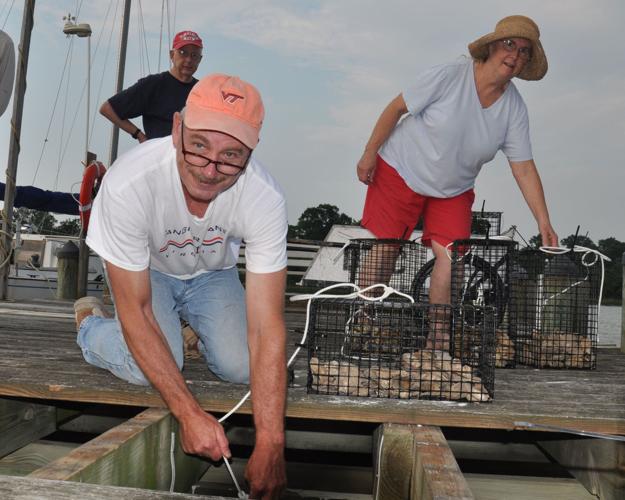
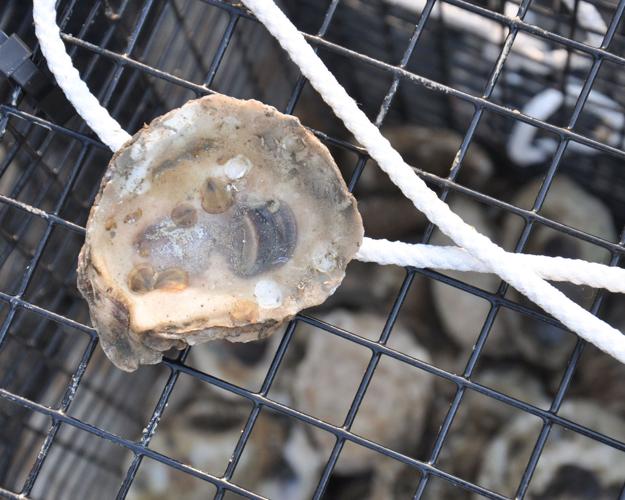
With assistance from CBF and concerned citizens like the members of the Dahlgren Yacht Club, oysters are making a comeback — a boon for seafood lovers — but they are also improving the quality of the waters they inhabit. At its most basic level, CBF’s oyster restoration program recruits and helps volunteers tend “gardens” of juvenile oysters known as spat. Participants in the program, like the members of the yacht club, ensure that the garden, or wire cage of spat-on-shells (baby oysters set on recycled shells), remains in the water and that the cage remains free of obstructions, which keep the spat clean and healthy. As they grow and form their own shells, the spat grow into mature oysters and fill the cages. During this growing phase, the spat will feast on the algae and other impurities, including nitrogen pollution, in the water.
Shannon explained that oysters are filter feeders and each can filter approximately 50 gallons of water each day. Each of these oyster gardens will benefit not only the water quality, but also create additional habitat for other fish and crustaceans as the oysters grow and form reefs. In addition, as the native oyster species Crassostrea virginica makes a comeback, the hope is that the industry will soon follow.
Base employee Alan Hardesty, who is the yacht club’s commodore, said he and other members of the Dahlgren Yacht Club decided to be a part of the program because they were interested in reintroducing the oysters to the Upper Machodoc Creek and the Potomac River.
“King George has quite a history of watermen and oyster harvesting,” said Hardesty. “We hope to help restore that proud tradition.”
Randy Grigg, along with wife Betty, are heading the oyster gardening program for the yacht club. Grigg shared that the club will work in conjunction with Naval Support Activity South Potomac and the CBF to relocate the spats to a sanctuary reef once the oysters reach adulthood next June. The oyster gardening program is open to anyone who has access to a dock and can care for the growing bivalves during the course of the year it takes to reach maturity.
“Our hope is to keep this going year after year, to be able to fully create reefs out here to help clean up our waters,” he said.
Shannon told the DYC volunteers how best to care for the cages of maturing oysters, including how to protect them during inclement weather and how to ensure that as they get bigger, they have ample space to accommodate the growing oysters by separating the growing spats into additional cages.
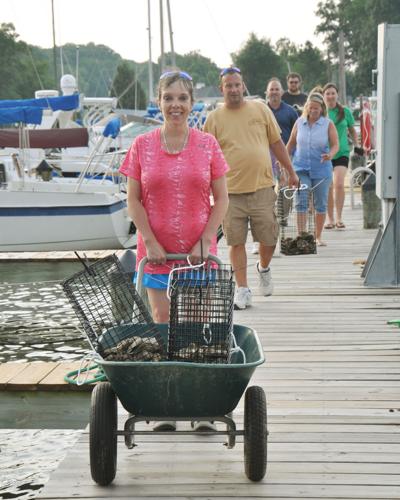
After the tutorial on oyster care, the majority of the oyster cages that Shannon brought were hung at the end of the yacht club’s dock, while the rest of the cages went home with attendees to be incubated at their own home docks.
The oyster gardening program through CBF would like to have more participants on all of the bodies of water that feed into the bay. Shannon and her team are giving presentations at other locations to raise awareness with the hopes of having 500 cages of oysters growing by the year 2022. Dahlgren’s oyster garden will be the first located in the Potomac River and Upper Machodoc Creek.
If you are interested in being a part of the oyster gardening program, you must live on the water with some salinity. Waters northwest of the Harry Nice bridge tend to not have the salinity needed, but Shannon says they are happy to provide spats if an interested party lives on slightly less salty waters to attempt to grow oysters. If you don’t have access to water, you can also help the program by saving oyster shells. Spats need shells to “incubate” on and there is a shortage of shells. CBF turns 2,000 bushels of recycled oyster shells each year into habitat for millions of oysters planted in the Bay and its rivers.
To learn more about how you can be a part of the program with the CBF, contact them at oystergardener@cbf.org.