
A Brief History of the Chief Petty Officer
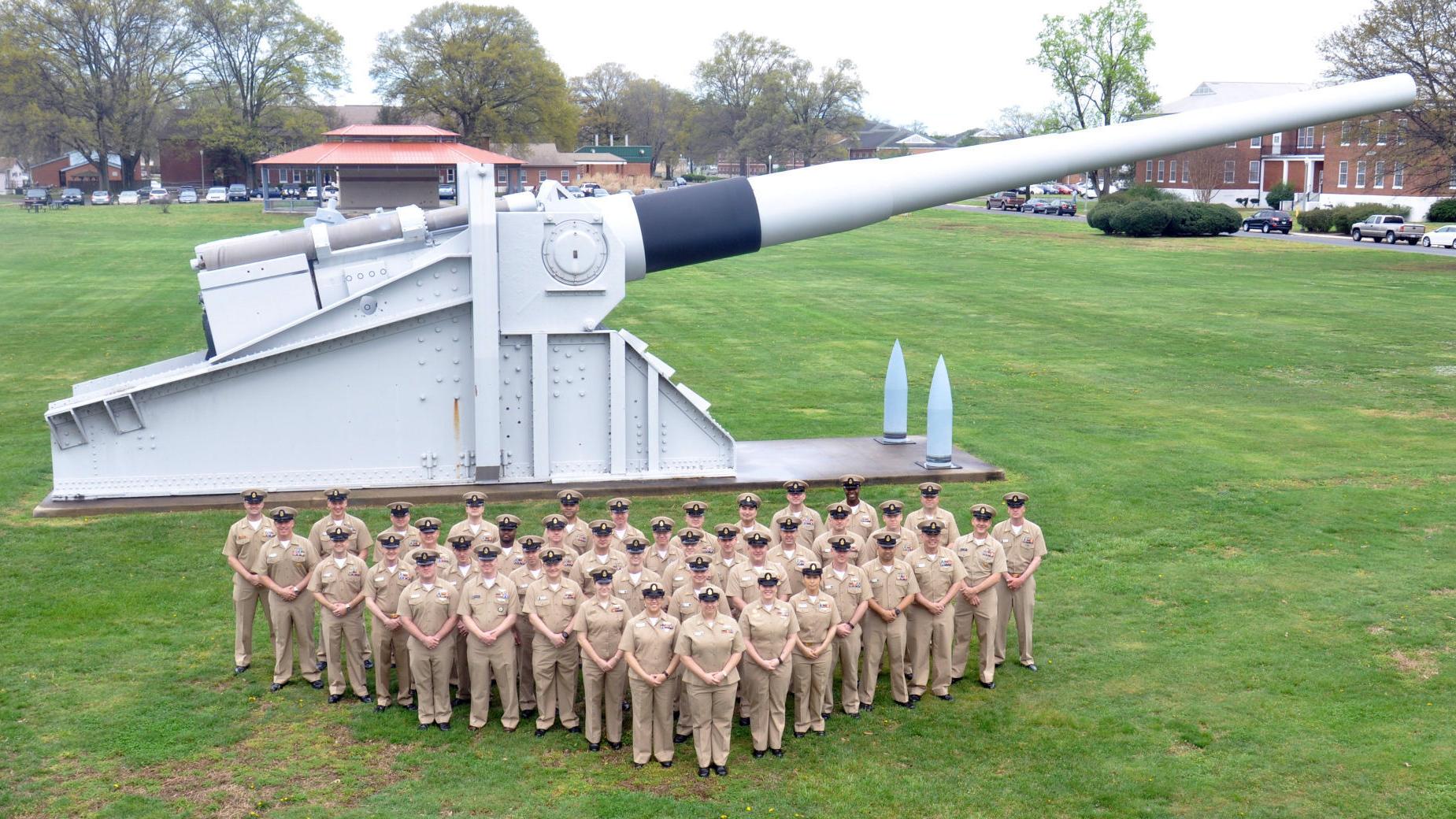
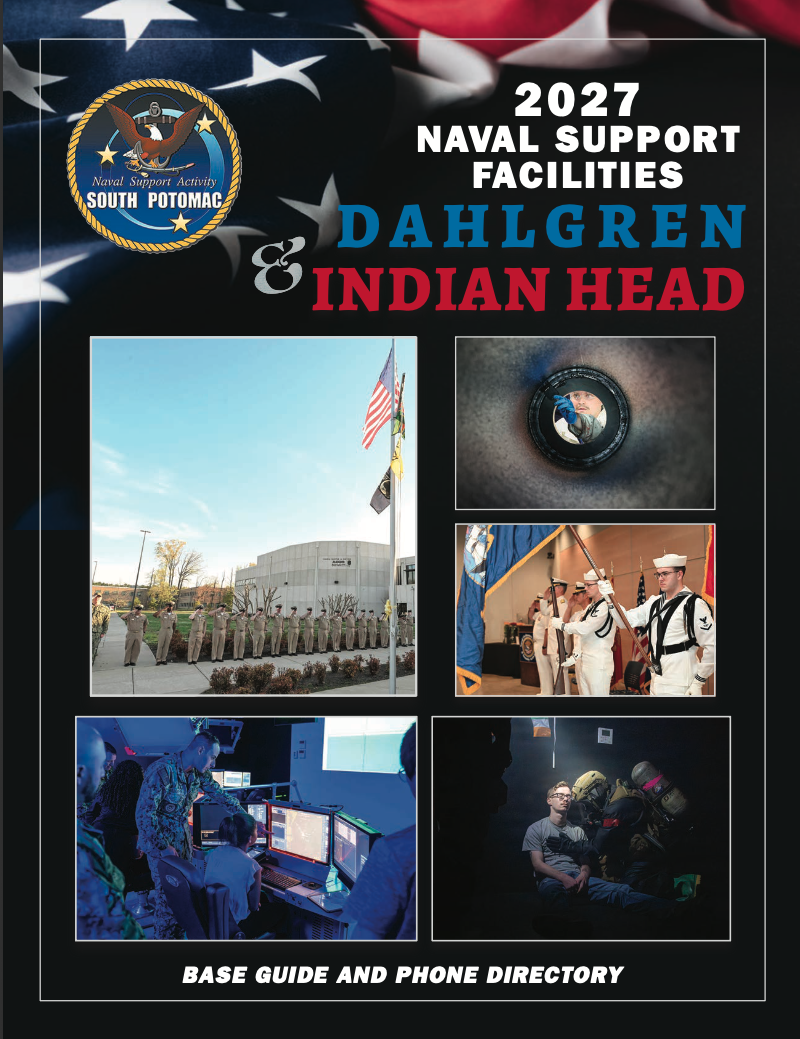
Chiefs at Naval Support Facility (NSF) Dahlgren joined chief petty officers (CPOs) across the Navy in celebrating 123 years of CPO leadership April 1. In the background is a 16-inch gun that saw service aboard USS New Jersey (BB-62). Happy birthday to chief petty officers past, present and future!
[Editor’s Note: The following content was provided by guest writer Chief Wert, who provided his views on being a chief petty officer.]
The honorable but daunting task of presenting the history of the Chief Petty Officer in less than one kilo-words is only surpassed in its requirement that it be entertaining enough to actually read. With that burden in mind, I gladly accepted the assignment due to my love for all things historical and a slight penchant for wordsmithing. This is a weakness my brothers in the mess know all too well and the reason for my being goaded into such an assignment. So, here goes.
After decades of informal titles to distinguish the most senior petty officer on any given ship, or even the top petty officer in a particular rating on a ship, the Navy finally created the pay grade and rank title of Chief Petty Officer on April 1, 1893.
Who was the first Chief Petty Officer?
The answer is—drum roll—no one.
On that date, most First Class Petty Officers became Chief Petty Officers and everyone else subsequently moved up a pay grade and rank. There were a couple of rates that were not allowed to advance, because just as it is doing today, the Navy was considering doing away with those rates. Some things never change.
The first official rates that carried the grade of Chief Petty Officer from the Seaman Branch were Chief Master-At-Arms, Chief Boatswain’s Mate, Chief Quartermaster and Chief Gunner’s Mate; from the Artificer Branch there were Chief Machinist and Chief Carpenter’s Mate; from the Special Branch there were Chief Yeoman, Apothecary and Band Master.
The Navy had allowed skippers to assign people to “acting appointments” as Chief Petty Officers decades before and for “many years after” the official implementation of the grade to fill vacancies in the ships’ compliment. The chiefs’ titles then were designated with follow-on letters AA (Acting Assignment) or PA (Permanent Assignment). The Acting Chief would hold the position for six months to a year (again, some things never change) and if he did a good job, the skipper would recommend to the Bureau of Navigation (Changed to Bureau of Personnel BUPERS in 1942) that the advancement be made permanent. The practice of using the follow-on letters continued until Oct. 1, 1949.
There also used to be a pay difference between the Acting and Permanently Assigned Chiefs. Pay was about $50-$70 a month depending on specialty. In 1903, General Order 134 stated: “Chief Petty Officer Officers (sic) whose pay is not fixed by law and who shall receive permanent appointments after qualifying therefore by passing such examination as the Secretary of the Navy may prescribe shall be paid at the rate of $70.00 per month.”
After the passage of the 1958 Amendment to the Career Compensation Act of 1949, the ranks of Senior Chief Petty Officer and Master Chief Petty Officer were established effective June 1 of that year. Chiefs who were Permanently Assigned with four years in rank and 10 years in service were advanced to the grade of E-8 and rank of Senior Chief. Six-year Chiefs with more than 13 years in service were advanced to the grade of E-9 and rank of Master Chief.
Throughout that long period of bureaucratic maneuvering, however, Chiefs were making a difference at sea and at war. Chiefs have been the recipients of more than three dozen Medals of Honor. Chief Aviation Ordnanceman (AOC) John W. Finn was awarded for his actions while manning a .50-caliber machine gun at Kaneohe Bay during the attack on Pearl Harbor; he recently died at the ripe old age of 100 years and one of the newest Arleigh Burke- Class Destroyer (DDG-113) is named USS John Finn in his honor. The most recent Medal of Honor recipient was Senior Chief Special Warfare Operator (SEAL) Edward C. Byers Jr., awarded on March 12, 2016.
In 1966, the upper echelons of the Navy decided to poll in the fleet concentration areas about the largest issue concerning the enlisted ranks. When the poll results suggested that Navy leadership was out of touch with the concerns of enlisted sailors, they formed Senior Enlisted Advisor of the Navy on Jan. 28, 1967.
Master Chief Gunner’s Mate Delbert Black was selected by Navy leaders for a four-year term. They changed his title to Master Chief Petty Officer of the Navy (MCPON) on April 28 of that same year, finally catching up to the Marine Corps and the Army, who formed their senior enlisted positions in 1957 and 1966, respectively. There have been 13 MCPONs in total. On Feb. 15, 2016, we lost the third MCPON, Robert J. Walker, who among other things, pushed to begin the Enlisted Surface Warrior (ESWS) Qualification. Rest in peace, brother…
Chiefs have been respected as the backbone and anchor of the Navy for more than a century. It is widely and fondly known among retirees and other civilians whom I have encountered, that “Chiefs run the Navy”. I accept the praise with humility and generally reply that it “is all in a day’s work.” Because I know the history and the mission of THE CHIEF: turning young scared kids into fighting seafarers, to being the voice of reason when the wardroom is unanimously praising the executive officer’s “great idea.” The position and mission of the Chief Petty Officer and the need for that differentiation and separation on afloat commands is unique in the armed services. Recent trends in training to square with those differences have largely been productive.
It is my firm conviction, however, that there is still a place for training new Chief Petty Officers to handle stressful situations, often on little sleep, while completing the mission. We understand there are consequences for failure that impact the Sailors we have sworn to NEVER FORGET. I hope the Navy never loses sight of that reality. It would be a travesty not only to the Navy, but also to the memory of those who have earned the title:
CHIEF PETTY OFFICER.