
Tropical cyclone naming history
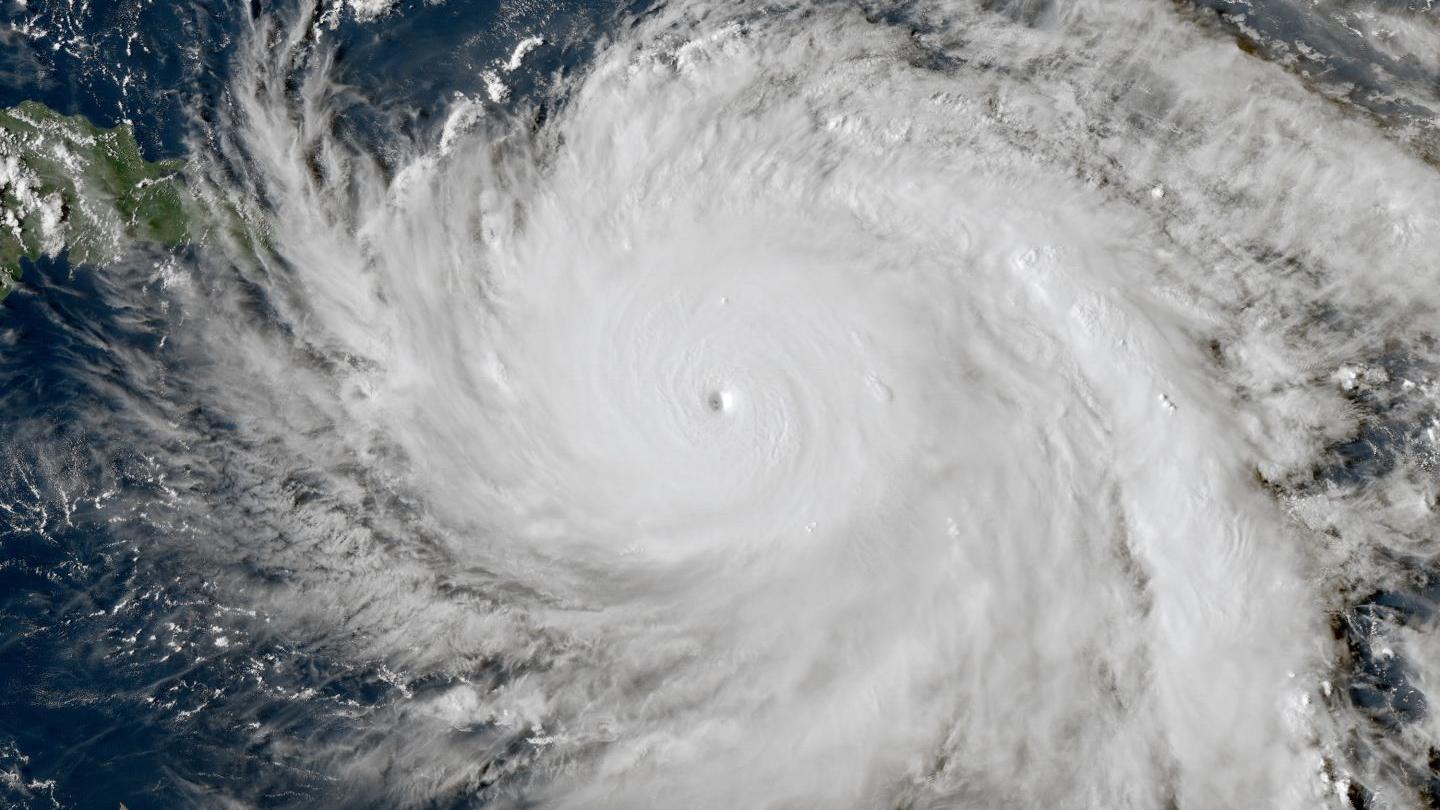
Hurricane Maria was a deadly Category 5 hurricane that devastated Dominica, St Croix, and Puerto Rico in September 2017.
Since 1953, Atlantic tropical storms had been named from lists originated by the National Hurricane Center. They are now maintained and updated through a strict procedure by an international committee of the World Meteorological Organization.
Reason to name hurricanes
Experience shows that the use of short, distinctive names in written as well as spoken communications is quicker and less subject to error than the older, more cumbersome latitude-longitude identification methods. These advantages are especially important in exchanging detailed storm information between hundreds of widely scattered stations, coastal bases, and ships at sea.
The use of easily remembered names greatly reduces confusion when two or more tropical storms occur at the same time. For example, one hurricane can be moving slowly westward in the Gulf of Mexico, while at exactly the same time another hurricane can be moving rapidly northward along the Atlantic coast. In the past, confusion and false rumors have arisen when storm advisories broadcast from radio stations were mistaken for warnings concerning an entirely different storm located hundreds of miles away.
History of hurricane names
For several hundred years, many hurricanes in the West Indies were named after the particular saint’s day on which the hurricane occurred. Ivan R. Tannehill describes in his book “Hurricanes” the major tropical storms of recorded history and mentions many hurricanes named after saints. For example, there was “Hurricane Santa Ana” which struck Puerto Rico with exceptional violence on July 26, 1825, and “San Felipe” (the first) and “San Felipe” (the second) which hit Puerto Rico on Sept. 13 in both 1876 and 1928.
Tannehill also tells of Clement Wragge, an Australian meteorologist who began giving women’s names to tropical storms before the end of the 19th century.
An early example of the use of a woman’s name for a storm was in the novel “Storm” by George R. Stewart, published by Random House in 1941. During World War II this practice became widespread in weather map discussions among forecasters, especially Army and Navy meteorologists who plotted the movements of storms over the wide expanses of the Pacific Ocean.
In 1953, the United States abandoned a confusing two-year old plan to name storms by a phonetic alphabet (Able, Baker, Charlie) when a new, international phonetic alphabet was introduced. That year, the United States began using female names for storms.
The practice of naming hurricanes solely after women came to an end in 1978 when men’s and women’s names were included in the Eastern North Pacific storm lists. In 1979, male and female names were included in lists for the Atlantic and Gulf of Mexico.
The NHC does not control the naming of tropical storms. Instead a strict procedure has been established by an international committee of the World Meteorological Organization.
For Atlantic hurricanes, there is a list of 21 names for each of six years. In other words, one list is repeated every seventh year. The only time there is a change is if a storm is so deadly or costly that the future use of its name on a different storm would be inappropriate for obvious reasons of sensitivity. If that occurs, then at an annual meeting by the committee (called primarily to discuss many other issues) the offending name is stricken, or retired, from the list and another name is selected to replace it.
There is an exception to the retirement rule, however. Before 1979, when the first permanent six-year storm name list began, some storm names were simply not used anymore. For example, in 1966, “Fern” was substituted for “Frieda,” and no reason was cited.
Greek alphabet
In the event that more than 21 named tropical cyclones occur in the Atlantic basin in one season, additional storms will take names from the Greek alphabet. This naming convention has been established by the World Meteorological Organization Tropical Cyclone Programme.
This year’s nomenclature lineup
The 2020 Atlantic storm names are: Arthur, Bertha, Cristobal, Dolly, Edouard, Fay, Gonzalo, Hanna, Isaias, Josephine, Kyle, Laura, Marco, Nana, Omar, Paulette, Rene, Sally, Teddy, Vicky and Wilfred.