
Throwback Thursday: August 1980 T-2C completes initial ski jumps
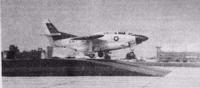
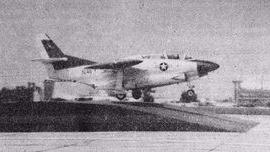
U.S. Navy photo
Lt. Cmdr. Steve Hazelrigg, carrier systems branch, Strike Aircraft Test Directorate, pilots a T-2C off a three-degree elevation to initiate a feasibility study on ski jump takeoffs by conventional jet aircraft. The asphalt ramp, located at the approach end of runway two, is just over four feet high at its peak, 70 feet wide and 130 feet long.
Editor’s note: Each month, Tester will revisit the people, places and events of NAS Patuxent River as reported in the installation’s newspaper throughout the years.
This article and photo were originally published Aug. 8, 1980.
A conventional Navy jet has completed a series of ski jump takeoffs at the Naval Air Test Center.
A T-2C Buckeye raced up and off a three-degree incline on July 31 to set in motion a program examining the feasibility of using ramps for launching aircraft from the next generation of aircraft carriers.
Navy test pilot Lt. Cmdr. Steve A. Hazelrigg and a team of engineers from NATC’s Strike Aircraft Test Directorate are evaluating data gathered during the first series of jumps from the four feet, two-inch high ramp.
Next to come in the Short Takeoff and Arrested Landing (STOAL) concept demonstration will be a four to five-month program to determine the optimum ramp attitude for takeoffs by T-2 and F-4 aircraft.
A variable angle ramp which will adjust to three, six and nine degree elevations is being developed by the Naval Air Engineering Center at Lakehurst, N.J.
Planned at Patuxent, the second phase is scheduled to begin next January following the installation of the variable angle ramp.
Bob Traskos, STOAL program manager at NATC, said the second phase will be extensive, with the Buckeye and Phantom logging between 20 and 30 launches each from the three different angles.
The third phase, planned in mid-1982, will take the variable angle ramp aboard a carrier for tests involving F-4, S-3, E-2 and possibly F/A-18 aircraft.
With the first phase of the program now completed, Traskos said his team is two and one-half weeks ahead of schedule. He credited lead engineer Alex Smith and engineers Tom Devereux, Larry Thomas and Terry Pickering, all of Strike’s flight systems branch with the success.
Traskos also praised the U.S. Naval Test Pilot School and members of the Air Operations Department, Public Works Department, Chesapeake Test Range and Realtime Telemetry Processing System who were instrumental in the timely completion of the first phase.