
The history beneath Pax River's runway
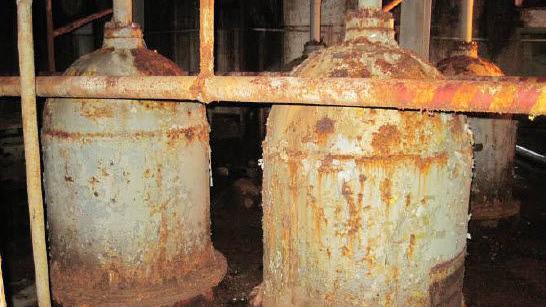
The H8 catapult’s hydraulic accumulators, where hydraulic fluid was stored under pressure.
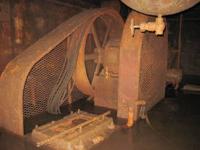
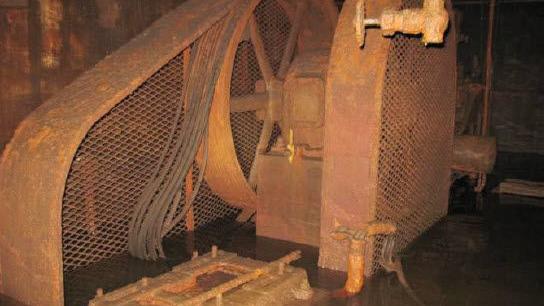
Partially dismantled compressor. Located on the lower level of the abandoned H8 catapult, it is now completely submerged in water.
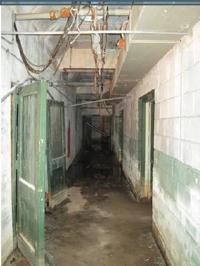
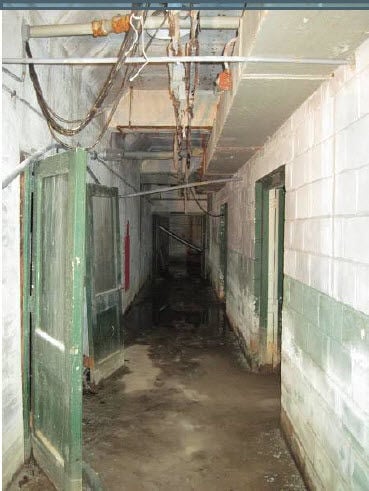
Professionally lit to obtain photos during a 2011 Basis of Design Report of the H8 catapult, this hallway of deteriorating offices, workshops and storerooms leads to the equipment room.
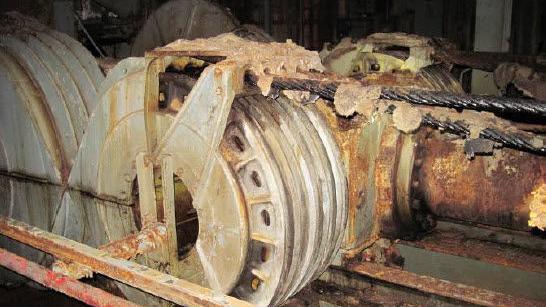
Rusted cabling and piston from the launching engine, the hydraulic machinery that launches an aircraft.
On a recent Sunday morning — when the busy airfield at NAS Patuxent River was finally quiet enough to allow such an excursion — a small group descended into history beneath one of the installation’s runways, entering the long-abandoned subterranean H8 hydraulic catapult facility.
The group, accompanied by Air Operations personnel, included historians, writers, a representative from the Maryland Historical Trust, a museum curator from Naval History and Heritage Command (NHHC), and Pax River’s Cultural Resources Manager, Mike Smolek.
H8, believed to be one of the last two hydraulic aircraft catapults to survive in the world, is slated for demolition sometime around April, when a large runway repair renovation project is expected to be underway.
“This catapult is at the end of the runway, so they’ll do it at the same time the runway will already be shut down for repairs,” Smolek said. “There are plans to demo the three abandoned underground catapults and this is the first to go.”
One member of the group was Jeff Bowdoin, deputy head of NHHC’s Curator Branch, whose mission is to identify, collect, preserve, interpret and disseminate the material history and heritage of the U. S. Navy.
“The catapult is representative of the long history of naval aviation testing and development at NAS Patuxent River,” Bowdoin said. “I was involved with the inspection so I could ascertain if there were any materials that could be removed and saved that would illustrate that history.”
Long pry bars were necessary to force open the rusted, ground-level hatch of the catapult facility before the group could cautiously descend the stairs into the dark, dank rooms below.
Smolek described walking long corridors with shafts of light from the visitor’s multiple flashlights streaking erratically through the darkness, revealing peeling paint, a rusty water cooler, abandoned furniture, and decaying offices and workshops that once bustled with personnel as far back as 1952.
“In the distance loomed huge pieces of unrecognizable machinery with cables, large pulleys and a spider web of piping and hydraulic shafts,” he added. “A ladder disappeared further downward into ink-black water; once a lower level, but now completely flooded.”
The group spent a little more than an hour underground, but it was decided no artifacts could be saved.
“Unfortunately, due to the immense scale of most of the equipment that was visibly seen, recovering artifacts from the catapult will not be possible,” Bowdoin said. “There was an additional level but it was completely submerged and we weren’t able to descend any lower. If I had been able to acquire anything, my plan was to speak with the National Naval Aviation Museum in Pensacola, Fla., one of the museums within the NHHC, about displaying the material.”
Throughout its history, Pax River has seen its share of catapult technology.
“There were six different kinds here, including gunpowder, jet-powered, two hydraulics, electric and steam,” Smolek noted. “Our current TC-7 facility was probably the first steam catapult built in the U.S.”
The location — under the airfield — of the three deteriorating catapult facilities requires that they be removed because of the potential hazards to the planes above, Smolek explained.
“About 10 years ago, research was done to record these facilities, and we have since further investigated and documented the surviving electric catapult, called the Electropult,” he said. “Only two were ever built; the one at Pax is the lone survivor and is completely intact underground.”
Smolek said that after World War II, the Navy chose not to pursue electricity to power catapults; however, in an interesting twist of fate, some 70 years later, the Navy returned to it with the development of EMALS — the Electromagnetic Aircraft Launch System, which is being installed in the latest aircraft carrier now under construction.