
September is National Preparedness Month
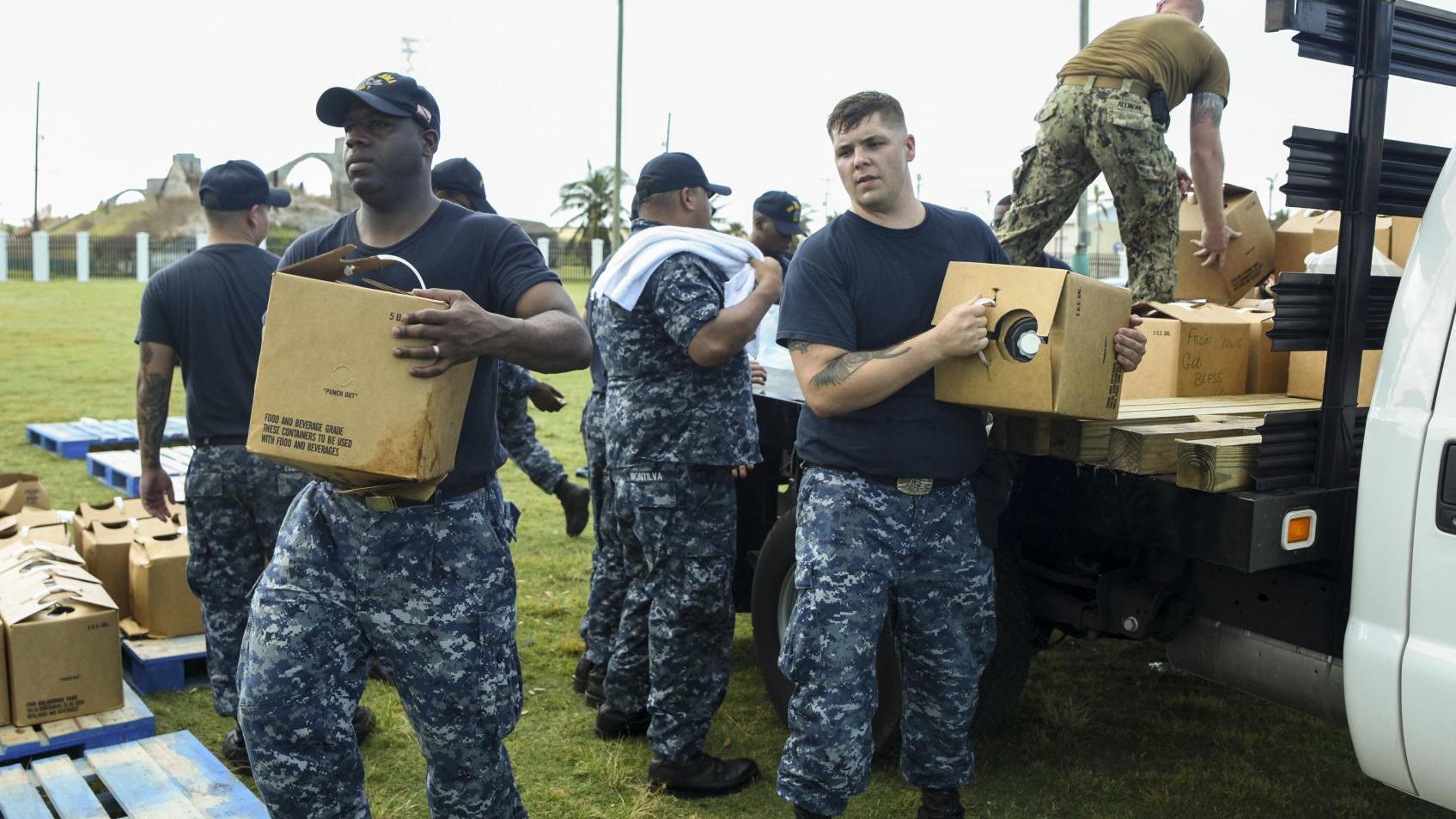
170914-N-QE668-005 KEY WEST, Fla. (Sept. 14, 2017) Sailors unload water at a Federal Emergency Management Agency distribution point in Key West, Florida, in September 2017 following the aftermath of Hurricane Irma.
National Preparedness Month is observed each year in September and culminates Sept. 30 with a National Day of Action. Launched by the Federal Emergency Management Agency (FEMA) in 2004, it serves to encourage individuals, communities, businesses, schools and government organizations to take action to prepare for a number of hazards that could impact the nation – everything from weather-related emergencies to terrorist attacks.
The Secretary of the Navy urges all Sailors, civilian personnel, and families to assess their readiness at home and abroad. Ready Navy, the Navy’s Emergency Preparedness Program, has information, tips, and tools to help every member of the Navy community take part. Visit www.ready.navy.mil to get started.
“National Preparedness Month reminds us all of the importance of being prepared in the event disaster strikes,” said Tim Alexander, CNIC director of operations. “For many of us, it’s not a question of ‘if’ but a matter of ‘when.’ Having a well thought-out plan to execute when the times comes, significantly improves the chances of a positive outcome.”
Emergencies happen, often with little or no notice. Empower yourself and your family by taking action beforehand to be prepared – it saves lives, property and time.
Tips to consider:
- Preparing your family for an emergency is as simple as a conversation over dinner; get started with tips from www.ready.gov
- Make a family escape plan and practice two ways out of every room
- Practice your fire escape plan by having a home fire drill at least twice a year with everyone in the home
- Consider the costs associated with disasters and save for an emergency
- Download a group texting app so your entire crew can keep in touch before, during and after an emergency
- Take time to learn lifesaving skills such as CPR and first aid; prepare a first aid kit
- Practice evacuating in the car with your animals so they’re comfortable if you need to leave in an emergency
- Get the @fema app with weather alerts for up to five locations at www.fema.gov/mobile-app
- Sign up for local emergency alerts in your area by searching online
- Document property (photo, video, or PCS inventory sheets could be used)
- Make digital copies of important documents and save them on the cloud or a secure cell phone app
- Contact your water and power companies to get on a “priority reconnection service” list of power-dependent customers if you rely on electrical medical equipment
- Find out if laws in your state permit pharmacists to dispense a 30-day refill of medications in an emergency
- Know basic home maintenance and practical safety steps like shutting off water and gas
- Put smoke alarms on every level of your home
- Know the ways to keep your home safe from cooking, heating and electrical fires
- Carbon monoxide is deadly, colorless and odorless; protect your family by installing a detector
- Be prepared for a power outage by having enough food, water and meds to last for at least 72 hours
- Always make sure you have spare batteries
- Plan with neighbors and fellow Sailors to help each other and share resources
- Flood insurance allows you to recover more quickly and fully; visit floodsmart.gov to learn more about flood insurance and how to protect your home
- Keep some cash on hand