
Navy joins nation in celebrating African American/Black History Month
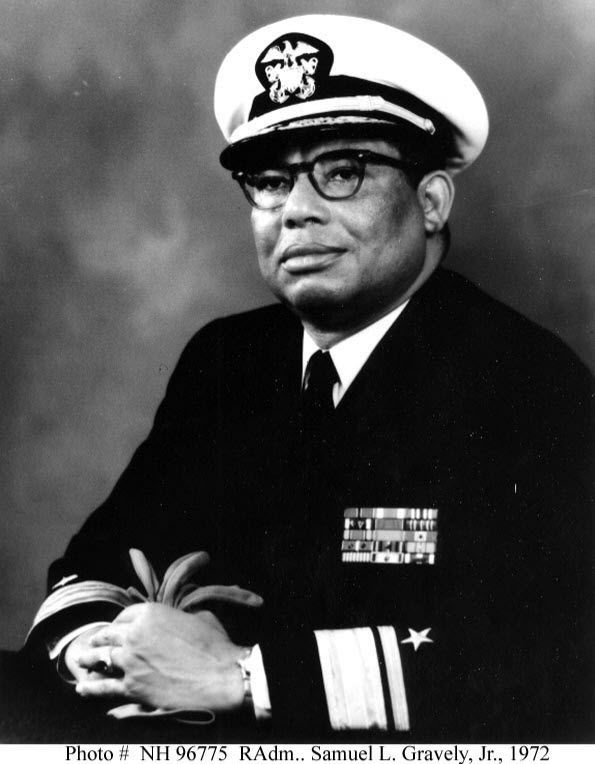
Vice Adm. Samuel Lee Gravely, Jr. enlisted in the Navy Reserves on Sept. 15, 1942 and was trained as a fireman apprentice. Gravely went from recruiting Sailors to building a Navy career that lasted 38 years and included many distinguished accomplishments. Among those accomplishments, are a string of impressive ‘African American firsts’ that include: first to command a U.S. Navy warship (USS Theodore E. Chandler); first to command an American warship under combat conditions since the Civil War (USS Taussig); first to command a major naval warship (USS Jouett); first admiral; first to rise to the rank of vice admiral; and the first to command a U.S. Fleet (Commander, 3rd Fleet). He retired in August 1980.
Throughout the month of February, the Navy joins our nation in celebrating the history and culture of African American and Black Sailors during National African American/Black History Month.
The observance has its origins in 1915 when historian and author Dr. Carter G. Woodson founded the Association for the Study of Negro Life and History. Dr. Woodson and the association initiated the first Negro History Week in February 1926 and since 1976, every U.S. President has officially designated the month of February as National African American/Black History Month.
“The greatest strength in our Navy comes not from weapons but from the diversity of our people.” said Rear Adm. Stephen Evans, commander, Naval Service Training Command. “Every day, Sailors of diverse race, gender, religion, ideas, and background work together to accomplish the extraordinary.”
African American and Black Sailors and civilians are an integral part of the One Navy Team. Nineteen percent of Navy’s enlisted force identifies as African American or Black, to include 17 percent of all senior and master chiefs, while seven percent of the officer force and four percent of all admirals identify as the same.
In the Navy’s civilian workforce, 15 percent are African American or Black and 20 are Senior Executive Service members.
A diverse workforce positions the Navy to operate successfully around the globe by bringing together Sailors and civilians with different ideas, experiences, perspectives, capabilities and skill sets. Integrating Sailors and civilians from diverse backgrounds into the force allows the Navy to recruit and retain the nation’s top talent from a wider pool of skilled personnel.
“The call to serve our great nation comes with a responsibility to push yourself to be at your best, to be ready,” Evans said. “Training and education are vital to readiness, which is why we strive to attract talent from diverse pools of future leaders and provide them the highest quality naval accession training.”
The Navy partners with organizations including the National Naval Officers Association, the National Society of Black Engineers, and Historically Black Colleges and Universities in support of African American service members and civilians. The Navy supports science, technology, engineering, and math (STEM) programs encouraging young minority students to pursue careers in science and industry.