
It's only halftime for hurricane season
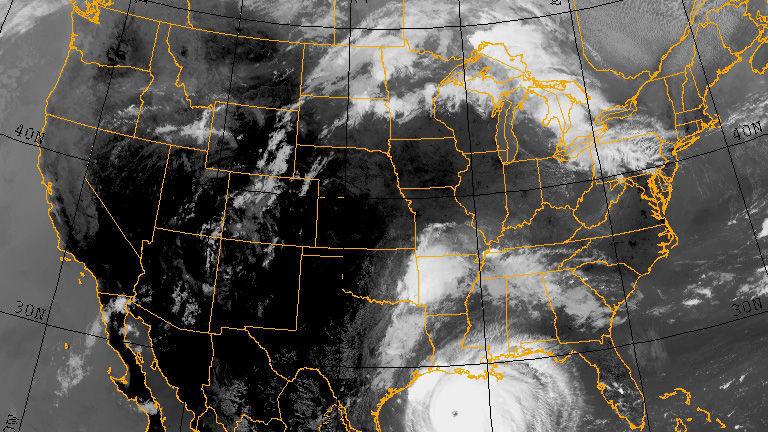
An infrared satellite image of Hurricane Laura, a Category 4 hurricane on the Saffir-Simpson scale taken Aug. 26 at 1 p.m. EDT. The Atlantic Hurricane Season runs through Nov. 30.
It’s only halftime for hurricane season
If you compare the hurricane season to a football game, we’re only now coming up on halftime. Mother Nature likely hasn’t shown us the worst pages of her playbook yet.
We’ve been lucky so far this summer, but the effect and cost from Tropical Storm Isaias a little over a year ago still impacts our community. Our area was lucky that Tropical Storm Henri decided to head farther north.
Ocean water takes months to heat up, but also takes longer to cool down. The same goes for the Chesapeake Bay and our rivers. That’s a reason some of the fattest, meatiest crabs routinely get pulled in after Labor Day. The water is still quite warm.
Hurricanes, which thrive on warm water, can be devastating for coastal communities like ours, and those of us who tend to be more superstitious might say we’re due for something soon.
The last major destructive storm to pass through this area was Hurricane Sandy in 2012. The previous August, Hurricane Irene, a Category 1 storm, knocked out power to 43,000 SMECO customers in St. Mary’s and 108,800 across Southern Maryland.
Thousands of trees came down, many onto houses. Roads were blocked by toppled trees and downed power lines in Irene’s wake.
In September 2003, Hurricane Isabel had been downgraded to a tropical storm by the time it struck Southern Maryland, but it still packed a wallop few will ever forget. Isabel caused a 6-foot storm surge which flooded about 300 homes and businesses. Its top wind here was a 63 mph gust recorded at Naval Air Station Patuxent River. The tropical storm did $84 million in damage.
We can all knock on wood that we’ll continue to be spared this hurricane season, but gambling on the weather doesn’t exactly sound like the best strategy for keeping safe.
September is National Preparedness and Maryland Preparedness Month. Here are some hurricane preparedness tips from the Department of Homeland Security’s www.ready.gov site:
• Prepare your home: Before a hurricane is even reported, there are steps you can take to keep your property and family safe. Trim or remove damaged trees and limbs; secure loose rain gutters and downspouts and clear any clogged areas or debris to prevent water damage; secure and reinforce the roof, windows and doors of the home; and purchase a portable generator or install a generator for use during power outages (keep them outside, at least 20 feet away from windows and doors and protected from moisture and never attempt to power the house by plugging a generator into a wall outlet).
• During a hurricane watch, review evacuation routes, listen to any information being broadcast by local officials and review and add to the items in your disaster supply kit. Kits should contain nonperishable food, water and other supplies, such as flashlights, local maps, first aid supplies and a battery-powered radio.
• During a hurricane warning, follow any evacuation orders from local officials, check in with family and friends and follow the hurricane timeline preparedness checklist found at www.ready.gov/hurricanes. When the hurricane is six hours away or closer, stay away from windows, turn the refrigerator or freezer to the coldest setting so food lasts longer in the event the power goes out, and check for news updates.
• After a hurricane: Listen to officials for updates or instructions; check in with family and friends; return home only once authorities say it is safe; watch for any debris or downed power lines; avoid walking or driving through flood water, as it may sweep you away or be electrically charged from downed lines; and photograph property damage to aid in filing an insurance claim.
The Maryland Emergency Management Agency offers a hurricane resource guide at the website https://mema.maryland.gov/Pages/resources-hurricane.aspx
And to get instant notification about severe weather and other alerts in St. Mary’s County, sign up with county government at www.stmarysmd.com/emergencycodered.asp. For alerts in Charles County, go to the website www.CharlesCountyMD.gov/CNS/. And in Calvert County, go to www.calvertcountymd.gov/2574/Be-Aware-and-Prepare to sign up for alerts.
Here’s to a safe second half of the Atlantic hurricane season.