
Ford qualifies naval aviators using Precision Landing Mode
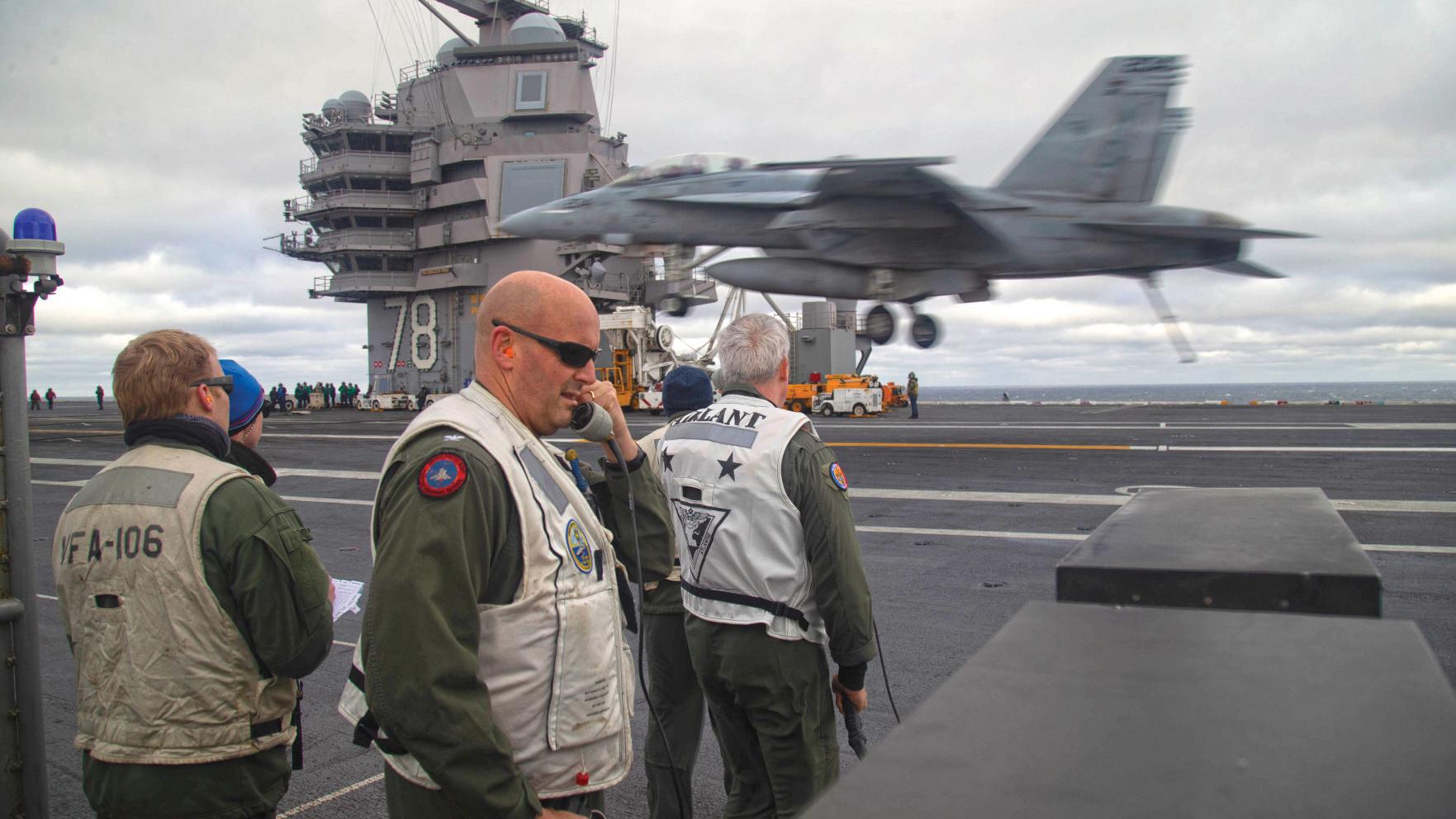
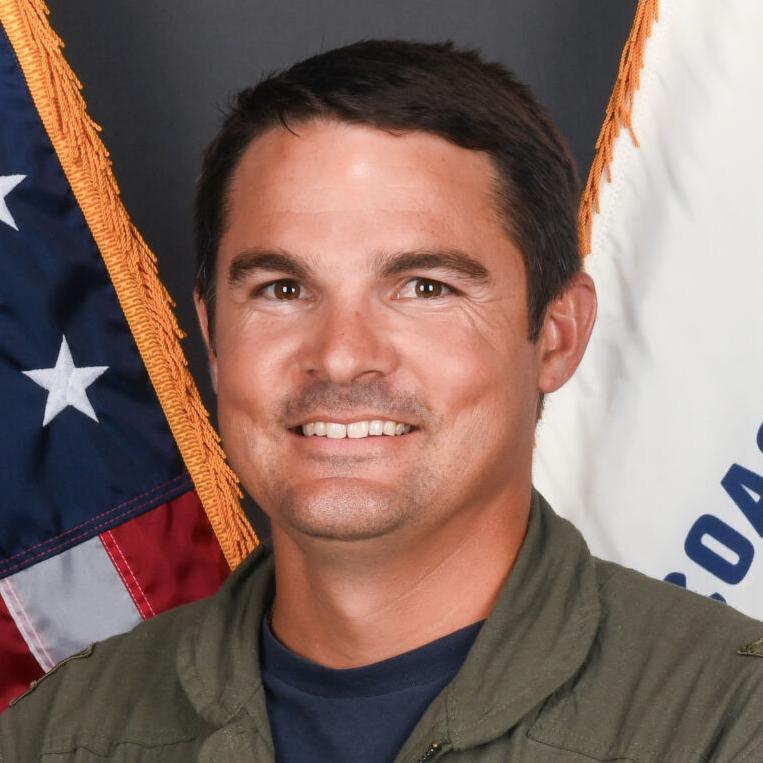
Capt. J. J. Cummings, USS Gerald R. Ford’s (CVN 78) commanding officer, communicates with pilots while overseeing the landing of an F/A-18F Super Hornet on Ford’s flight deck using the Precision Landing Mode.
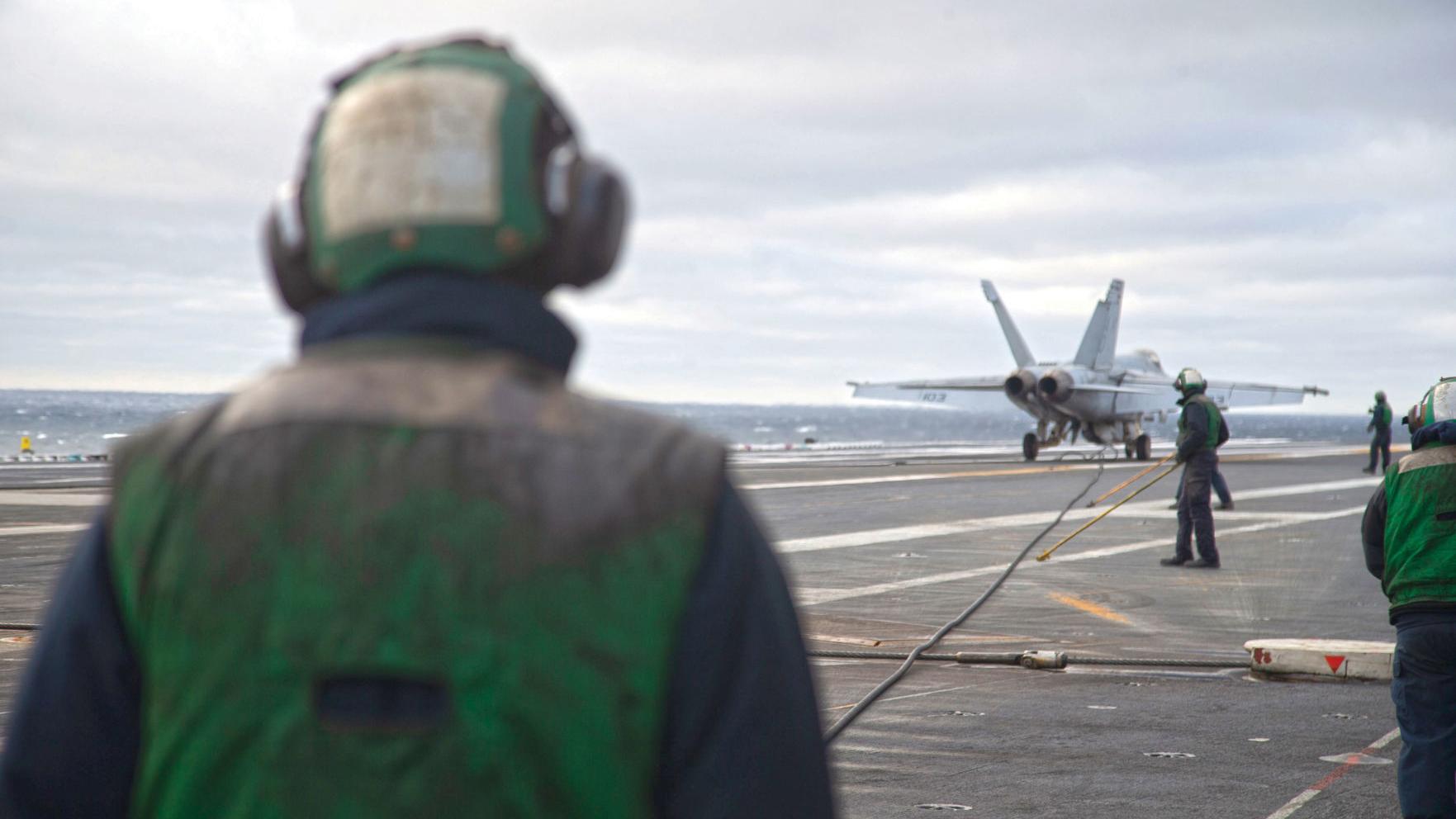
A VFA-106 F/A-18F lands on Ford’s flight deck using the Precision Landing Mode.
Naval aviators, assigned to the “Gladiators” of fleet replacement squadron (FRS) Strike Fighter Squadron (VFA) 106, qualified Feb. 8 onboard USS Gerald R. Ford (CVN 78) using the Precision Landing Mode (PLM).
PLM is a new flight control technology designed for F/A-18 Super Hornets to improve safety, efficiency and success rates in recovering fixed-wing aircraft onboard aircraft carriers while easing pilot workload. It promises to increase overall boarding rates, create the potential to reduce tanker requirements and improves Naval Aviation’s effectiveness.
Carrier strike groups have been using PLM since 2017, when Carrier Air Wing (CVW) 2 was the first to conduct Composite Unit Training Exercise (COMPTUEX) aboard USS Carl Vinson (CVN 70) with PLM.
“The pilots still have to fly the landing pattern around the ship and control the line-up, but with PLM, the glide slope control is smoother, and deviation is much smaller, making for a much safer landing qualification,” said Rear Adm. John Meier, commander, Naval Air Forces Atlantic. “The improved wave-off characteristics make PLM inherently safer for the aircraft carrier.”
PLM increases the safety of the most challenging evolution pilots and flight deck crews face on a daily basis. PLM will also increase training efficiency, pilot proficiency and enable aircrew to make better use of flight time to train for the diverse and ever-expanding array of tactical and strategic missions the Super Hornet and Naval Aviation are responsible for executing.
PLM was originally developed by engineers at the Naval Air Warfare Center Aircraft Division (NAWCAD) as part of the Maritime Augmented Guidance with Integrated Controls for Carrier Approach and Recovery Precision Enabling Technologies (MAGIC CARPET) program. The technology was first tested in the Super Hornet at sea in April 2015, when Air Test and Evaluation Squadron (VX) 23 pilots and NAWCAD aeromechanics division engineers from Naval Air Station (NAS) Patuxent River, Maryland, demonstrated the software aboard USS George H.W. Bush (CVN 77).
Capt. J.J. Cummings, then-Commanding Officer of Ford, has used PLM to land F/A-18Fs on CVN-78 and was impressed with the technology and ease with which it allows naval aviators to gain their confidence while landing aircraft at sea.
“I first heard about PLM seven years ago and to be quite honest, it sounded too good to be true,” Cummings said. “I now have about 20 traps on Ford using PLM, and it is as good as advertised. In fact, it is straight up amazing. I was fortunate to get eight traps this underway and found that using PLM really stabilized the jet and significantly reduced the amount of corrections I was making during the approach.”