
Programmable mannequin valuable teaching tool at Pax health clinic
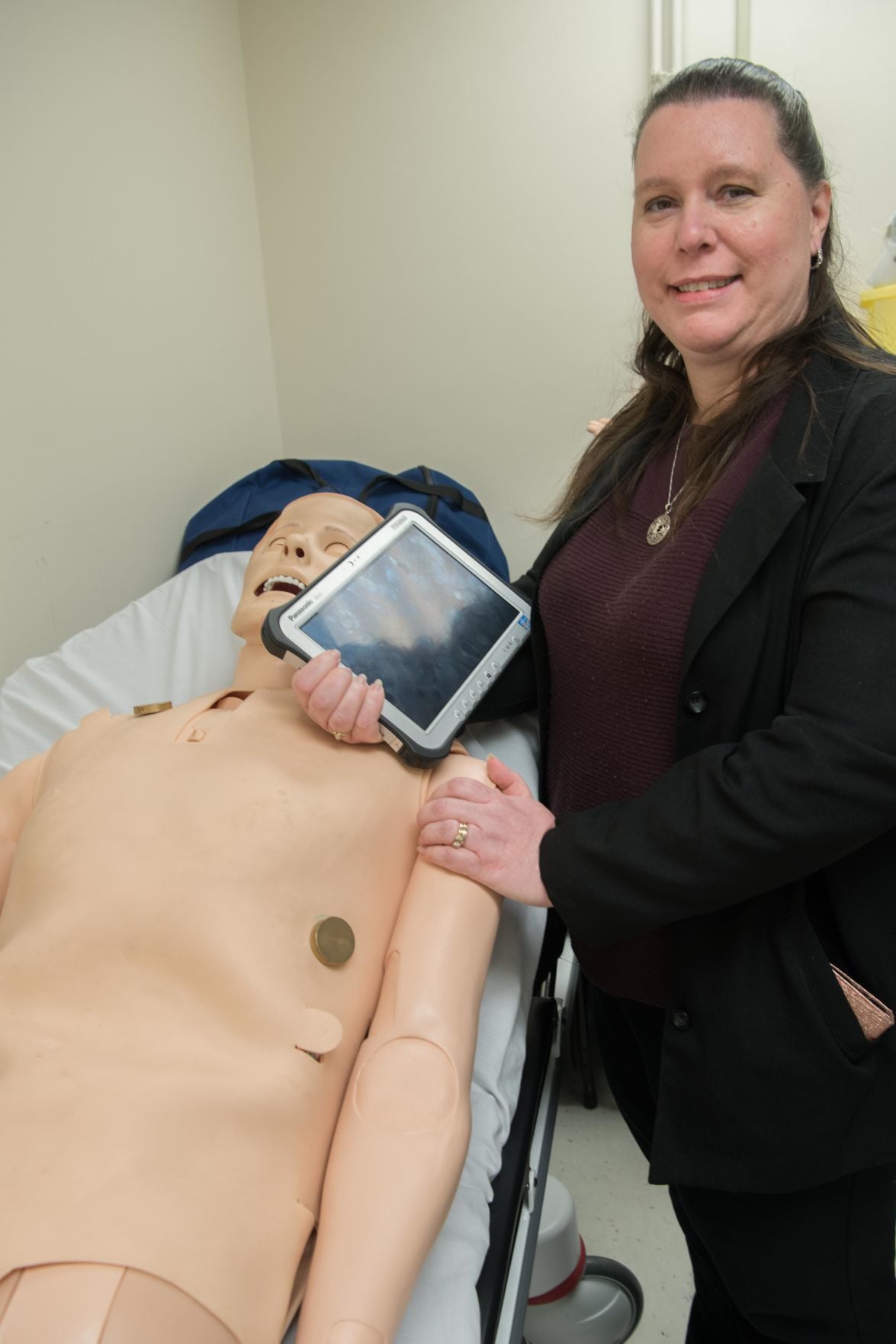
Nurse Educator Kathy Keister, with Naval Health Clinic Patuxent River, gets ready to program SimMan, a lifelike simulation mannequin, for a medical training scenario.
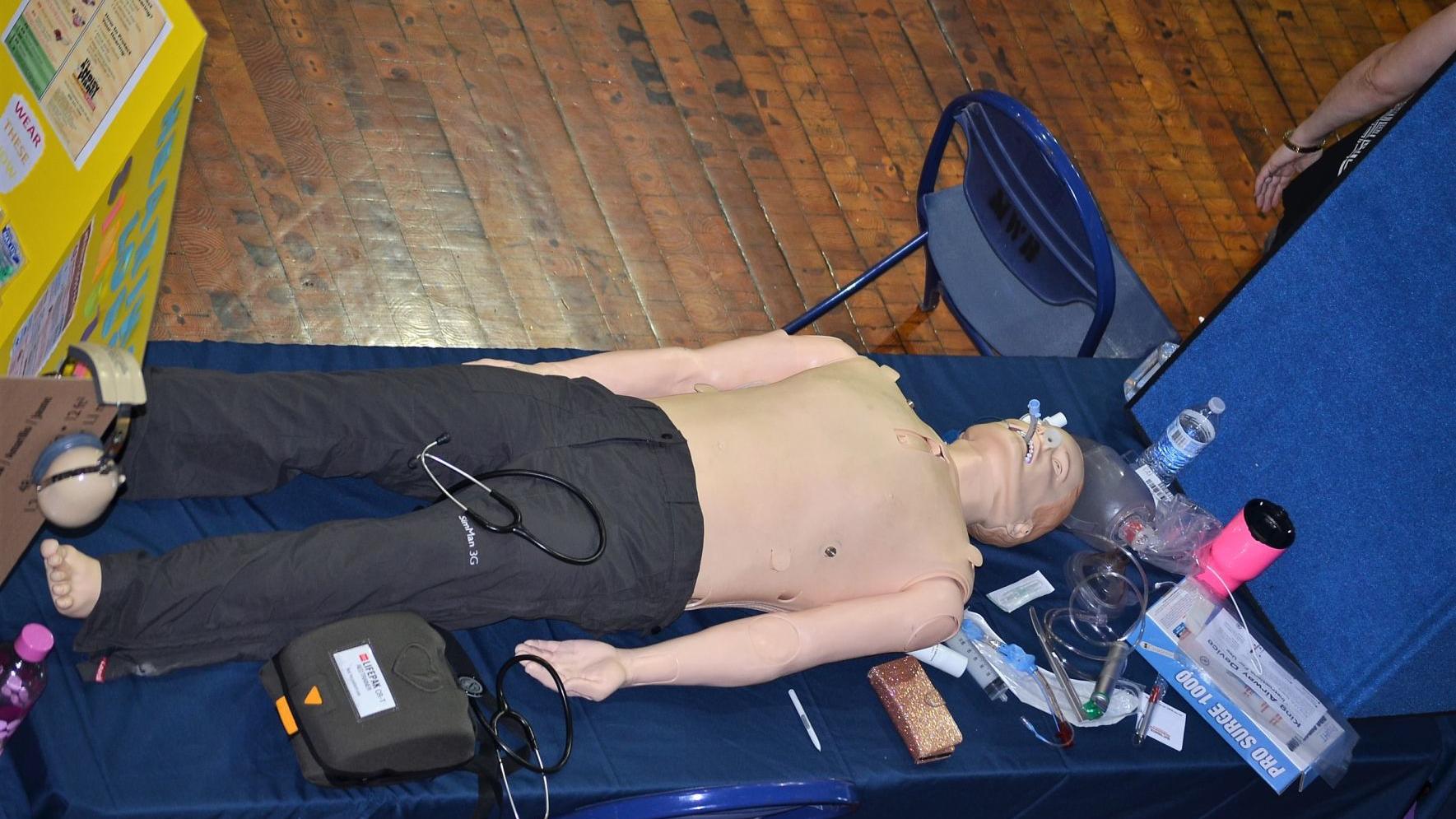
An intubated SimMan was part of the Pax River Health Clinic’s display at the Health and Wellness Expo held at the Drill Hall in May.
There is a particular “patient” at Naval Health Clinic Patuxent River (NHCPR) who never complains, no matter how many procedures medical corpsmen or nurses might practice on him. His name is SimMan.
A high-fidelity programmable simulation mannequin, SimMan is specifically designed for military and civilian emergency services to simulate treatment of a trauma patient, making it possible for learners to fully immerse themselves in a variety of training scenarios.
“SimMan has cardiac rhythms, heart and lung sounds, bowel sounds, and you can start IVs and interosseous needles,” said Kathy Keister, nurse educator at NHCPR. “He can be intubated, shocked and paced. He blinks and has teeth, has oral and nasal airways, he can cry and make noise, and you can even talk through him. You can fill his bladder with ‘urine’ and his veins with ‘blood.’ He even has an amputated leg you can put on that will bleed for practicing tourniquets.”
Each month, SimMan reports for duty for hands-on training facilitated by Keister at the clinic.
“Recently, our training covered anaphylaxis and what to do if the patient has an allergic reaction,” she said. “We can do everything with him from simulating him wheezing just a little bit, to full cardiac arrest and anything in between.”
Hospital Corpsman Jasmine Humlicek, who has trained with SimMan, thinks working with the mannequin is as close to a live patient as it gets.
“He’s so lifelike,” she noted. “His eyes blink, and if you shine a light in them, the pupils will react. They can make him not breathe, and then if you use a [bag valve mask], you can see his lungs inflate just like a real person. It’s better than working on a real person because we’re not scared of hurting him and we can do it the first time and not worry about messing up.”
Keister, who is trained to operate SimMan and controls him via a tablet computer, can program scenarios so he can react in real-time, such as when CPR is performed or if meds are administered.
“We can change the program as it’s occurring to demonstrate what our corpsmen might see and how they should react in that situation,” she said. “They have to assess as if he were a real patient. It’s good experience because these aren’t things they see every day and they need to know how to react when they do happen.”
Hospital Corpsman Jacob Hampton has worked with SimMan to practice male and female catheter insertions, multiple code blue drills, and intubation drills. He has also assisted in running code blue drills at Branch Health Clinics Indian Head and Dahgren, which forced corpsmen and providers there to think on their feet until the training scenarios concluded.
“Throughout my time in the ER, I had to learn on the fly to help treat patients,” Hampton said. “With SimMan, we’re able to simulate almost any situation to give the corpsmen hands-on experience. He’s an invaluable tool and there’s no doubt in my mind that with [the mannequin] and RN Keister’s knowledge, we are training truly competent corpsmen who are ready to save lives in the field and afloat.”
Keister notes the research backs-up Hampton’s beliefs.
“There’s lots of research that shows if you train the way you actually need to care for a patient, you’ll do a better job; and patient outcomes are greatly improved when somebody has hands-on training beforehand,” she said. “It’s not only corpsmen who make use of SimMan, we also use it for nursing skills, and doctors can practice their skills as well.”
Readiness is the primary focus now, especially with the military medical treatment facility’s transition to the Defense Health Agency this fall. Navy Medicine, through the Navy Medicine Readiness and Training Command, retains command and control of the uniformed medical force and maintains responsibility and authority for operational readiness.
“They’re coming here to be trained by us, so they’re ready to deploy,” Keister said. “The things you see, you’ll remember.”