
Wearing what the Doughboys wore
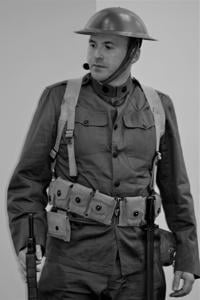

A 3d U.S. Infantry Regiment (The Old Guard) Soldier dressed in a World War I uniform prepares for a performance at the AUSA Annual Meeting and Exposition in Washington, D.C., in October.
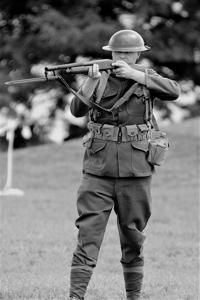

The World War I uniforms supplied by the Joint Base Myer-Henderson Hall Flag Shop show how a Doughboy infantryman would have looked in 1917-1918. This Old Guard Soldier is participating in a tattoo-style show in Baltimore’s Defender’s Day in September.
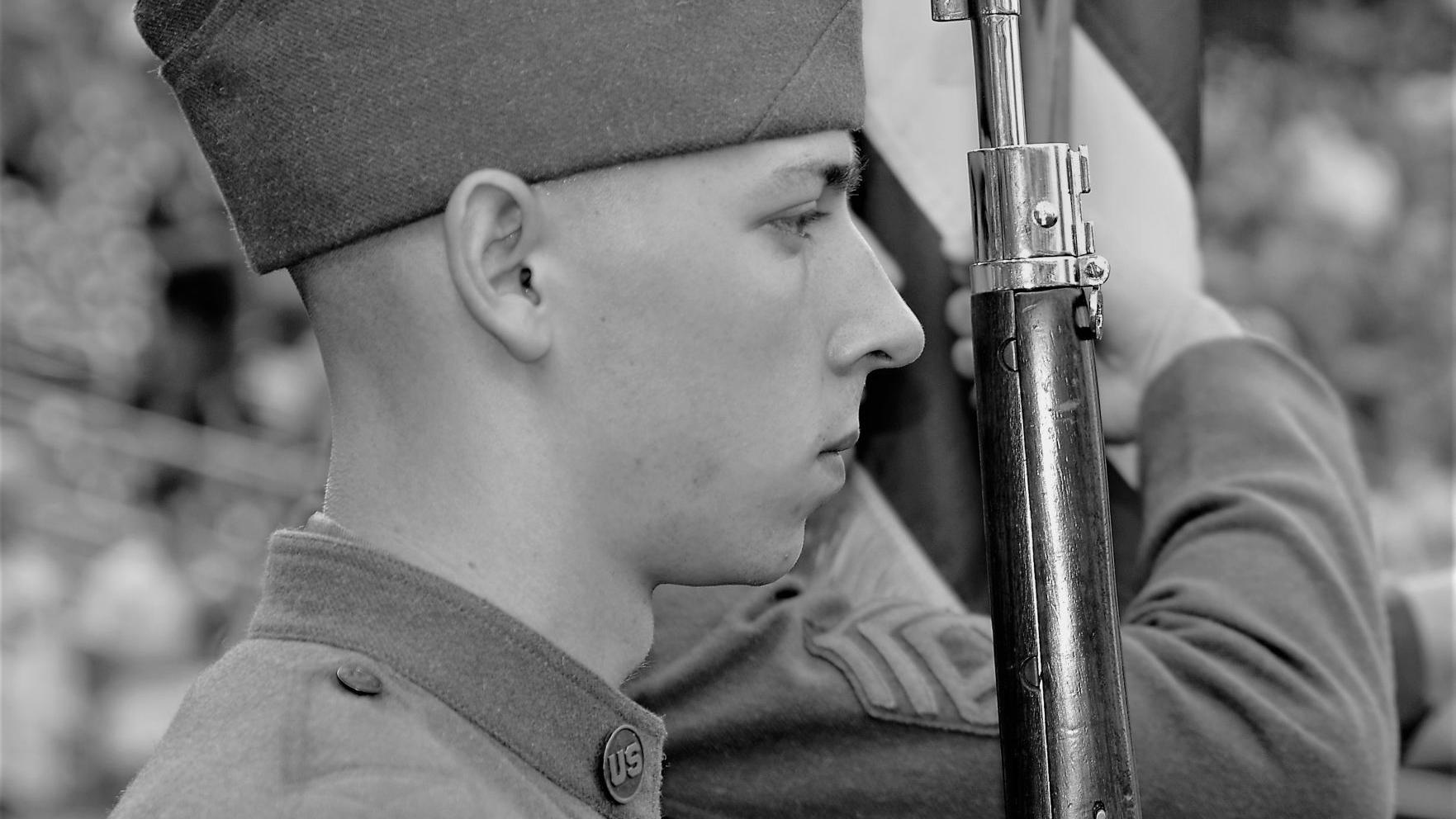
A Military District of Washington Soldier wears a World War I replica uniform during Opening Day ceremonies at Nationals Park in April.
To commemorate the 100-year anniversary of World War I, 3d U.S. Infantry Regiment (The Old Guard) Soldiers have been honoring the Great War’s veterans by wearing replica WWI uniforms.
And the team at the Joint Base Myer-Henderson Hall Flag Shop clothe and accessorize Soldiers for color guards, pre-game ceremonies of sporting events in the National Capital Region, Twilight Tattoos and special functions.
At the Flag Shop, located on the northern edge of the joint base near the dog kennels, a warehouse holds a treasure trove of the Army’s past.
Sgt. Joseph Tumminelli is one of the custodians of the garb at the Flag Shop. In January, the shop team started getting requests to prepare to uniform Soldiers in World War I-era apparel.
“It’s basically a two-piece process — we get them fitted for the uniforms and then we get them the accouterments,” Tumminelli said. “We have them try it on and see what works for them. Back here, we have all the accouterments whether it be like the helmet, suspenders or an ammo belt. All the accessories that go with (the uniform) are back there.”
According to the Flag Shop staff, 25 full WWI-era replica uniforms are available for The Old Guard Soldiers to wear. The biggest challenge the Flag Shop faces is sizing and fitting a Soldier.
“The sizing (is a challenge) because everybody is different, and number two, some of the accoutrements are older and we have to have a fresh look every time they go out there,” Tumminelli said.
Tumminelli said supplying Soldiers spit-polished canteens, knap sacks, leggings and ammo belts from the earlier wars and conflicts is extremely difficult.
Original World War I Army uniforms are at a premium and expensive. Online auction sites place the price of a full WWI in the $850 range, so the Flag Shop mixes and matches uniform pieces from a vendor and from donations to its collection.
Two differences are noticeable from the vendor-supplied uniforms and the originals. Government-issued uniforms were not sized with tags or labels and were constructed from wool.
Original WWI uniforms were a hot, itchy wool. Shop members said they now attempt to recreate the wool feeling and appearance. Many of the vintage-looking uniforms are made from a polyester-type of material, which adds to the Soldier’s comfort.
“This (uniform) is a lot lighter, so if they wore it in the summer months, it would feel a whole lot better,” Tumminelli said. “With the wool, you’d be dying. With the uniforms we have now, it’s a whole lighter material.”
Pentagram Staff Writer Jim Dresbach can be reached at jdresbach@dcmilitary.com.