
Pro baseball player, World War II fatality buried at Arlington
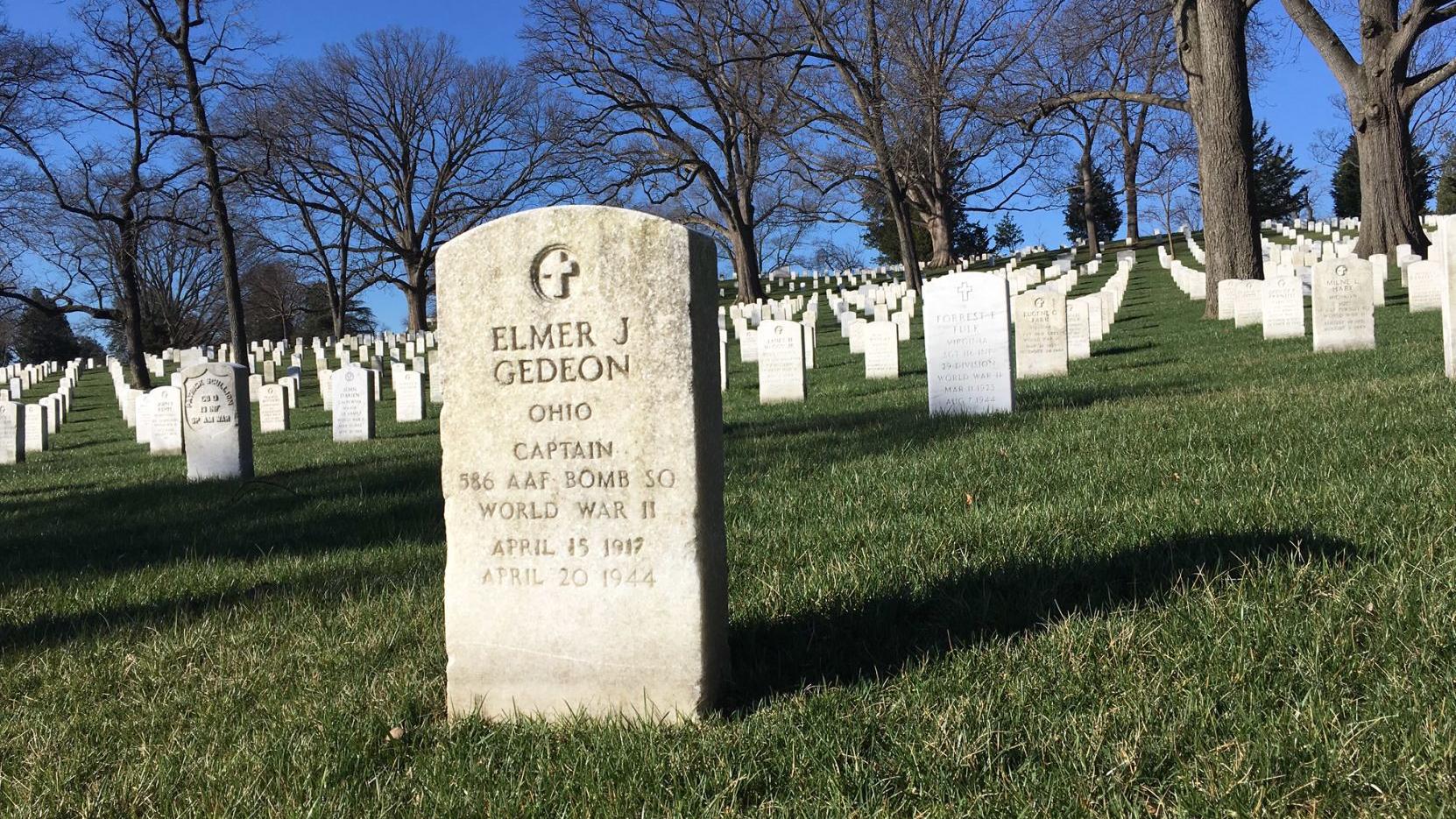
U.S. Army Capt. Elmer Gedeon is buried in Section 34 of Arlington National Cemetery. The Cleveland, Ohio, native was an All-American track star at the University of Michigan and played five games with the Washington Senators in 1939. He died in 1944 when his Army Air Corps bomber was shot down over France.
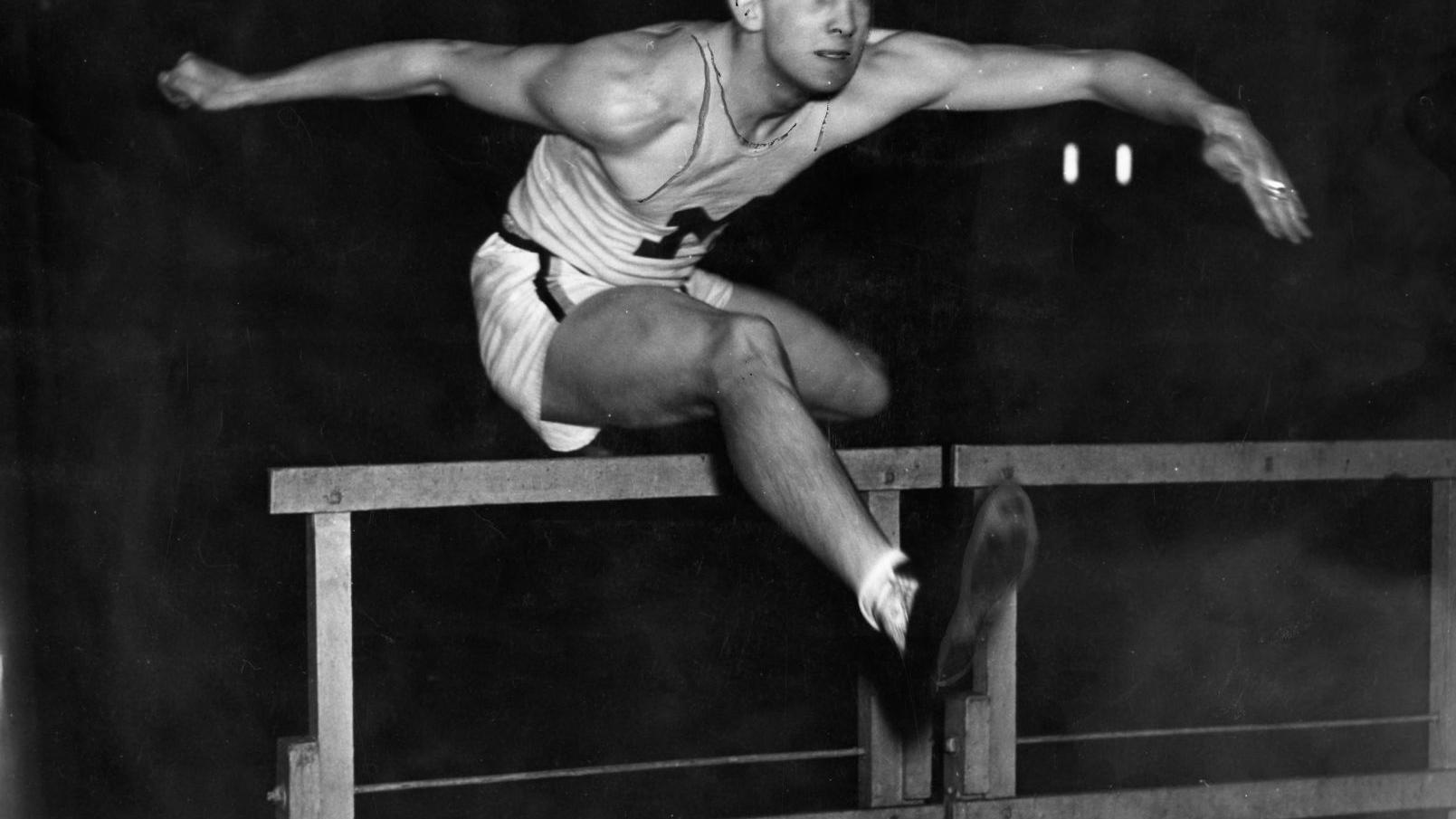
Elmer Gedeon was an Olympic hurdling hopeful in the late 1930’s. On some spring days, Michigan sports historians said he played baseball and ran track on the same day.
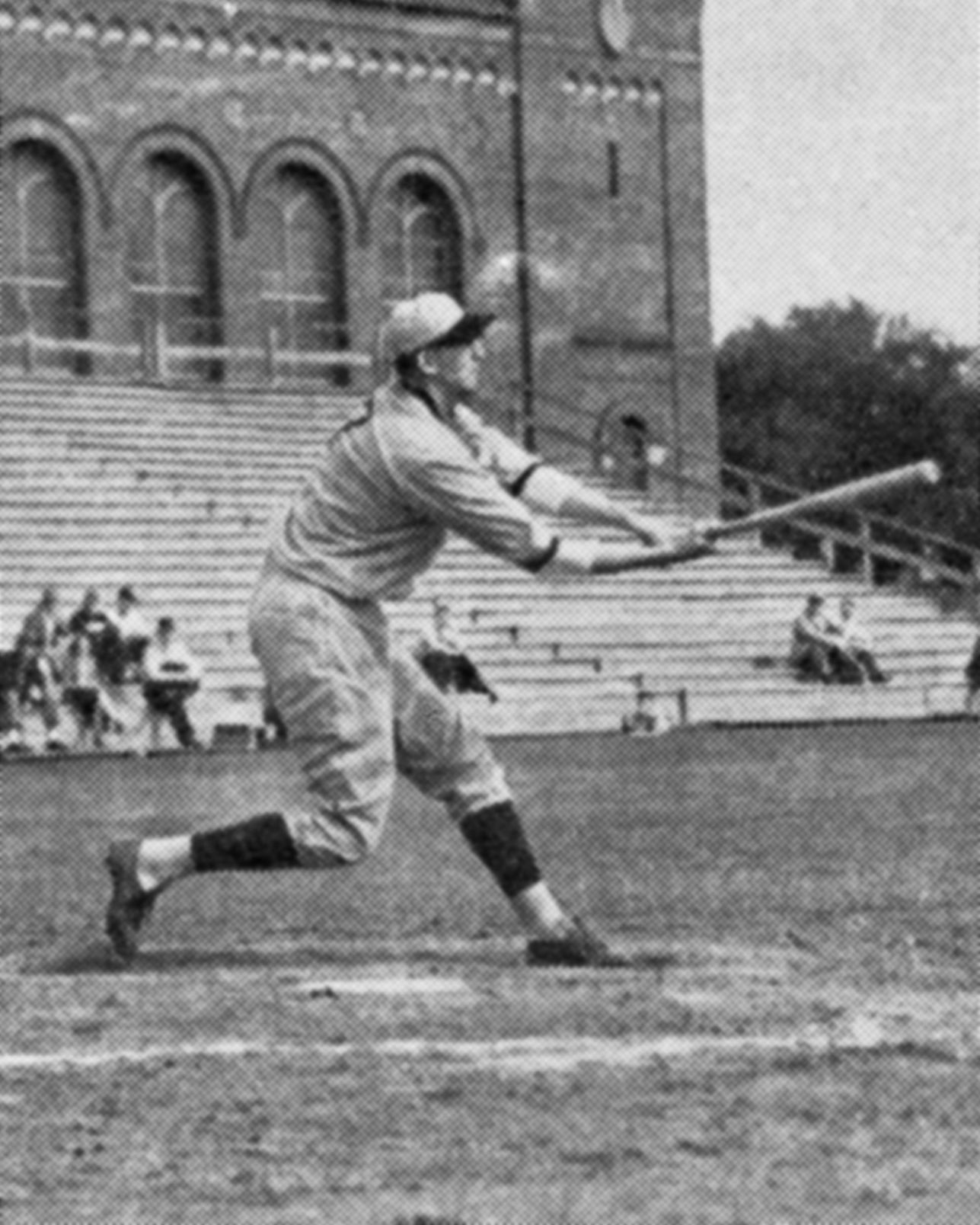
Elmer Gedeon playing baseball for the Michigan Wolverines. Gedeon’s baseball career reached its high point in 1939 with a late-season call-up to the Washington Senators.
Editor’s note: Over a dozen former major league baseball players who served their country in the military are buried at Arlington National Cemetery. In this series, the Pentagram will focus on men who traded in gloves, cleats and bats for helmets, boots and rifles.
In the 1989 motion picture, “Field of Dreams”, former baseball player turned physician Dr. Archibald “Moonlight” Graham told Ray Kinsella: “If I’d only gotten to be a doctor for five minutes now that would have been a tragedy.”
The same could be said for Elmer Gedeon. If the three-sport star from the University of Michigan had only gotten to be a Soldier for five minutes, that would have been a tragedy.
For five September afternoons in 1939, Gedeon lived every American boy’s dream. The final Major League Baseball regular season of the 1930s was coming to an end. With the guns of a second world war echoing in the ears of a neutral United States, The Washington Senators’ Gedeon played in five American League games at Washington D.C.’s Griffith Stadium.
In his MLB finale on Saturday, Sept. 23, Gedeon faced fellow center fielder Joe DiMaggio and the New York Yankees. Gedeon went hitless in two at bats while drawing a walk and striking out once that afternoon, and he would finish with a .200 batting average while the German Wehrmacht and Luftwaffe conquered and bombed Poland.
Following a return to the minor leagues, Gedeon’s destiny sent him to the U.S. Army Air Corps as a pilot. He is the only known Major League Baseball player who died in action during World War II to be buried in Arlington National Cemetery. A B-26 bomber pilot, Gedeon was shot down over France and killed on April 20, 1944. That day, Gedeon’s former team, the Washington Senators, blanked the Philadelphia Athletics, 5-0 in D.C.
Roughly 4 1/2 miles separate the site where Griffith Stadium once stood and Arlington National Cemetery. In Section 34 close to the grave of Gen. John Pershing, Gedeon’s remains rest on a sloping hill next to many of his World War II bombing squad compatriots.
But Gedeon’s athletic fame reached all the way back to the upper Midwest. At the University of Michigan, the 6 foot, 4 inch Gedeon was a wide receiver on the Wolverine football team and according to the University of Michigan Sports Information Department, Gedeon mixed track and baseball his final two years at Ann Arbor. At times, he competed in both sports on the same afternoon. He was an Olympic-caliber hurdler and held several track world records.
His most productive MLB game came Sept. 19 against the Cleveland Indians. Playing center field, Gedeon knocked out three hits in four at bats against Tribe pitching. He was relegated to a Senator farmhand in 1940 and by 1941 was appointed to the U.S. Army Air Corps. He trained with the 21st Bomb Group at MacDill Field in Tampa, Florida.
Many major league baseball careers were interrupted by war. More than 500 pro baseball players, including stars like Stan Musial, Ted Williams and Bob Feller, were drafted for military service. While Stan the Man, the Splendid Splinter and Rapid Robert made consistent impacts on big league diamonds, Gedeon made a heroic impact before he ever participated in a combat mission.
In August 1942, Gedeon was on board a B-25 bomber which crashed in North Carolina. Despite broken ribs and burns, he escaped the wreckage and went back inside the burning plane to rescue crew members. The crew members died, but Gedeon was convinced he had his lone incident of the war.
On his 13th mission, Capt. Gedeon took part in a bombing raid to knock out V1 rockets on the European mainland. He never returned to his British air base and was temporarily buried in France. Following the war, Gedeon’s remains were re-interred at Arlington.
The University of Michigan inducted Gedeon into its hall of honor in 1983.
Pentagram Staff Writer Jim Dresbach can be reached at jdresbach@dcmilitary.com.