
This Week in Military History
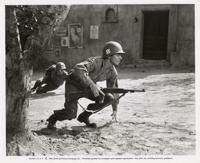
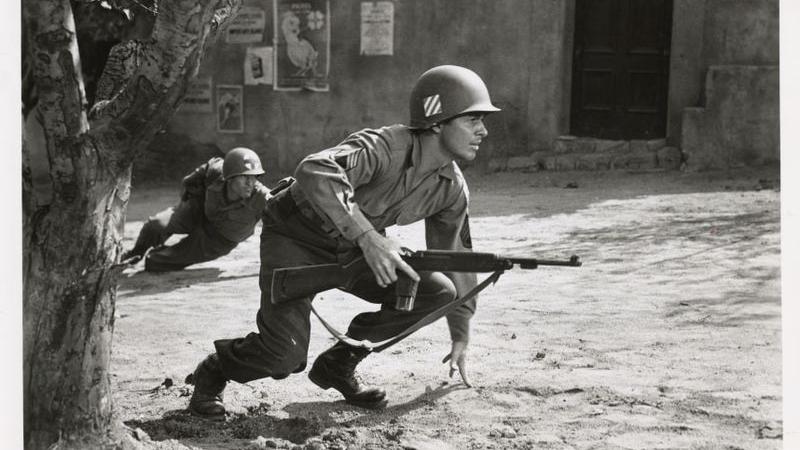
Lt. Audie Murphy served three years of active duty, beginning as a private, rising to the rank of staff sergeant, and finally winning a battlefield commission to second lieutenant. He was wounded three times, fought in nine major campaigns across Europe, and was credited with killing 241 Germans. He won 37 medals and decorations.
Jan. 25
After two months, Gen. Ambrose Burnside is removed as commander of the Army of the Potomac in 1863. Burnside assumed command of the Army after President Abraham Lincoln removed Gen. George B. McClellan from command in November 1862. Lincoln had a difficult relationship with McClellan, who built the Army admirably but was a sluggish and overly cautious field commander. Lincoln wanted an attack on the Confederate Army of Northern Virginia, which was commanded by Robert E. Lee. Burnside drafted a plan to move south toward Richmond. The plan was sound, but delays in its execution alerted Lee to the danger. Lee headed Burnside off at Fredericksburg, Virginia, on Dec. 13. Burnside attacked repeatedly against entrenched Confederates along Marye’s Heights above Fredericksburg with tragic results. More than 13,000 Yankees fell; Lee lost just 5,000. Northern morale sunk in the winter of 1862-1863. Lincoln allowed Burnside one more chance. In January, Burnside attempted another campaign against Lee. Four days of rain turned the Union offensive into the ignominious “Mud March,” during which the Yankees floundered on mud roads while the Lee’s men jeered at them from across the Rappahannock River. Lincoln had seen enough–Gen. Joe Hooker took over command of the Army.
Jan. 26
Army Lt. Audie Murphy, is wounded in France in 1945. Born the son of Texas sharecroppers on June 20, 1924, Murphy served three years of active duty, beginning as a private, rising to the rank of staff sergeant, and finally winning a battlefield commission to second lieutenant. He was wounded three times, fought in nine major campaigns across Europe, and was credited with killing 241 Germans. He won 37 medals and decorations, including the Distinguished Service Cross, the Silver Star (with oak leaf cluster), the Legion of Merit, and the Croix de Guerre (with palm). The battle that won Murphy the Medal of Honor, and which ended his active duty, occurred during the last stages of the Allied victory over the Germans in France. Murphy acted as cover for infantrymen during a last desperate German tank attack. Climbing atop an abandoned U.S. tank destroyer, he took control of its .50-caliber machine gun and killed 50 Germans, stopping the advance but suffering a leg wound in the process. Upon returning to the States, Murphy was invited to Hollywood by Jimmy Cagney, who saw the war hero’s picture on the cover of Life magazine. By 1950, Murphy won an acting contract with Universal Pictures. In his most famous role, he played himself in the monumentally successful “To Hell and Back.” Perhaps as interesting as his film career was his public admission that he suffered severe depression from post-traumatic stress syndrome, also called battle fatigue, and became addicted to sleeping pills as a result. This had long been a taboo subject for veterans. Murphy died in a plane crash while on a business trip in 1971. He was 46.
Jan. 27
Henry Knox’s “noble train of artillery” arrives in Cambridge, Massachusetts, in 1776. The Knox Expedition, was an expedition led by Continental Army Col. Henry Knox to transport heavy weaponry that had been captured at Fort Ticonderoga to the Continental Army camps outside Boston during the winter of 1775–1776. Knox went to Ticonderoga in November 1775, and over the course of three winter months, moved 60 tons of cannons and other armaments by boat, horse and ox-drawn sledges, and manpower, along poor-quality roads, across two semi-frozen rivers, and through the forests and swamps of the lightly inhabited Berkshires to the Boston area. Historian Victor Brooks has called Knox’s exploit “one of the most stupendous feats of logistics” of the entire American War of Independence. The route by which Knox moved the weaponry is now known as the Henry Knox Trail, and the states of New York and Massachusetts have erected markers along the route.
Jan. 28
American forces are recalled from Mexico after nearly 11 months of fruitless searching for Mexican revolutionary Pancho Villa, who had lead a bloody raid against Columbus, New Mexico, 1917. In 1914, following the resignation of Mexican leader Victoriano Huerta, Pancho Villa and his former revolutionary ally Venustiano Carranza battled each other in a struggle for succession. By the end of 1915, Villa had been driven north into the mountains, and the U.S. government recognized Carranza as the president of Mexico. In January 1916, to protest President Woodrow Wilson’s support for Carranza, Villa executed 16 U.S. citizens at Santa Isabel in northern Mexico. Then, on March 9, 1916, Villa led a band of several hundred guerrillas across the border and raided the town of Columbus, killing 17 Americans. U.S. troops pursued the Mexicans, killing 50 on U.S. soil and 70 more in Mexico. On March 15, under orders from Wilson, U.S. Brig. Gen. John J. Pershing launched a punitive expedition into Mexico to capture Villa dead or alive. For the next 11 months, Pershing, like Carranza, failed to capture the elusive revolutionary and Mexican resentment over the U.S. intrusion into their territory led to a diplomatic crisis. On June 21, the crisis escalated into violence when Mexican government troops attacked Pershing’s forces at Carrizal, Mexico, leaving 17 Americans killed or wounded, and 38 Mexicans dead. In late January 1917, having failed in their mission to capture Villa and under pressure from the Mexican government, the Americans were ordered home. Villa continued his guerrilla activities in northern Mexico until Adolfo de la Huerta took power over the government and drafted a reformist constitution. Villa entered into an amicable agreement with Huerta and agreed to retire from politics. In 1920, the government pardoned Villa, but three years later he was assassinated at Parral.
Jan. 29
Beginning of the second day battle of Rennell Island after which U.S. transports reached Guadalcanal 1943. By Jan. 23, U.S. aerial reconnaissance had reported a large number of Japanese transports, freighters and destroyers at Rabaul and Buin and carriers and battleships milling around Ontong Java, North of Guadalcanal. These were preparations for the final Japanese evacuation of Guadalcanal. Halsey, however, interpreted this activity as preparations for another major Japanese reinforcement effort. In an attempt to lure the Japanese into another naval battle Halsey sent up four fully loaded transports along with strong covering forces, from Efate and Numea, to reinforce the U.S. garrison on Guadalcanal. Among the covering force were six U.S. cruisers including the USS Chicago, the only heavy cruiser to survive the battle of Savo Island, five and one-half months earlier. In the twilight of Jan. 29, at 7:45 p.m., 50 miles north of Rennell Island, Japanese torpedo laden Bettys from Munda successfully attacked the supporting group and the Chicago was struck and went dead in the water. Placed under tow she was heading slowly SE on the afternoon of the 30th when nine Bettys once again caught up with her a few miles east of Rennell Island. At 4 p.m. four torpedoes struck home into Chicago’s already damaged starboard side. She sank in 20 minutes. This Battle of Rennell Island was the last of seven naval battles in the Guadalcanal Campaign.
Jan. 30
USS Commodore Perry, Lt. Cmdr. Charles W. Flusser, on a joint expedition with Army troops, landed at Hertford, North Carolina, and destroyed two bridges over the Perquimans River. As a result of the successful mission, Flusser reported, “There are now no bridges remaining on the Perquimans, so that the goods sent from Norfolk to the enemy on the south side of the Chowan (by whom they are conveyed to Richmond) have to be passed over a ford, and the roads leading from that ford can be guarded by the troops at Winfield.” Three days later (Feb. 2), Perry anchored at the mouth of the Yeopim River; two boats were sent into the river and succeeded in capturing three Confederate small boats. Two of the captures contained cargoes including salt. The constant harassment and interruption of supply lines through the Union Navy’s control of the waterways hurt the Confederacy sorely.
Jan. 31
American landings begin on the islands of Kwajalein Atoll in 1944. Adm. Raymond Spruance is in overall command and Gen. Holland Smith commands the various landing forces. Elements of U.S. 4th Marine Division (Smith) land on Roi, Namur and nearby islets. Task Force 53 (Adm. Richard Connolly) provides transport and naval support, including battleships, and escort carriers. The landing on Roi makes rapid progress. On Namur there is heavy Japanese resistance. Meanwhile, there are also landings on Majuro Atoll by the U.S. 27th Infantry Regiment. Adm. Hill’s task force provides naval support. The Majuro Atoll is captured quickly and is immediately prepared to become a base for American forces. Also, the carriers of Task Force 58 (Adm. Marc Mitscher) continue attacks on Eniwetok and Maleolap.