
Who are the CASAs? What do they do?
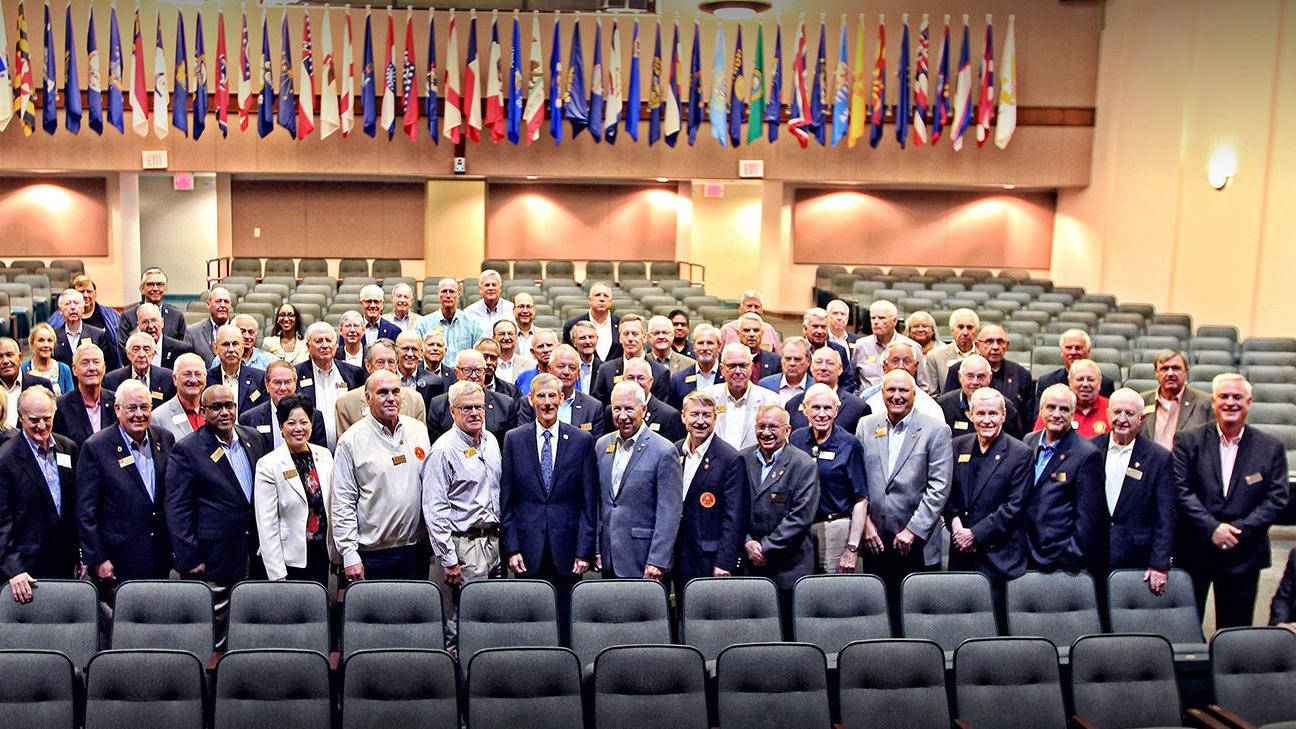
Civilian aides of the secretary of the Army pose for a group photo.
Editor’s Note: This is the first of a five part series on civilian aides to the secretary of the Army. The Pentagram will publish a new story every week on CASA members in the National Capital Region.
The Army has a story to tell, as do all institutions. The question: How does the Army get its story out to its citizens, students, mothers, fathers, sons and daughters, workers, and even local politicians? How do high-ranking military officials get connected to everyday people?
Institutions take different approaches to getting their message to the public for consumption. The Army learned long ago that if it wanted to touch the lives of everyday people, it had to do something it hadn’t done before. They needed people to reach people, and not just in a superficial way. The also needed everyday citizens who support service members and their Families, while no one else was paying attention. In 1922, four years after World War I, Secretary of War John W. Weeks, recognizing the contributions of The Military Training Camps Association, an organization that trained civilians who could be called to action if a war broke out, established the first civilian aides to the secretary of war, also known as CASA. It was an offshoot, if you will, of the MTCA.
Members of the MTCA advised the secretary to do so because there was a need for a group that would help to coordinate collaboration between their organization and the War Department. The structure was made up of a chief civilian aide and aides representing each corps area, state, and Washington D.C. During World War II, the Army used them to do confidential work and to identify skilled candidates for service, those who could provide support to Army emergency relief work and to recruit more women to the military.
However, decades since its establishment, the CASA program has changed. For example, there was once a civilian aide chief. That position was terminated sometime after the 1950s. Civilian aide emeritus was added to acknowledge participants service. Secretary of the Army John M. McHugh placed the program under the supervision of the administrative assistant of the secretary of the Army.
Today, the program boasts 110 active CASAs with 25 additional as CASA emeritus. CASAs are now leaders within their local communities who provide advice and support to Army leadership and service members in the U.S. CASAs are also the arm of the secretary of Army. They’re liaisons, reaching down in the community to build bridges and to tell the Army’s story. Their motto: “The Army’s Link to the People.”
CASAs engage the local community, armed with current and relevant information about the military, by giving speeches, engage with community members, and attend Army and community functions.
For example, if a service member dies, the local CASA will often visit the Family on behalf of the secretary of the Army to provide his or her condolences, said Angela Ritz, director of CASA.
According to Ritz, originally it was preferred that CASA members live near military installations, which are usually in rural areas, to provide help. However, as of recent, she said, they have been recruiting people who live in and around cities.
CASAs are sometimes citizens and sometimes military veterans who love the military and want to serve in a different capacity. They’re hired as unpaid government employees, a requirement that has not changed, and are akin to a three-star general.
To be considered for the position, Ritz said, a person “cannot be a federal employee or an elected or appointed official if a conflict of interest exists.”
“You can’t be on the San Antonio city council and be the CASA for San Antonio,” said Ritz as an example. “ You can’t serve two supervisors or leaders.”
CASAs fundamentally work for the secretary of the Army and should support official positions of the Department of the Army.
Being a CASA is a fairly exclusive position. It is estimated that fewer than 500 individuals have served as a CASA. CASAs typically only fill a position when a vacancy occurs, however, at times the secretary may choose to add a position in an area which needs additional coverage or he may choose to appoint someone and create a position.
For example, Ritz said “someone recommended Army veteran Joe DePinto, a West Point graduate and CEO of 7-Eleven, who is a huge supporter of the military service members as a CASA. Although CASA had no opening in the Dallas area where DePinto resides. The Pentagram approached him and he was interested. DePinto was discussed with the current CASA for the Dallas area and he was thrilled to have him as a partner in the area.”
However, Ritz maintained that the organization can’t accept anyone as a CASA member. She said they’re looking for people who are dedicated to their community and love the Army.
To get a picture of the many people who serve within this organization and what they do on a day-to-day basis, the Pentagram has selected some CASA members from the National Capital Region, as far as southern Virginia, to share their stories of how they contribute to telling the military story.
The Pentagram interviewed David Bernd who is a CASA member and a former CEO of Sentara Healthcare. Bernd, as readers will learn, is interested in making sure Soldiers who are transitioning out of the military can compete with civilians in the job market.
The newspaper also talked to Karen Conlin, a CASA in Middleburg, Virginia. She tells the military story by connecting with veterans, schools and colleges. She speaks at schools and colleges by informing students about military history. She also connects students with leaders in their profession. She wants to inspire the next generation to be all they can be.
The Pentagram also spoke with Woody Goldberg, a CASA in Washington, D.C., area. Goldberg completes many service projects for military service members. During holidays and beyond him and his wife serve food to the Soldiers who stay on the bases during the holiday seasons. Goldberg, a veteran, is one of those CASA members who can relate to Soldiers and their struggles in the military, which is why he and his wife try to do as much as they can to serve and visit Soldiers when they can.
The Pentagram also talked to Joe DeFrancisco, a CASA member in northern Virginia. DeFrancisco is a former base commander who’s been working in the defense industry for nearly two decades. DeFrancisco talks to senior industry officials about the military and what is actually happening there.
Pentagram Staff Writer Delonte Harrod can be reached at dharrod@dcmilitary.com