


Editor’s Note: This story originally ran July 14.
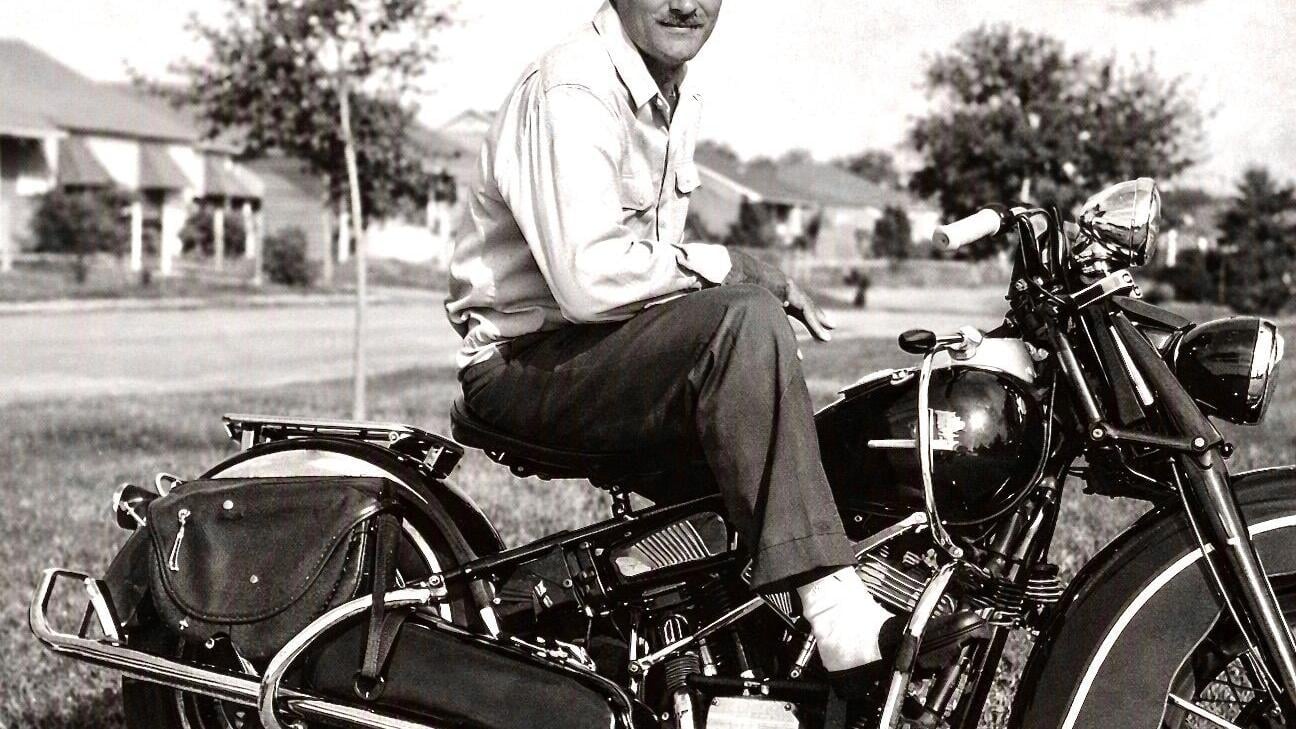
The 21-year-old Airman had a hard time sleeping that night. Two in the morning Sept. 19, 2015, he hadn’t found a buddy to ride with him, so Air Force Senior Airman Kyle Cook set out on his motorcycle—on an unfamiliar Hampton, Va., road in the dark—alone.
Rounding a bend, he saw arrows on the pavement. Cook anticipated an open intersection ahead and changed lanes. Trees blocked his view. There was no time to react.
His Buell 1125R struck the curb in front of him at full-speed. The crash launched Cook off his bike, flying more than two feet off the ground, and smashed the experienced rider into a tree.
The tree broke his fall, fractured his left leg in three places—and severed the right.
“It took all the skin off my leg, and then the leg with it,” he said.
His helmet struck the pavement below.
“I just [laid] there, kinda confused,” Cook explained. “I thought I had just [fallen] off my bike; I didn’t even know I had hit the tree.”
He laid there for a second. He tried to get up. He couldn’t move.
“I thought I was paralyzed. I looked at my right leg and lifted it up. It felt real light, like a fluid-filled sack. Nothing,” he said. “That time I knew it was gone.”
With his hands, Cook dragged himself more than 30 feet to the middle of the road where he hoped a passerby would see him and help. He lifted his left leg and what was remaining of the right as high as he could, to ward off shock.
How did he know what to do?
“Kinda like instinct, I guess,” Cook said. He described his “knowing” as the combination of adrenaline and the fight to stay alive.
With his legs in the air, he kept himself alive.
A driver saw Cook and stopped. Cook repeatedly coaxed the man, stunned by the accident scene, to call for help.
Minutes later, a police officer arrived and placed a tourniquet on Cook to control bleeding. Rescuers found more than two liters of blood at the scene.
The paramedics arrived and secured ice from a local restaurant to preserve his amputated leg, and rushed him to the hospital.
The emergency medical technicians tried to keep him conscious. They loaded the young man in an ambulance. “That’s the last thing I remembered,” Cook said.
Transcripts of the 911-call were titled, ‘Three a.m. fatal accident,’ he explained. “I don’t know if I died or what.”
Transported to Riverside Medical Center in Newport News, Va., surgeons placed rods in his remaining leg, cleaned him up, and briefly placed him on a ventilator.
He woke up with his parents in the room. They drove the nine-hour trip from Franklin, Pa. to be by his side.
Cook was transferred to the trauma ward at Walter Reed National Military Medical Center (WRNMMC) for the first of an estimated 20 surgeries to date. He expects more—a bone grafting for his left leg.
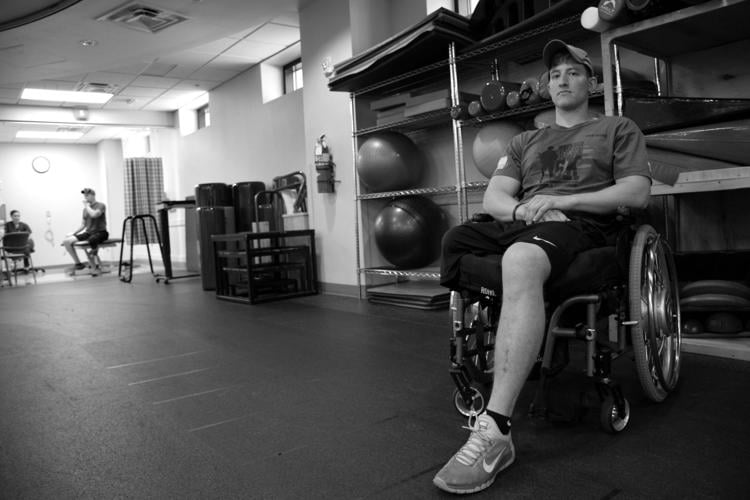
He remains on the WRNMMC-medical campus, recovering in Tranquility Hall, Bldg. 62, with his mom, Diana. She helps him with day-to-day tasks.
“When I first got here [Bldg.62], I could hardly even move. I had an electronic wheelchair with a joystick and it was hard for me to just transfer to [it]; I couldn’t move around at all,” Cook said. Diana brought food to him in bed, and set out his clothes.
“There’s no way I would’ve been able to do it without her,” he added. “Mentally, it’s kind of a huge thing, not just physical. I have someone here. I’m not alone.”
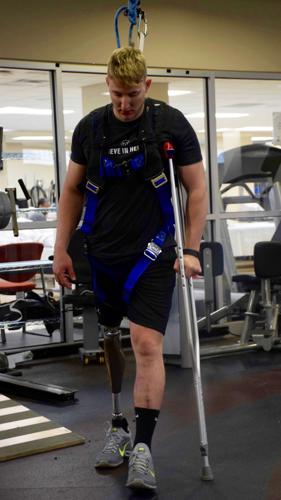
Nine months later, Cook plans to complete this portion of his recovery at WRNMMC. He continues to progress with his prosthetic leg: first using crutches, and today without.
“It just feels good to stand,” he said, now a 23-year-old Air Force staff sergeant.
Will he ever ride again?
“Hell, yeah. I want to get back on a bike,” he said. Maybe [I’ll] switch from a sport bike to a cruiser-style instead. “They make a special [prosthetic] leg for it.”
His advice to other service members who enjoy riding motorcycles: know where you’re riding; don’t travel on any roads you don’t know; and always be weary of obstacles ahead.
“Most accidents occur because of failure to interpret the turn,” Cook said.
Cook explained the accident has increased his faith, he prays more; he has more gratitude.
“I’m really thankful that I had all the schools and churches praying for me,” he said. He believes those prayers played a big factor in his recovery.
Cook said he knows people are still praying for him. He’s grateful for those prayers.
Cook hopes to meet the passerby that helped him that fateful morning. “So I can thank him,” he said.