
Protect, Take Care of Your Eyes Every Day
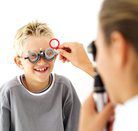
Now is also a good time for parents to get their children’s eyes checked as they prepare to send them back to school, according to officials from the American Academy of Ophthalmologists. - Credit: Courtesy photo
July was Eye Injury Prevention Month, and August is Children’s Eye Health and Safety Month as well as Cataract Awareness Month, but health-care providers at Walter Reed National Military Medical Center (WRNMMC) encourage you to take care of yours and your child’s eyes every day of the year.
“Just as strapping on a seatbelt every time you drive a car could save your life, reaching for a pair of sunglasses or protective eyewear whenever you engage in occupational or recreational activities that may present unexpected foreign bodies, might just save your eyes,” says Dr. Joseph Pasternak, staff physician in Ophthalmology Service, Department of Surgery, at WRNMMC.
Now, just as parents are making sure their children’s immunizations are up-to-date to go back to school, is a good time for parents to get their children’s eyes checked, according to officials from the American Academy of Ophthalmology (AAO). They explain poor vision can hinder a child’s progress in school and other activities.
One in 20 preschool-aged children have a vision problem that could result in permanent vision loss if left untreated, and many of these problems aren’t caught until children are at grade school level, according to the AAO. They add an estimated 80 percent of preschoolers do not receive vision screenings, and nearly 25 percent of school-aged children have vision problems.
Parents are encouraged to set up eye exams for their children annually. Parents should also be aware of signs that may indicate their child may have a vision problem, such as wandering or crossed eyes, a family history of childhood vision problems, difficulty in reading or viewing distant objects, and squinting or turning the head in an unusual manner while watching television or using a visual electronic device such as a computer.
Children will also be enrolling in athletic programs at this time of year, and poor vision could affect athletic performance as well as result in injury, according to the AAO. It’s important to make sure your child wears protective eyewear while participating in sports or recreational activities to avoid injury, Pasternak said. In addition, toys for children should also be age-appropriate, and toys with sharp or protruding parts should be avoided.
Sunglasses are also recommended to protect eyes from the sun’s ultraviolet (UV) rays which can damage eyes and harm vision. In addition, children should wash their hands regularly and avoid touching or rubbing their eyes to prevent the spread of conjunctivitis, or pink eye, which causes numerous missed school days each year, according to the AAO.
Children aren’t the only ones who need to protect their eyes.
“There is absolutely no question that wearing eye protection is the single most effective way to prevent both occupational and recreational ocular injury,” Pasternak continued. “The majority of injuries result from small particles or objects striking or abrading the eye. Examples include foreign bodies sustained while working in the garage or shop, under a car, gardening, doing yard work, housework, or riding a bicycle or in a convertible.
“During any activity that might have even the slightest chance of exposure to a foreign body or accidental trauma, the default should always be to wear eye protection sunglasses or protective eyewear,” Pasternak added.
He explained exposure to UV rays is not only a factor in causing cataract progression, but also in worsening of macular degeneration. Wearing UV protective lenses can reduce ultraviolet exposure, he added.
Pasternak explained that a cataract is “any opacification of the natural crystalline lens of the eye,” resulting in blurred vision.
“Cataracts come in a variety of shapes, densities and locations within the lens, and are quite variable in how they present and how severely they affect the vision,” Pasternak continued. He added cataracts can be caused by “aging, genetics and UV exposure. They can also be congenital, caused by trauma, medications, diabetes and occupational exposure.”
Eating foods high in vitamin E, such as almonds, spinach, hazelnuts, broccoli, kale, Swiss chard and avocados, can help reduce a person’s risk for developing cataracts, according to the American Optometric Association.
Pasternak recommends people be aware of blurred vision, haloes around lights, and loss of contrast when in low lighting situations as signs for eye disease or damage.
“An annual eye exam with an ophthalmologist is sufficient for most people with minimal visual issues. Your doctor will determine if you should be seen more frequently,” he added.
For more information about eye health and safety, visit www.preventblindness.org or www.aao.org.