
New Policy Bans Electronic Cigarettes in NSAB Buildings

- Credit: Courtesy photo
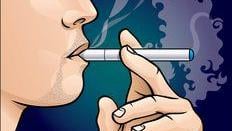
Naval Support Activity Bethesda (NSAB) fire safety officials released a new policy April 24 that prohibits the use of electronic cigarettes, or e-cigs, anywhere on the installation except for in designated smoking areas.
The policy is the first of its kind across Naval District Washington, with other regional military installations expected to take the same course of action, said Naval District Washington Fire and Emergency Services District Fire Chief John Gray. The policy was put in place with full support from installation leadership and tenant commands, Gray said, and applies to everyone visiting, living or working on NSAB.
The change is a result of the heightened fire risk from the battery-operated devices that use a heating element to turn liquid nicotine into vapor. Gray said there has been a nationwide increase in house fires and other incidents caused by electronic cigarettes.
“The problem is because they aren’t regulated by the Food and Drug Administration, there’s no way to tell if the product is safe,” Gray said. “Fire departments across the nation are starting to experience some problems with the devices themselves.”
Reports of electronic cigarettes exploding or starting a fire when left to charge for an extended period of time have become more common, and while there have been no injuries or incidents on NSAB, Gray and Fire Protection Specialist Dan Hunt ask staff, patients and family members on the installation to adhere to the new policy.
“We’re not saying they can’t use the product,” Gray said. “We’re just not authorizing use in any building on campus.”
Gray and Hunt have noticed an influx of electronic cigarette use in NSAB dormitories and at Walter Reed National Military Medical Center, where residents, patients and staff are using them as an alternative to lit tobacco products. In the last ten months, NSAB fire inspectors have seen a ten-fold increase in electronic cigarette use on the installation. Hunt said this could be due to a regulation earlier this year that changed the locations of some of the designated smoking areas onboard NSAB.
“Folks had to walk longer distances or go places they didn’t really want to go to smoke a cigarette,” Hunt said. “So they were opting to utilize the e-cigarette.”
But without regulation, Gray and Hunt fear the marketing of electronic cigarette products is not telling the whole story.
“These products have not been tested by a government agency; the consumer is becoming the tester,” Gray said.
In addition to the fire safety issues presented by electronic cigarettes, Gray said they also pose a health risk.
“People are selling it as a safe alternative to lit tobacco products,” Gray said. “Obviously there’s no smoke so people think they aren’t going to harm others with second-hand smoke, but the vapor generated by an electronic cigarette also contains chemical by-products, much like second-hand smoke.”
Health officials have also warned electronic cigarette users about the toxicity of liquid nicotine. A March 2014 article in The New York Times suggested just a teaspoon of diluted electronic cigarette liquid could kill a small child.
“This is the kind of stuff that keeps me up at night because it’s only going to take one incident,” Gray said. “This is a life-safety issue. We have a high-risk population, some of whom cannot self-extricate in the event of a fire.”
“It’s our job to try to mitigate that risk for everyone,” Hunt said.