
Joint Base partners with public works and the community to improve the environment
- Credit: U.S. NAVY PHOTOS BY LT. CMDR. JIM REMINGTON
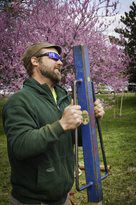
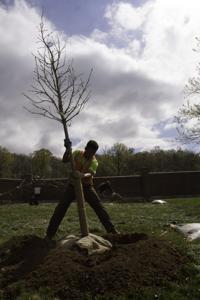
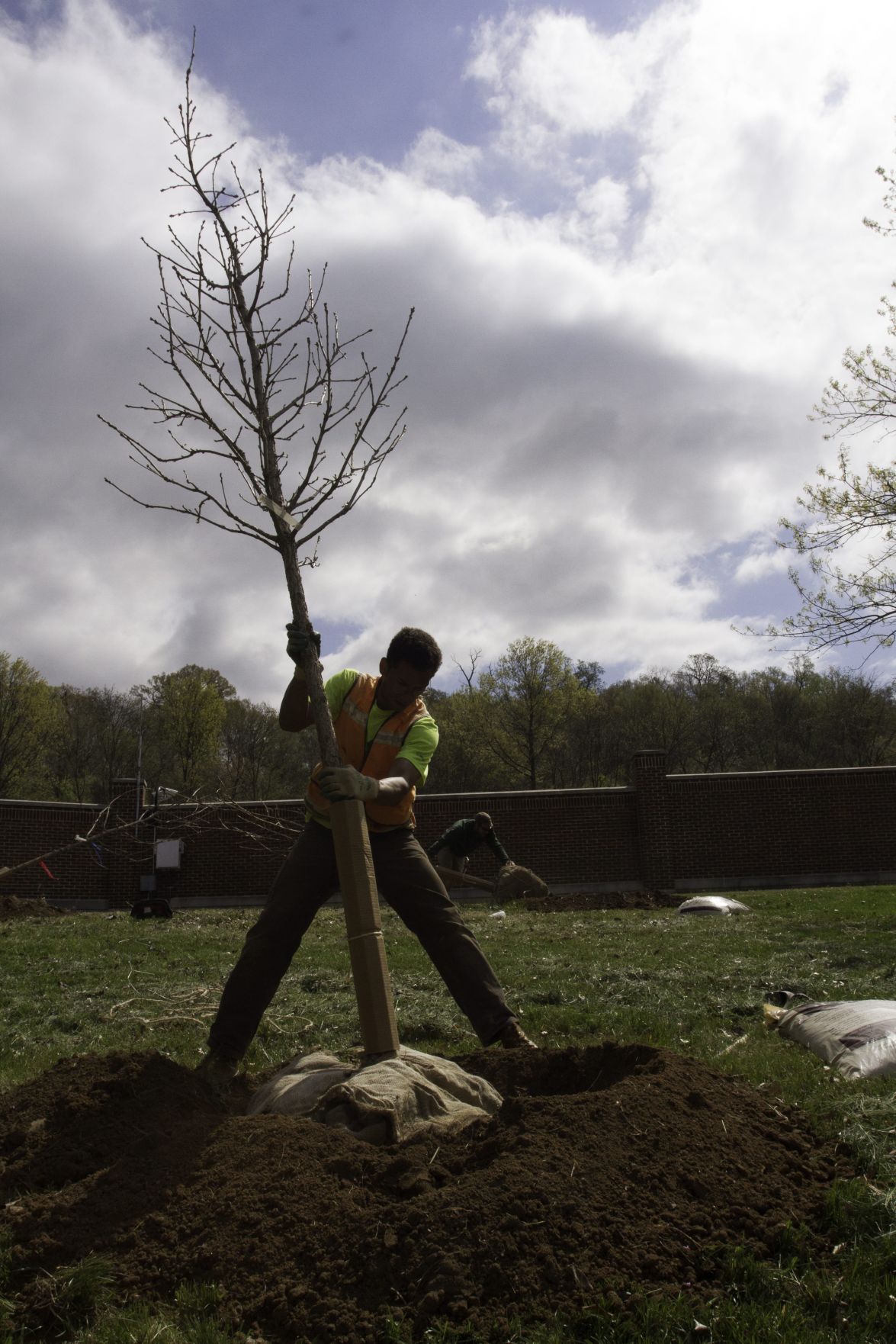
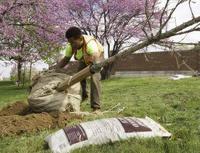
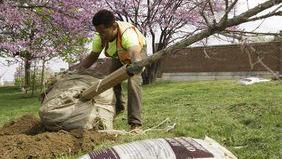
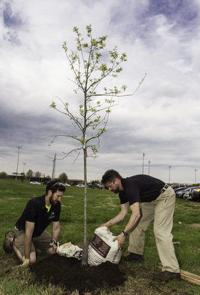
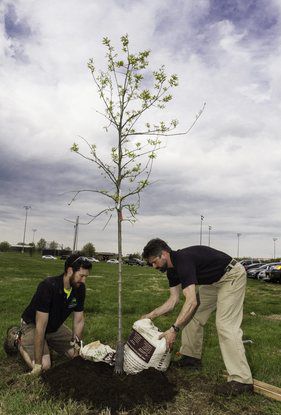
Representatives of Joint Base Anacostia-Bolling (JBAB), its Public Works department and Casey Trees, a community based environmental organization, completed work that helps improve the environment.
The work, begun on Earth Day 2014 (April 22), culminated this week with the planting of the final tree, of 100 trees, on the military installation.
The completed project helps reduce the carbon footprint in the nation’s capital and demonstrates the military’s continuing support for environmental stewardship and being good neighbors to communities near military installations.
The District of Columbia (D.C.), is considered the birthplace of arboriculture, due to the tens of thousands of trees planted in it during the 1800’s and with its lush tree canopy of extensive green spaces and tree lined boulevards, still boasting more green space per capita than any other city in the United States. It has earned the nickname, the “City of Trees.”
Yet, a land analysis survey of the District, conducted by Casey Trees, a non-profit organization dedicated to reversing the decline of Washington’s tree canopy and its negative impact on the environment, determined that the District’s tree canopy declined from approximately 50 percent in 1950 to just over 35 percent in 2011.
Committed to restoring, enhancing and protecting the tree canopy of the nation’s capital for the long term, Casey Trees conducts extensive community outreach efforts. During one of those efforts, an alliance between Casey Trees, JBAB and the neighboring community began.
JBAB community service volunteers were active in several projects and efforts to help improve the quality of life in D.C.’s Wards 7 and 8, including environmental projects in Oxon Run Park and Fort Greble Park, both in the southeastern portion of the District. In Oxon Run Park, JBAB volunteers worked alongside Casey Trees personnel and their volunteers, further solidifying the new relationship.
JBAB leaders and community relations personnel engaged with community leaders, members and organizations to establish the interest level and subsequently, gain support for adding more trees to southeastern D.C. The feedback from each stakeholder was very positive.
Military, non-profit and community collaboration, yields positive results
In September 2012, following preliminary and conceptual discussions, JBAB formally partnered with Casey Trees to prepare a detailed plan and other documents.
JBAB’s Public Works department, a component of Naval Facilities Engineering Command (NAVFAC)-Washington and JBAB’s Staff Judge Advocate (legal counsel), a component of Region Legal Service Office Naval District Washington played vital planning and analysis roles, helping the project move ahead.
Their collaboration resulted in a modification of the preliminary intent to plant 150 trees at JBAB being reduced to the 100 trees that were ultimately planted, based in part on future land use plans, which will be published in JBAB’s revised master plan later this year.
At the 2014 Earth Day observance and the first day of tree planting at JBAB, Casey Trees’ Director of Tree Planting, Jim Woodworth, affirmed the environmentally sound forward thinking and planting location decisions of the interdisciplinary JBAB team, stating, “Trees in this type of environment can provide many benefits, from the environmental and biophysical, to the social and psychological,”
The project plan made its way from JBAB to the Office of the Secretary of the Navy, where it enthusiastically gained final approval in November 2013. Like the other military branches, the Navy has long supported and implemented efforts that help lower the existing carbon footprint.
“Reducing energy costs to heat and cool and the mitigation of storm water are all obvious benefits to the Department of Defense, which is facing budget cuts and sequester, but still has environmental and energy stewardship obligations to be met,” Woodworth, said.
Woodworth continued, “Trees can also provide a sense of dignity, honor, structure and order to a place, by complementing its building architecture and design. The stress relief and the sense of calm that trees can provide, to servicemembers, civilian workers and their families, working, visiting or residing on the base, is real, but may seem more intangible at first.”
To help the District maintain green, tree friendly development and similar pursuits and best control costs and tree health, the non-profit Casey Trees grows its own trees on a farm in Berryville, Va., a short drive from the city.
It takes years to grow a tree large enough to be properly transplanted from the farm to its intended planting location. “Some of the trees planted at JBAB weigh 300 to 400 pounds,” explained Woodworth.
High-tech trees
Each tree comes with a barcoded label, Woodworth stated. “That barcode plays an important role in the tree’s planting,” he said.
“This is not a haphazard operation. There is a detailed plan, which we coordinated with JBAB’s public works personnel, our arborists and other experts, to ensure that we plant a proper mix of tree types,” Woodworth said.
Casey Tree personnel had to wait for the yearly spring planting season before work could be started, in order to ensure the health and survival of the trees, he said.
“In our planning, we take into account tree growth potential and the locations they are being planted in, to take advantage of their environmental benefits, such as the natural cooling that shade will provide, their absorption of carbon and the release of oxygen, while helping to soak up standing water during rainy season in areas that might otherwise become flooded,” Woodworth continued.
Geographic Information Systems (GIS) mapping, which includes buried utility lines and other data, is used to identify and plan the best location to plant each tree.
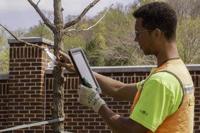
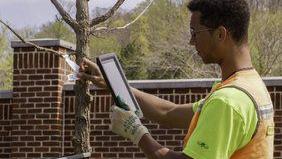
Once the tree is placed in the ground, the tree’s barcode is scanned at the planting site and its location is mapped, using the precision provided by the Global Positioning System (GPS).
The GPS data is then uploaded into the GIS to update JBAB’s maps, ensuring they remain valuable tools for use in maintenance and other public works related planning efforts.
During the planning and review phases, four areas at JBAB were identified as the best for planting the trees.
“One upland parcel will provide tree cover for wildlife, buffering them from Interstate 295, which runs along the perimeter of the base. Other locations focus on shading parking areas, pedestrian walkways and recreation facilities. We are putting trees where people on base will most directly benefit,” Woodworth stated.
“These trees will soak up storm water, buffer winds off the riverfront, and help counter the heat island effect, inevitable in place that had nearly 50% impervious cover,” Woodworth continued.
As if the planting of the last tree was planned to serve as a prelude to the beginning of National Public Works Week, and its theme of “Building for Today, Planning for Tomorrow,” Woodworth concluded, “We are pleased to assist Joint Base Anacostia - Bolling with the installation of new trees and we are optimistic about its future tree canopy.”
National Public Works Week begins May 18. Since 1960, its goal has been to raise the public’s awareness about public works issues and public works employees, such as those at JBAB, who are dedicated to improving the quality of life for present and future generations. The planting of 100 trees at JBAB will contribute to improving the quality of life for present and future generations.
Joint Base Anacostia-Bolling Public Affairs Navy Lt. Cmdr. Jim Remington contributed to this story.