
Fourth of July brings safe practices for fireworks
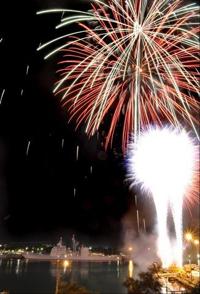
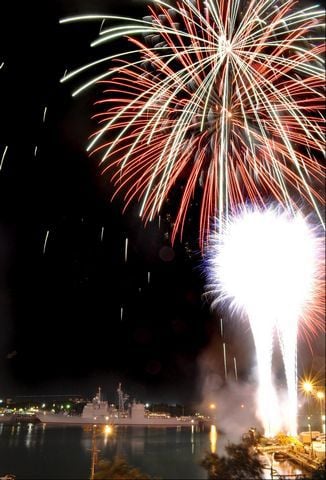
Fireworks are displayed for military families at Pearl Harbor during a celebration last year. In Maryland, Washington, D.C., and Virginia, firecrackers, skyrockets, torpedoes, and other fireworks which explode, travel laterally, rise into the air, or fire projectiles into the air are illegal. Handheld sparklers of less than 20 inches in length are legal in most areas; however, all fireworks are illegal in Maryland’s Prince Georges and Montgomery counties, according to U.S. Fireworks, a national distributor of fireworks for personal use. - Credit: U.S. Navy photo by Petty Officer 1st Class Shawn T
Fireworks are as much a part of America’s annual independence celebration as picnics, parades and Old Glory. Our national anthem specifically mentions bombs bursting in air.
Shortly after sundown on July fourth, Americans by the millions gather in many hundreds of cities and towns across the nation to watch public fireworks displays.
Many people also set off their own fireworks, a tradition that raises safety concerns among some officials. And for good reason. Each year, thousands of Americans are injured by fireworks that malfunction or are not handled properly.
“Read the warnings, rules and instructions. Then, after you read them, follow them to the letter,” warned Dean McKinsey, safety specialist for JBAB.
Fireworks laws vary by state, and, in some cases, by county and city.
In Maryland, Washington, D.C., and Virginia, firecrackers, skyrockets, torpedoes, and other fireworks which explode, travel laterally, rise into the air, or fire projectiles into the air are illegal. Handheld sparklers of less than 20 inches in length are legal in most areas; however, all fireworks are illegal in Maryland’s Prince Georges and Montgomery counties, according to U.S. Fireworks, a national distributor of fireworks for personal use.
Federal regulations restrict the use of certain classes of fireworks.
Nonetheless, 20 percent of injuries involving fireworks of known type were caused by fireworks illegal under Federal law, according to a National Fire Protection Association website.
“M-80s and ‘blockbusters’ are not legal fireworks; they are dangerous, banned explosives,” said McKinsey. “Avoid anything that isn't clearly labeled with the name of the product, the manufacturer's name and instructions for proper use. Never experiment with fireworks or try to make homemade ones.”
The sixth largest public fireworks display in the nation each year is the Independence Day Celebration on the mall is Washington, D.C., according to Fireworks Guide, a publication serving the fireworks industry. The show is held on the fourth of July on the National Mall along Constitution Avenue between 7th and 17th Streets beginning at 9 p.m.
“If you attend a professional display, you don't need to get close.
The best view is from several hundreds yards away,” said McKinsey. “If debris falls nearby, don't touch it.”
If people intend to set off personal displays, McKinsey suggests these safety tips:
Buy fireworks from reliable retailers.
Have a bucket of water or a garden hose handy.
Don't let small children play with fireworks or set them off. Adults should either ignite the fireworks, or supervise older children who are doing it.
Wear eye protection and keep all parts of your body out of the line of fire.
Make sure the audience is out of range of misfired or misdirected rockets and roman candles.
Set off the fireworks on a hard, flat surface away from anything flammable.
Wait several minutes before walking up to a firework that didn't go off. Don't try to relight duds or misfires. Soak them in water.
Avoid storing fireworks for extended periods. If you must store them, keep them in a cool, dry place.
When the show is over, soak the expended fireworks and dispose of them in a trash container.
Leave pets at home. Dogs, in particular, can have their hearing damaged by the explosions.