



EARLEVILLE — True to his name, infant Maverick Simmons has not been one to go along with expectations in the little over nine months since he was born prematurely.
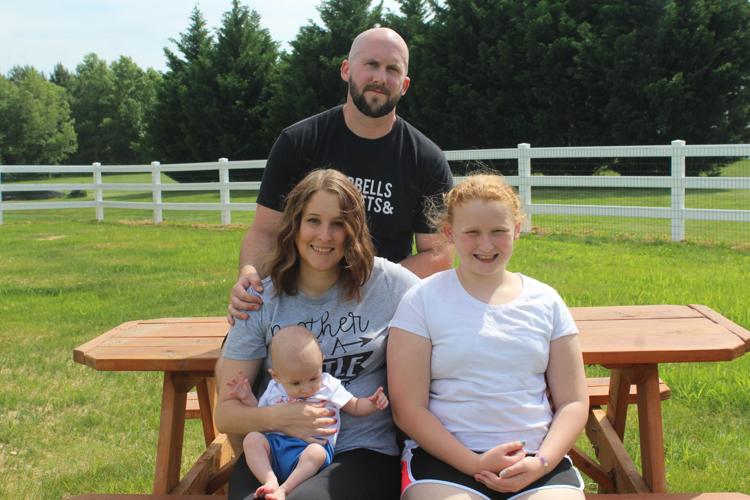
Maverick’s mother, Shane Simmons, was pregnant with triplets — Maverick, Maddux and Vivian — last year. But 15 weeks into the pregnancy, doctors informed Shane and her fiancé, Jason Painter, that Maddux’s gestational sac had ruptured.
“We thought we were going to lose them all within a couple weeks,” she said.
Shane was able to carry the triplets for 10 more weeks, but during that time Maddux’s sac continued to leak and Shane’s uterus became infected. Her body went into shock and doctors had to remove the babies early.
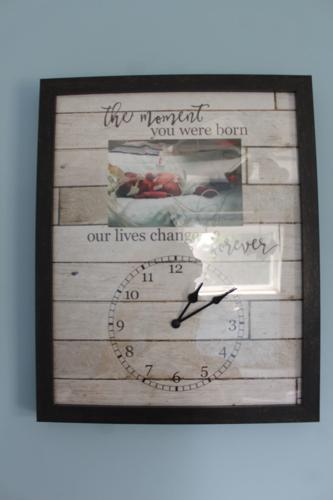
Shane delivered the triplets at Christiana Hospital in Newark, Del., on Sept. 3, 2018 — Labor Day.
At birth, Vivian weighed 1 pound, 4 ounces; Maddux, 1 pound, 11 ounces; and Maverick, 1 pound, 14 ounces.
But the babies, born prematurely at 25 weeks, came into the world with numerous complications that unfortunately led to Maddux and Vivian passing away.
“We lost Maddux within an hour of birth because he didn’t have enough fluid in the gestational sac for his lungs to be able to develop. So when they were trying to help him breathe, their efforts just weren’t working,” Shane recalled. “Vivian, essentially at first, was the best off. She was the smallest, but health-wise she was the best off. She ended up passing two days later from a brain bleed that they couldn’t stop.”
That left the couple looking at Maverick as their miracle.
Defying expectations
“My mom always says ‘You asked for a fighter and you got one.’ If he wants something, he wants something and you’re going to hear about it,” Shane said.
After he was born, Maverick’s stomach contents were leaking due to a hole in his intestines.
“Because children’s intestines are not mature like ours, they can’t just cut out the perforation and put their intestines back together because they’ll just disintegrate. So they have to bring them to the surface and into a colostomy bag,” Shane explained.
Shane and Jason ended up having Maverick transported to the Nemours/Alfred I. duPont Hospital for Children — or “A.I. duPont” — in Wilmington, Del., so he could receive the necessary surgeries to repair the intestinal perforation.
According to Shane, Maverick was only supposed to have a colostomy bag for seven to eight weeks, but he ended up getting Group B streptococcus, or a “strep” infection, twice and had to be on antibiotics for over a month total, during which time he couldn’t have the intestinal reattachment surgery. Eventually, Maverick beat strep and had the reattachment surgery.
“We thought we were free and clear and we’d be home in a week after that,” Shane said, “Then he got a hernia.”
Doctors fixed the hernia and Maverick ended up coming home Dec. 17, 2018, just in time for Christmas after spending 105 days in the neonatal intensive care unit.
Now, Shane said Maverick is doing well aside from a few issues, including a persistent ductus arteriosus — an arterial duct that remained open after he was born.
“Normally when babies are born, that closes within two days,” Shane said. “It’s like a door and it shuts so that the blood can’t recirculate back in and essentially drown you.”
The duct is still open, but Shane said she and Jason decided not to have it closed when Maverick was born because of the risks associated with the surgery and the fact that it wasn’t affecting him clinically.
“Clinically he’s fine,” Shane said. “But if you listen to him, it sounds like a little washing machine.”
By the time Maverick is 1 year old, Shane said they will get the duct fixed if it hasn’t closed on its own. But by that point, doctors can fix the issue through a catheter with a little clip that will be safer than the earlier surgical option, according to Shane.
Maverick still has normal follow-ups with cardiac doctors, his respiratory system is still compromised because he was born prematurely, and a physical therapist and speech specialist work with him.
Shane said the family also has to be especially careful about Maverick getting sick as they discovered recently when a normal cold turned into croup, an infection of the upper airway which makes breathing difficult and is accompanied by a bark-like cough.
“When he gets sick, he gets real sick,” Shane said.
But all things considered, Shane and her family feel very fortunate that Maverick is home and relatively healthy.
“He came home with no oxygen, no feeding tubes, which is really rare for a child born at 25 weeks let alone a multiple,” she said. “We are very blessed in that aspect … I feel like in the grand scheme of things, we’re very lucky especially considering everything.”
A community effort
Shane said she is grateful for the support her family received from loved ones, coworkers and community members throughout their journey.
When they first got to A.I., Shane said a nurse informed them about the Ronald McDonald House, a nonprofit organization that helps families get access to medical treatment for their child while not having to worry about housing, meals and other things that would otherwise be on their mind.
“We went over there and I was just floored by the building, the volunteers, the staff, the accommodations, the donations, the facilities, the food, everything, all of it,” Shane said.
In Maverick’s family’s case, the Ronald McDonald House has a location in Wilmington where they were able to stay while Maverick was getting treatment right across the street. Shane said that close proximity to her newborn baby meant the world to her and Jason.
“Down here [in Earleville], we’re about an hour and a half away from A.I. Dupont, so the commute and the insanity that would have put on my mental state of having to be here when he’s all the way there — and as we saw multiple times his condition could turn in a blink, it did many times — it was just so important for us to be right by his side and they allowed us to do that,” Shane said. “Without them, that wouldn’t have been the case.”
On top of all the other challenges Maverick had to overcome, he also has AB negative blood — the rarest blood type, with only 0.6% of the world having it. Compare that to A positive and O positive blood, which are the two most common blood types with 33% and 35% of the world population having them, respectively, according to Tony Prado, of the Blood Bank of Delmarva.
“I was like ‘Great, not only did I have triplets at 25 weeks and I lost two, but now my kid has the rarest blood type,’” Shane said.
Blood platelets can’t be refrigerated or their clotting factor will be compromised. Therefore, they only have a shelf life of five days, Prado said.
So, the community banded together to make sure Maverick had all the blood he needed for surgeries and continued care.
“We flooded the blood bank with phone calls and people donating,” Shane said. “They literally had two weeks straight of donations just from Maverick’s story.”
Paying it forward
Now that Maverick has gone through eight blood transfusions, Shane said she has gained a new perspective on the need to donate blood regularly.
Jason said that although many people donate blood when there is a widespread and well-publicized disaster, blood donations are needed year-round.
“Most people only come out when there’s a catastrophe, a hurricane, a tornado, when there’s an event … But on an everyday Tuesday, my son’s fighting for his life and you have no idea it’s happening,” he said. “Somebody else’s grandfather is having surgery and you don’t know it’s happening. That is the biggest and most important day of their life and that’s a catastrophe for them. Donate blood regularly, not just when you think it’s important because it’s always important.”
Since Maverick has come home, Prado said the family has stayed involved with the Blood Bank of Delmarva, including helping out with their summer blood drive, which runs May 20 to Sept. 11.
According to Prado, summer is one of the most important times of the year to donate blood as many donors are away on vacation.
“In the summertime, school’s ending … What happens when school ends? We lose our college and high school blood drives,” he said. “That’s a quarter of our blood supply during the school year, 20-25%. That’s a big gap that we have to make up for, so every summer we have to step up our game to replace that volume of blood lost so to speak.”
To participate in the summer blood drive, people can book an appointment at https://delmarvablood.org/summer-blood-drive/. By donating during the drive, donors will be automatically entered to win several gift cards, prizes and giveaways.
With this year’s campaign theme being #GiveYourBestLife, the Blood Bank of Delmarva is urging people to live their best lives by helping others live theirs.
“After donating blood, you will have a general feeling of contentment … You just feel good about giving back to your community,” Prado said.
In addition to raising awareness for blood donation, Shane and her family have also helped collect money and needed items for the Ronald McDonald House.
The 12 Minute Tag & Title store in Elkton, owned by Jason’s family, is set up as a donation center where people can drop off toys, stuffed animals, sheets, pillows, clothing, hygiene items and other materials for families. The store is also collecting can tabs to turn in for money that will be donated to the Ronald McDonald House of Delaware.
People can donate directly to the Ronald McDonald House at https://www.rmhc.org/.
Not alone
Through this journey, Shane said she realized how many families share similar stories to hers and how much support there is out there for families who need it.
Even fictional television shows like, “This Is Us,” which Shane watched with her daughter Hailey during these trying times, provided solace that they were not alone.
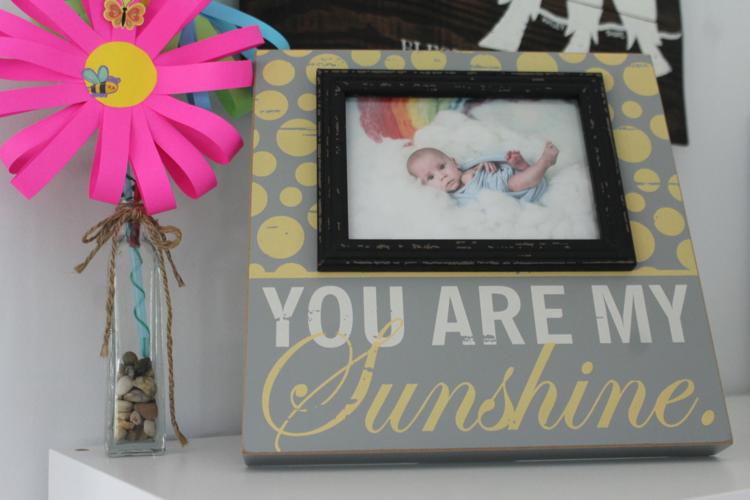
“We went through everything we went through and then ‘This is Us’ dropped their whole NICU spiel,” she said. “She’s on that show singing ‘You Are My Sunshine.’ That’s what I sang to Maverick in the NICU. His whole bedroom’s got ‘You Are My Sunshine’ all over it.”
Maverick’s arrival into their lives also helped Hailey become more responsible, according to Shane.
“She was 10 acting 20 during all that, and dealing with her own emotions and feelings,” she said. “I think the first time she saw him, he was 5 days old. She was looking through him through an incubator and I have pictures of her hand with his wrapped around and his hand so small compared to hers.”
As a big sister now, Hailey said she has to be more cognizant of her own health so that she can help protect Maverick.
“It’s hard sometimes because the thing is because he’s so little, the risks are more hard and more riskier for him … With me being a big sister, it’s actually made me feel more responsible about myself after being in the NICU for three months because I took care of myself,” she said.
Shane said Hailey has done a good job taking care of her baby brother, especially with the added circumstances of him recovering from issues related to his birth and development.
“What’s a normal cold to her could kill her brother, so I think she’s very aware more of ‘Let me wash my hands. Let me keep my hands out of my face,’” she said. “She’s a mini mom. She loves him to death. She constantly wants to help with him and hold him and do stuff for him. But at the end of the day, I think that fear for her that he’ll end up back in the hospital is really still real.”
A new perspective
Shane has been a member of the Hacks Point Volunteer Fire Company for 15 years after her parents were both members and her dad was chief for over 18 years.
“I grew up playing around on that floor, so it was something that was bred into me essentially,” she said.
After Jason and Shane started dating three years ago, she dragged him into the family business when they needed drivers during the day and he has been a member for the past two years.
In her time with the fire company, Shane said she has seen a lot of things that the average person doesn’t get to see. But the real test came when she returned to the company on the emergency medical services side on her first call back since giving birth.
As fate would have it, the call was for an emergency maternity for a mother who was having complications.
“Of course everybody in the fire department is texting me, ‘Do not go. Are you sure you’re ready to be back in?’ and I was like ‘I’m fine. I am OK. I’ll be fine,’” Shane said.
When she got there, Shane knew she made the right call.
“I feel like God really put me on that call and tested me like, ‘Can you still bring yourself back down and ground yourself and do what you need to do?’ and I did,” she said. “I treated her like every other patient. I didn’t feel any type of way. I cared for her and her baby, and I followed up later on … She was one that the next time we went to where we had to go, I followed up and everything was going great and that made me feel better.”
As an EMS volunteer, Shane said she often sees people at the worst time of their lives. Having gone through her own worst time, she said she feels better-equipped to help others who are going through their own trauma.
“I feel like it’s allowed me to connect more with my patients, especially when it involves a child,” she said. “It helps me to understand that in my mind maybe what they’re going through is not that significant or not that big of a deal. But that is the scariest moment of their lives and I know what the scariest moment of mine was and how I felt, so it’s definitely done more good than it’s done negative.”
Despite losing two babies, Shane said her family honors their memory while remaining grateful for having two other healthy children.
“I feel like it’s such an eye-opener,” she said. “We totally preach to people now to be humble ... At A.I., all you had to do was look around and it would just bring you back down to earth. Whatever you were going through, there’s somebody else going through it twice as bad or three times as bad.”