
Severe Winter Storm Survival Tips
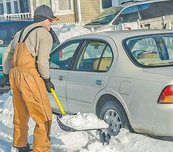
“If you are at home when a winter storm hits, the best thing you can do is stay there,” said Naval support Activity Bethesda Safety Manager Jim Ganz. “Drive only if it is absolutely necessary.” - Credit: Courtesy Photo
Although it’s been three years since the ‘Snowmageddon’ blizzard, Naval Support Activity Bethesda (NSAB) Safety Manager Jim Ganz and NSAB Emergency Manager Ron Kunz believe that base staff and residents should know what to do if it happens again.
“Being prepared is only one part of the battle,” said Ganz. “Knowing what to do can save your life. If you keep only a few tips in the back of your mind it can make a huge difference.”
Here are some of the survival guidelines the managers outlined in the event of a winter storm or under conditions of extreme cold.
Inform yourself
On the Hazard Specific Guidance document issued by Kunz, the very first piece of advice to the general public for winter storms is to, “Listen to your radio, television, or NOAA Weather Radio for weather reports and emergency information.”
“Information is your most valuable tool,” said Ganz. “The best thing you can do when facing a winter weather advisory is to know when it’s coming, where it’s going and how hard it will hit. You can’t do anything without first knowing that.”
Health
“Your health and the health of those around you should be a primary concern no matter where you are or what you are doing this winter,” said Ganz.
Avoid overexertion when shoveling snow. According to Kunz, overexertion can bring on a heart attack, a major cause of death in the winter. If you must shovel snow, stretch before going outside. Also eat regularly and drink ample fluids to avoid overheating.
Kunz advises those exposed to the elements for long periods of time to be mindful of frostbite. The symptoms of this medical condition include: loss of feeling and white or pale appearance in extremities such as fingers, toes, ear lobes, and the tip of the nose. “If symptoms are detected, seek medical help immediately,” said Kunz.
Even those not directly exposed to cold temperatures may still succumb to hypothermia. This condition, characterized by uncontrollable shivering, memory loss, disorientation, incoherence, slurred speech, drowsiness and exhaustion can be deadly.
“If these symptoms of hypothermia are detected; get the victim to a warm location; remove wet clothing; warm the center of the body first; and give warm, non-alcoholic beverages if the victim is conscious. Get medical help as soon as possible,” said Kunz.
At Home
Proper management of heat is imperative for those weathering out a storm at home.
“Conserve fuel, if necessary, by keeping your residence cooler than normal,” said Kunz, who advised temporarily closing off heat to unoccupied rooms. Keeping house occupants in a community space, like a living room or den, will take advantage of naturally occurring body heat and reduce heating fuel dependency.
Special care was emphasized by both managers when using portable heaters. Kerosene heaters should be refilled outside and placed indoors with good ventilation to avoid build-up of toxic fumes. All heaters, electric or otherwise, should be at least three feet from flammable objects.
“If you are at home when a winter storm hits, the best thing you can do is stay there,” said Ganz. “Drive only if it is absolutely necessary.”
Winter Driving
“It may be surprising, but the most dangerous activity you do on any given day is getting behind the wheel of a vehicle,” said Ganz. “That risk is significantly elevated during the holiday period and even more so during a winter storm.”
Ganz suggested planning for a trip long before rubber hits the road. “The Holidays mean traffic jams. Expect them,” He said. “Traveling during the daylight hours, driving reasonable distances, keeping others informed of your travel plans, taking breaks every two hour or so, getting rest before you start a trip and pulling over if you feel tired can ensure a safe journey.”
For those planning to travel long distances the Travel Risk Planning System (TRiPS) is an invaluable tool. The system plans automated travel routes and notifies supervisors and their subordinates of travel plans in the event of an emergency. “Since the program’s inception about 300,000 navy personnel have traveled using approved TRiPS assessments with zero associated fatalities,” said Ganz.
Stranded in Vehicle
If your vehicle malfunctions and you find yourself on the road during a snow storm, it is important that you stay within the visible vicinity of your vehicle. According to both managers, it is the most likely place a rescuer would find you.
“Do not set out on foot unless you can see a building close by where you know you can take shelter,” said Kunz. “[Even then], be careful; distances are distorted by blowing snow. A building may seem close, but be too far to walk to in deep snow.”
If you cannot contact help via cell phone or are not immediately visible on the road, Ganz lists multiple ways of attracting the attention of rescuers. Turn on your blinking hazard lights or place a distress flag on the radio antenna or window. Turn on the inside light at night so passersby can see you. If stranded in a remote area, stomp large block letters in an open area spelling out HELP or S.O.S. and line the letters with rocks or tree limbs.
“While you wait with your car try to stay as warm as possible,” said Kunz. “Exercise to maintain body heat, but avoid overexertion. In extreme cold, use road maps, seat covers, and floor mats for insulation. Huddle with passengers and use your coat for a blanket. If your vehicle still has fuel, run the engine and heater about 10 minutes each hour to keep warm. When the engine is running, open an upwind window slightly for ventilation. This, along with periodically clearing snow from the exhaust pipe, will protect you from possible carbon monoxide poisoning.”
While stranded in a car, fuel and battery power will be limited and require sparing use and close monitoring. “Be careful not to waste battery power. Balance electrical energy needs with supply,” said Kunz.