
Dinner with Churchill: Policymaking at the Dinner Table
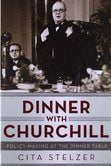
Dinner with Churchill: Policymaking at the Dinner Table by Cita Stelzer. Published by Pegasus Books, New York. 2012.
A researcher at Churchill College in Cambridge, England, Cita Stelzer has written a unique perspective on British Prime Minister Winston Churchill. It is a war of the minds not between the Allies and Axis, but among the Axis powers over the dinner table. Stelzer recreates the elaborate preparations for a meal that Churchill would undertake with Roosevelt, Stalin, his cabinet, King George VI, and Field Commanders. Churchill believed that taking a meal with a leader often helped in gaining an understanding of issues and allowed him to maneuver the leader towards British interests. An early example cited in the book is when, before the war, Churchill as Minister of Munitions broke a strike by getting the strikers to drink tea and eat cake with him; the compromise averted further labor problems.
In the book, readers will learn about Churchill’s peculiar dining habits such his dislike of thick bread as part of the sandwich, and the types of cigars he was partial to. The British Prime Minister negotiated for food to be part of America’s Lend-Lease Package, feeding a Britain under siege by Nazi U-Boats. Churchill also did not eat geese or pigs he had personally raised, having developed a relationship with the animals; he once told his wife Clementine over a plate of goose, “He was my friend.” The book dispels the myth that Churchill was a drunk, for while he did appear to drink prodigious quantities of alcohol during the day, his whisky was extremely watered down, and he always seemed to drink with meals. The extent of rationing of food shortages in Britain is discussed in the book, and how appreciative British sailors aboard the HMS Prince of Wales were when they received 1,500 care packages during the conclusion of Franklin Roosevelt and Churchill’s first meeting at Placentia Bay in 1941. The packages contained delicacies in extremely short supply.
There are vivid descriptions of Churchill being hosted by Soviet dictator Stalin as well as the eating habits noted by the British Prime Minister. The book discusses how Churchill politely consumed foods he did not like and would not necessarily eat, such as when Roosevelt served him his favorite delicacy of sauerkraut and pig’s knuckles. Stelzer ends her book with the limits of dinner diplomacy in Yalta, and the Potsdam Conference in which the United States and the Soviet Union would attempt to define what would later be termed the Cold War world. The book is a unique glimpse into World War II history.
Editor’s Note: Cmdr. Aboul-Enein is author of three books on the Middle East, all three published by Naval Institute Press. He teaches part-time at the National Defense University and wishes to thank his Teaching Assistant Ms. Tamara D’Amico for her edits to this book review column.