
Construction Begins on Dahlgren Wetland Project
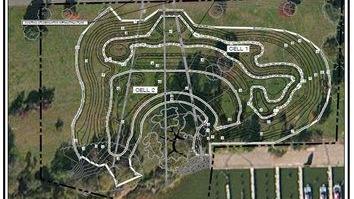
A construction plan for the wetlands under construction along Sampson Road. - Credit: Courtesy photo
Naval Support Facility Dahlgren took a big step toward reducing its environmental footprint when construction of a storm water runoff wetland began this week. The first phase of the project will add two acres of wetland to the installation and improve the quality of storm water runoff entering Upper Machodoc Creek. A second project phase will create additional wetland habitat across the street in the low lying grass fields along Sampson Road.
Service members, employees and residents onboard Dahlgren will notice an increase in truck traffic during normal working hours as construction workers remove approximately 10,000 cubic yards of soil from the ponds. The trucks will transport the soil from Sampson Road-also the site of the construction-via Caskey and Bennion Roads out to B Gate at a rate of about 40 trucks per day. No prolonged road closures are expected and the trucks will not pass through base housing.
Storm water runoff pollution has become a major environmental concern in the Chesapeake Bay region. The same nutrients that gardeners, farmers and homeowners use on plants and lawns become pollutants when they reach Chesapeake Bay waters in excess. When too much nitrogen and phosphorous accumulate in the bay, they cause algae blooms that consume the water’s oxygen, causing “dead zones” where fish cannot survive. Suspended solids-mainly a byproduct of construction projects-also hurts wildlife by affecting water clarity.
In response, the Environmental Protection Agency established total maximum daily load rules for the Chesapeake Bay watershed across six states and the District of Columbia. The rules are a phased approach to reducing storm water runoff pollution and the requirements vary by state. For Virginia, the nutrient reduction goal is five percent by 2018, 35 percent by 2023 and 100 percent by 2028.
Phase one of the Dahlgren wetland project will remove up to 54 pounds of phosphorus a year, which is roughly 40 percent of the total nutrient reduction goal calculated for NSF Dahlgren; environmental specialists estimate that the project’s second phase will have Dahlgren very close to achieving 100 percent of the required nutrient reduction.
The first phase of the wetland construction will protect the watershed from storm water runoff accumulated over 161 acres at a cost of $378,000. Phase one will be completed before the end of the year.
“Our fall is off to a great start with this project breaking ground,” said Brenna White, storm water program manager at NSF Dahlgren. “We hope to be finished with all major earth work by November to meet the fall planting schedule. If we can get the wetland plants in the ground and establishing over winter, we will have a healthy, strong wetland come spring.”
In addition to removing storm water pollutants, the project will provide habitat for wildlife like fish, frogs and turtles. The wetland-which will include high and low marsh zones-is not expected to cause a large increase in the mosquitoes since it also creates suitable habitat for dragonflies and other predators that will control the population.
Editor’s note: Brenna White, storm water program manager at NSF Dahlgren, contributed to this article.