
Upgraded C-40Bs bring state-of-art communications to VPOTUS airlift
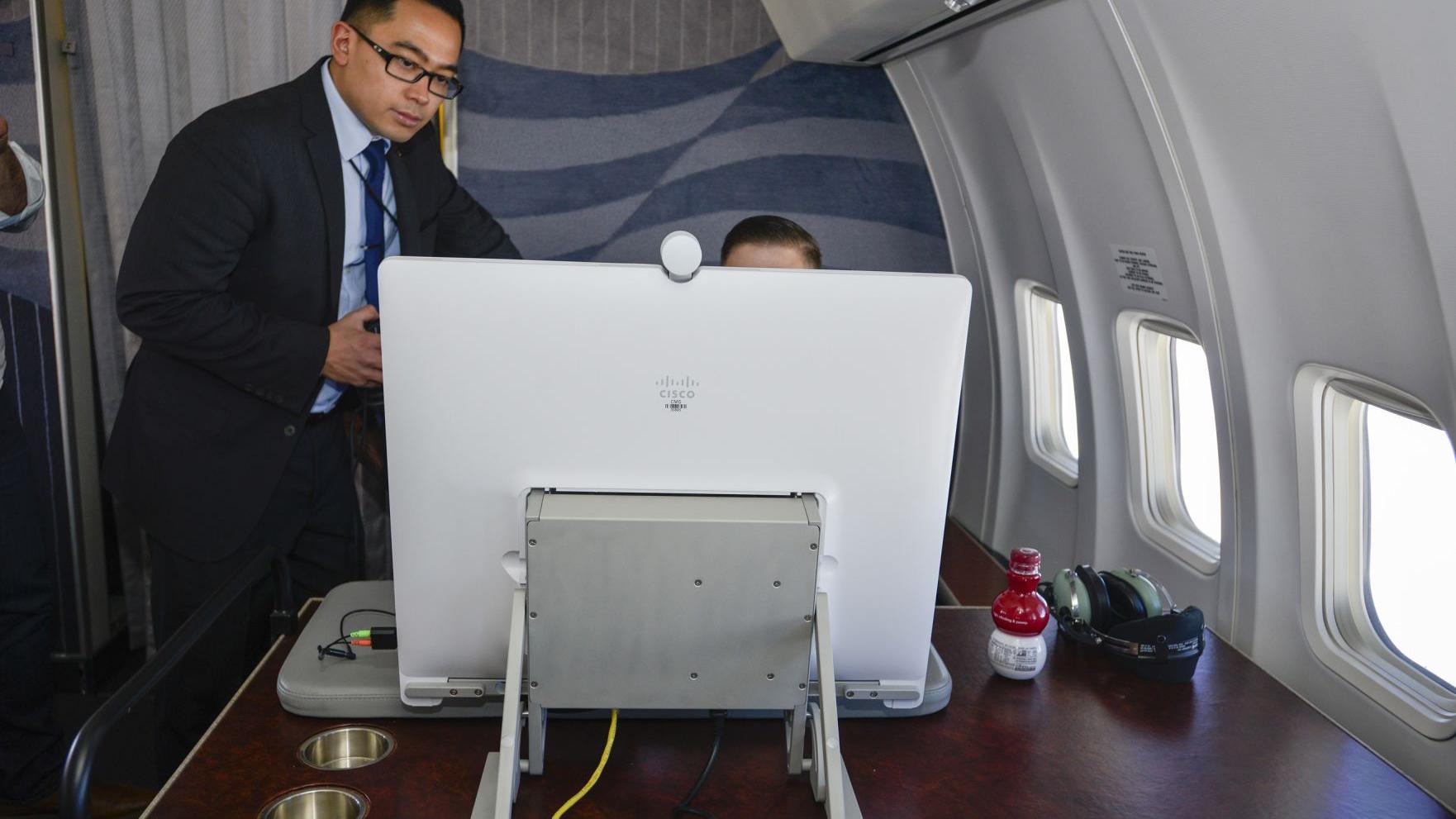
Air Force Staff Sgt. John Operana, 1st Airlift Squadron communication systems operator, looks on as Marine Staff Sgt. Corey Riley, U.S. Central Command advanced communicator, operates a video conferencing system while cruising at about 40,000 feet and crossing the Atlantic Ocean on board a C-40B in flight between Joint Base Andrews and Naval Air Station Souda Bay, Greece Feb. 4.
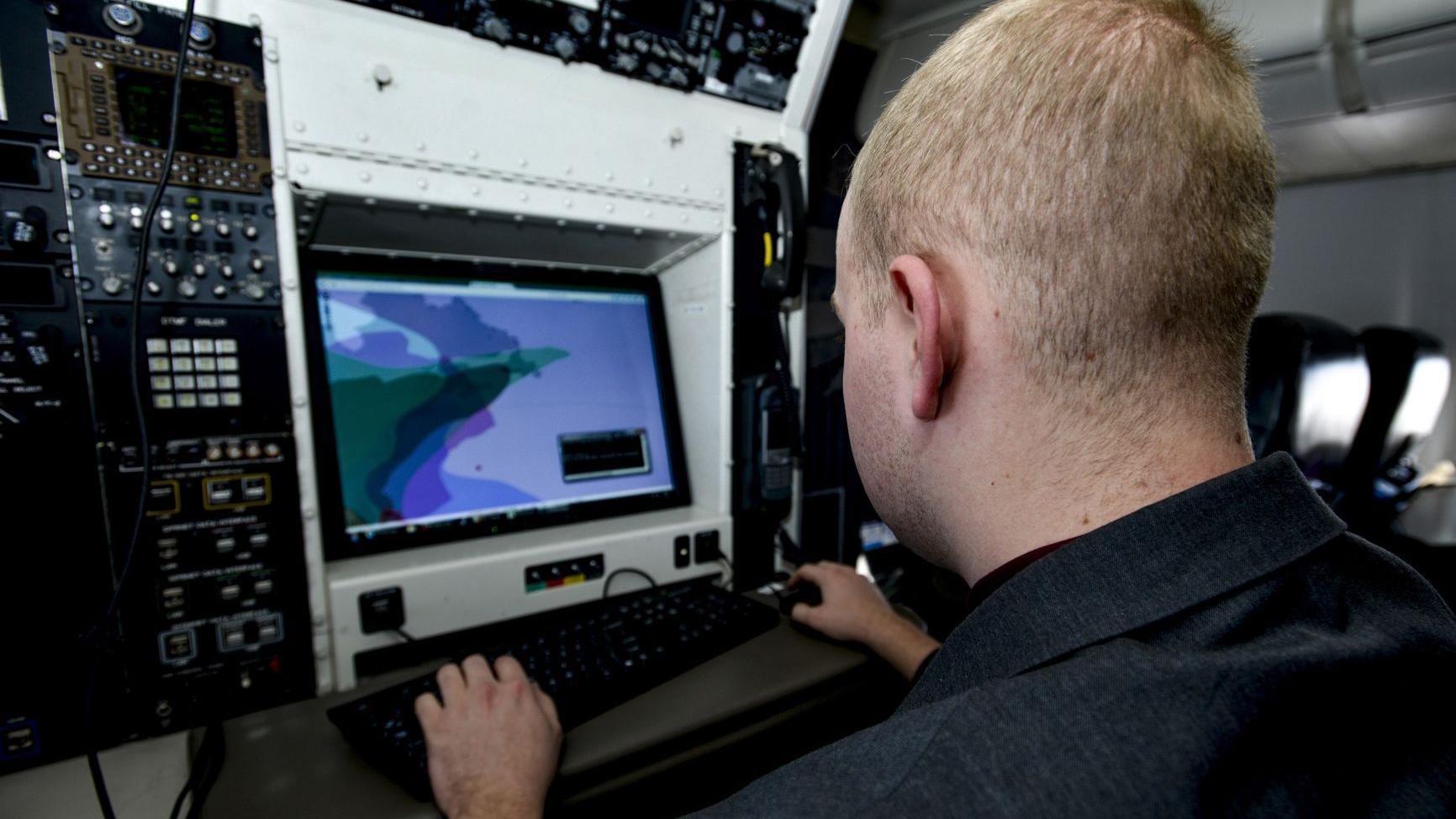
Airman 1st Class Matthew Hulse, 1st Airlift Squadron communication systems operator, monitors satellite signals and ranges as the C-40B he is flying on heads northeast, away from the U.S. eastern seaboard enroute to Naval Air Station Rota, Spain.
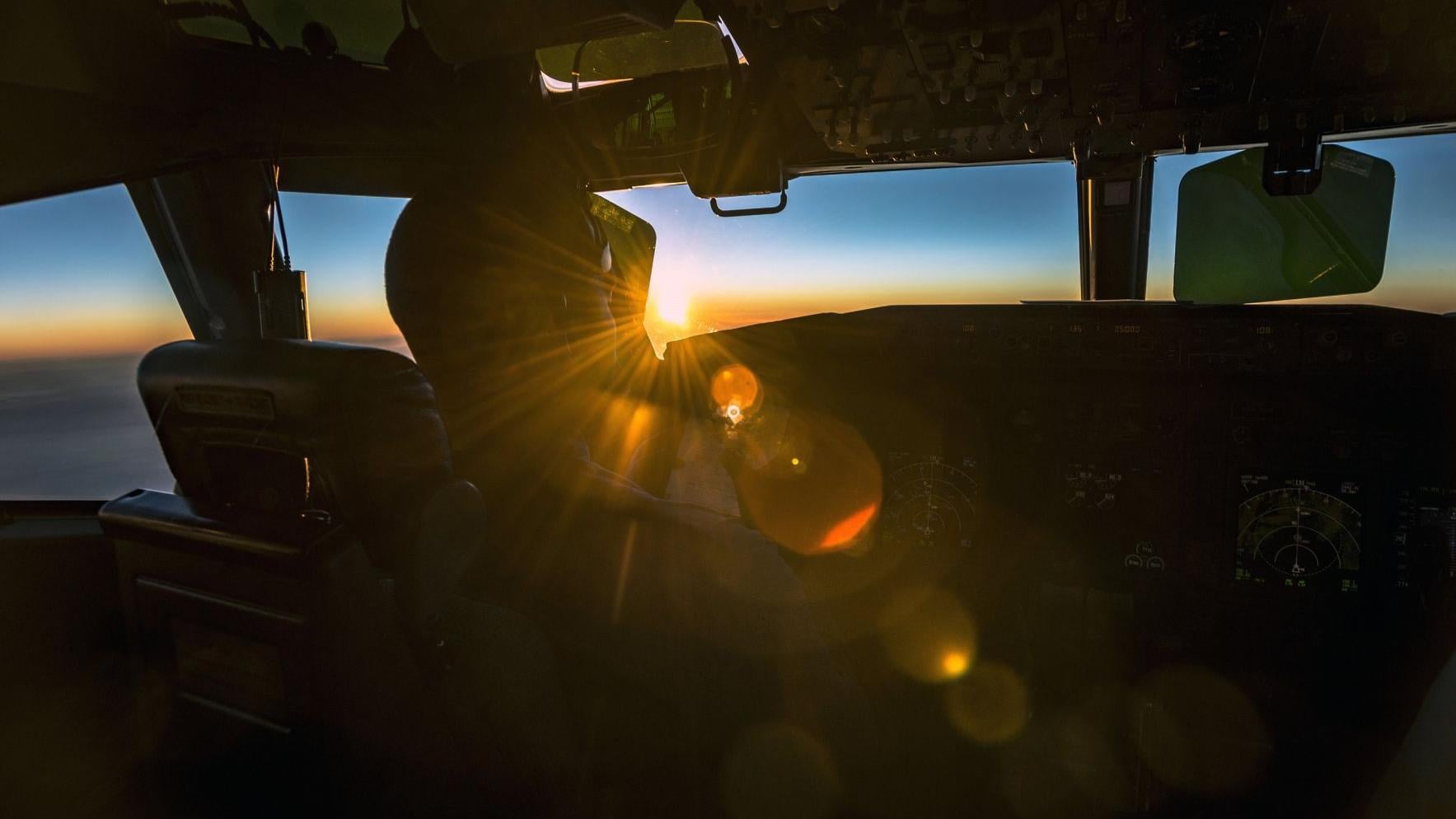
Lt. Col. Aaron Pierce, 1st Airlift Squadron C-40B chief pilot, cruises at about 40,000 feet in the early morning hours as he flies a C-40B from Naval Air Station Souda Bay, Greece to Muscat, Oman. Only the most experienced Air Force instructor or evaluator pilots are selected to fly at the 89th Airlift Wing, which provides airlift for the President of the United States, vice president, first lady, cabinet members, combatant commanders and other senior leaders.
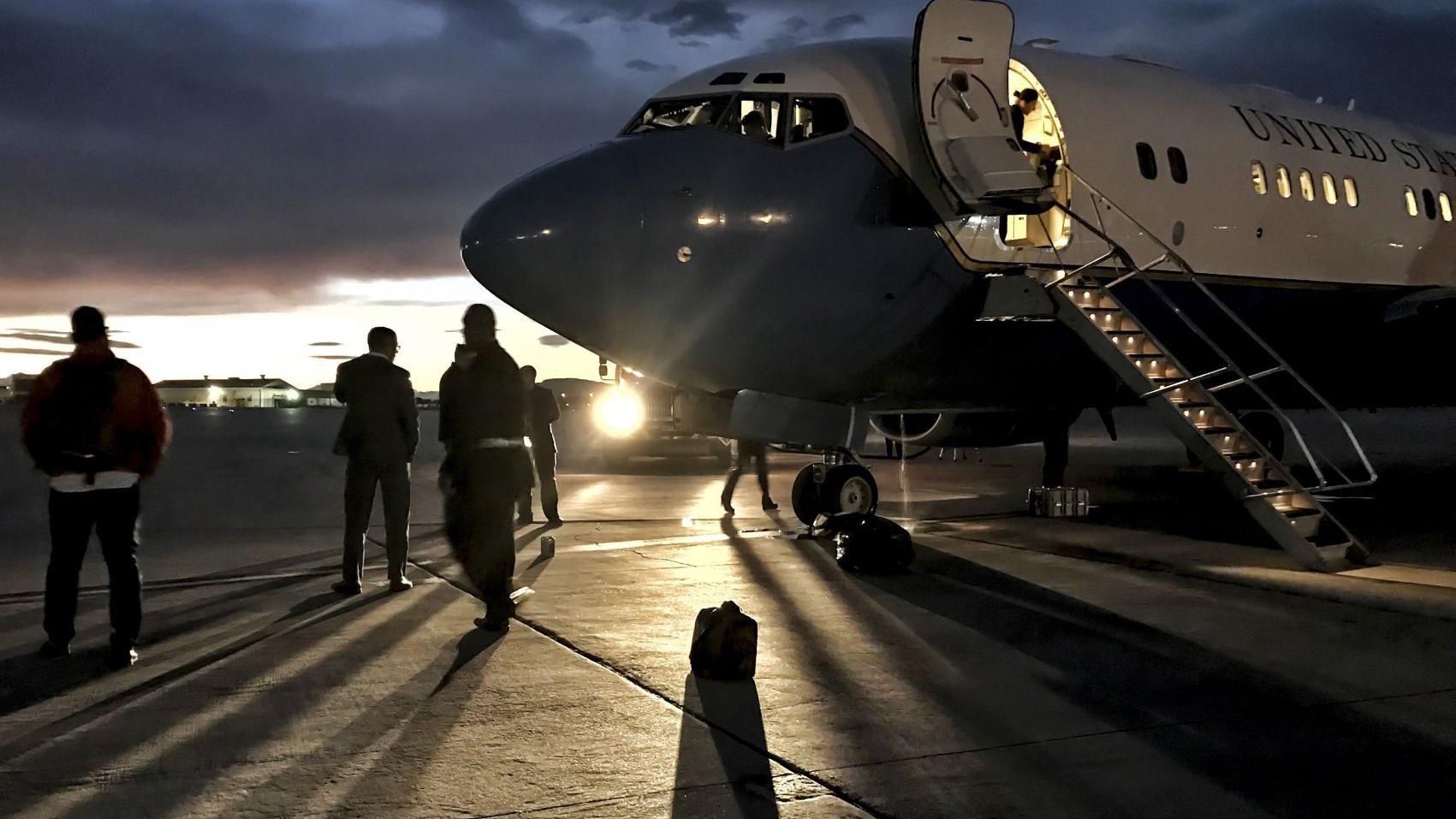
A 1st Airlift Squadron C-40B sits parked as it is re-fuelled at Naval Air Station Rota, Spain.
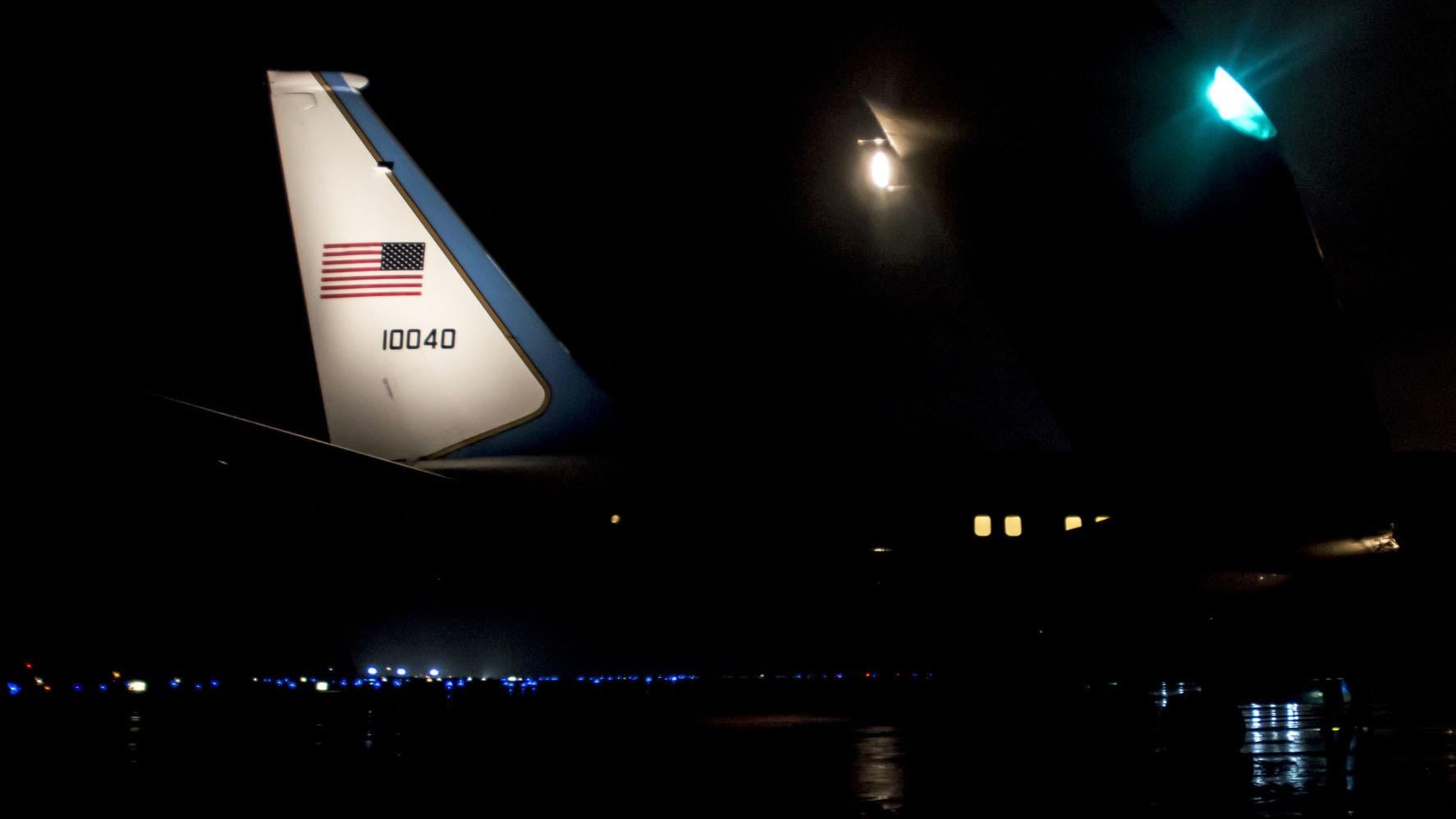
A 1st Airlift Squadron C-40B sits parked as it awaits fuel at Naval Air Station Rota, Spain. After receiving fuel, the C-40B crew then flew the jet to Souda Bay, Greece.
The 89th Airlift Wing recently received a C-40B back from a lengthy depot maintenance cycle where the aircraft communication systems were completely revamped, bringing state-of-the-art communication onto the jet.
The modifications were tested during a recent four-day off-station training mission.
Imagine a scenario where the Secretary of State is flying to Europe to meet with allies about escalating tensions in the region. The situation is one that is rapidly evolving and the secretary needs to host a secure video tele-conference with allied heads of state while enroute. This is a meeting that cannot be put off and must happen immediately; the communication systems must support the Video Teleconference and can’t fail.
Traversing the globe over an ocean at 36,000 feet and with varied weather patterns, the VTC is set up and heads of state align their strategic visions to face the evolving threat. This is the type of missions and scenarios the 89th AW faces every day. The Special Air Missions Foreign, or SAM Fox missions, revolve around communications.
The C-40B is a highly modified Boeing 737, accommodating 11 crew and up to 24 passengers. It has two communication systems operator stations, a small galley in the front of the aircraft, a DV cabin, an eight-person conference room and first-class type seating throughout. The aircraft is designed to provide global airlift to the vice president, Secretary of State, Secretary of Defense and other high-profile senior leaders.
Every aspect of 89th AW aircraft is to enable the reliable global airlift of America’s senior leaders, keeping them safe, comfortable, connected and protected.
“The comms system was upgraded from a proprietary fiber channel distribution system to an IP based open architecture distribution system enabling centralized command and control capabilities. A Ka-based network was also added which increased bandwidth about 10-fold from previous system capability,” Staff Sgt. John Operana, 1st Airlift Squadron Communications Systems Operator, said. “Airborne Executive Phones were also integrated to allow a single handset access to multiple classification voice connectivity.”
To keep SAM Fox customers connected while traveling away from the continental United States, the 89th AW CSOs continually switch from satellite to satellite, depending on their location and signal strength. They monitor and advise the pilots of emerging weather patterns that may disrupt communications, allowing the aircraft to divert as necessary, ensuring the communications vital to national security are maintained.
Tech. Sgt. Barry Bonnema, former 1st AS CSO currently stationed with L3 Technologies, serves as the liaison between L3 and the 89th AW.
“One by one, all four of the 89th AW C-32As and both C-40Bs are coming through us for the modifications. These mods take several months to complete as the aircraft communication systems, including all the electrical harnesses, are completely upgraded and brought up to state-of-the-art systems,” Bonnema said. “While many new systems were installed, several of the legacy systems were maintained for redundancy and back-up purposes. These 89th AW aircraft have layer after layer of redundancy so if one system becomes inoperable, the CSO has the ability to quickly switch to another system and restore the communications.”
Because of the no-fail missions the 89th AW flies, every pilot, flight attendant, flying crew chief, flight engineer and CSO are selectively hired and have demonstrated a high degree of skill in the specialty before they’re considered for an assignment onboard the prestigious blue-and-white fleet.
Col. Casey Eaton, 89th AW commander, ensures that every Airman has the tools they need to accomplish the no-fail mission. After that, the success of SAM Fox and indeed American diplomacy rests on the backs of the Airmen assigned.
“Every single one of our Airmen is here for a reason — because they’re incredible Airmen. They don’t just move people and stuff, they give the President of the United States options,” Eaton said. “Everything this wing does is woven into the fabric of America and of its history.”