

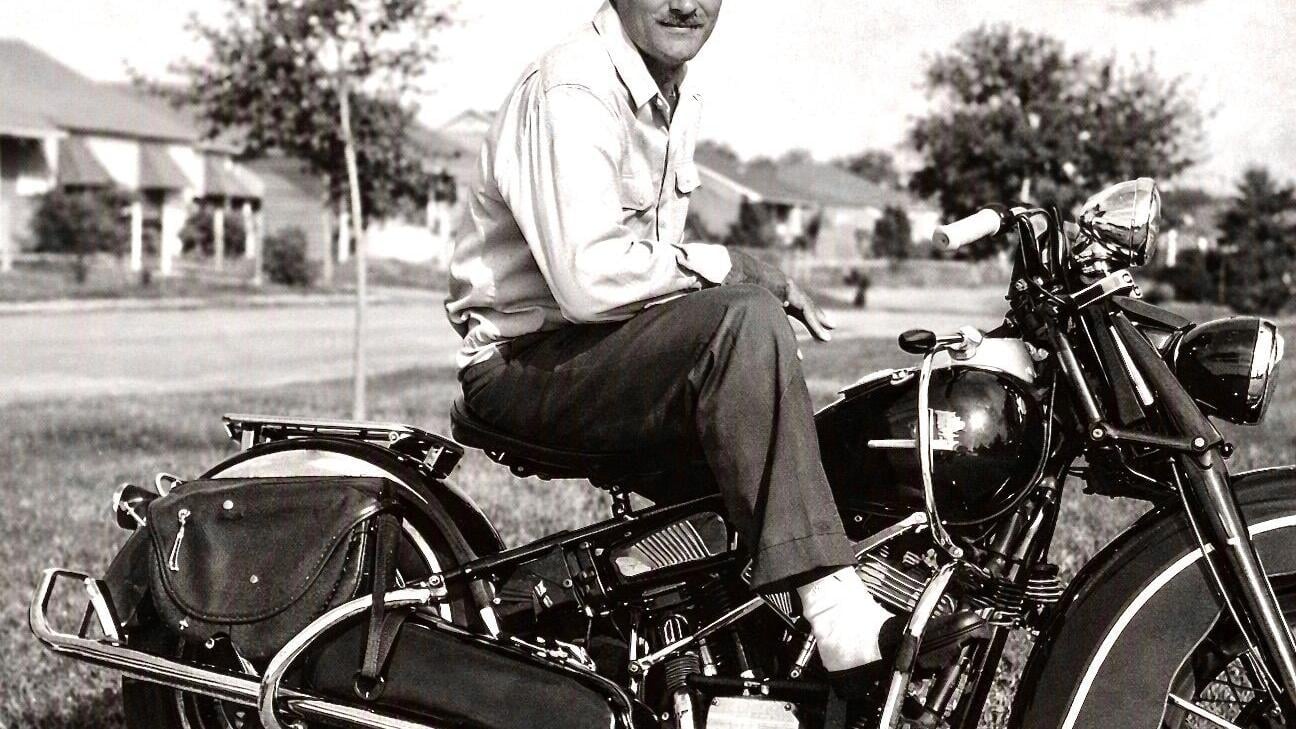
Mark Russell reported for his draft physical and because he’d recently had minor surgery, Army physicians told him to return in six months. He went back to his Alexandria, Va. home and continued with his life, working at the family gas station on Route 1, and taking in the occasional movie.
“It sounds implausible, but there was a movie playing in downtown Washington, “What Price Glory,” with James Cagney and Dan Dailey. They were Marines in World War I, and in the movie they spent a lot of their time drinking wine and chasing French women,” said Russell. “I saw it and thought, ‘That’s for me!’”
Russell went to the Marine recruiting desk in the lobby of the theater and signed up.
“The next day, I was on my way to boot camp. True story,” Russell said, where the first thing he learned was that Hollywood’s portrayal of military life was almost entirely inaccurate.
“In boot camp, they’d show us the right way, and the wrong way, to do everything. They’d say, ‘Don’t do it like John Wayne.’ He was not the icon he became later, in the Vietnam War. He was well known, but not the way he was in the 60s. The combat veterans who were teaching us noted that John Wayne, in his movies, he did everything wrong,” Russell said.
The Korean War ended shortly after Russell entered the Marine Corps.
“I spent most of my time as a peacetime Marine, so I learned to shine my shoes, polish my belt buckle and press my uniform,” Russell said of his time in Japan, Hawaii and at other duty stations between 1953 and 1956. Though he did not experience the adventures he’d seen on the movie screen, the conversations he had with fellow Marines came together to form Russell’s future.
“We would gripe about things; we’d bitch about things, and that was common. We were just privates and PFCs, and the stock answer was, ‘You’re not supposed to know the big picture.’ And that stuck with me. As a political satirist, I’ve been trying to find the big picture. I haven’t gotten there yet, but I’m still looking,” Russell said.
After his time in service, Russell returned to Washington.
“I was a piano player—not a very good one. I worked in real dives: subterranean saloons. I like to say I started at the bottom and worked my way down,” Russell said. “Then I got a job in a bar across from the Senate Office Building, and that gave me a focus. I was at the piano telling old jokes and corny jokes and talking to people like a lounge lizard would do, and one of the Senators said, ‘If you want us to pay attention, talk about what we do.’”
Russell had to learn about the work his audience did, across the street from the Carroll Arms Hotel.
“They had hearings, and I knew nothing about that. I would go to the Senate and watch the hearings, and the participants would come across the street after the hearings and I’d try to work what I’d heard into my act,” Russell said. “Then the owner of the Shoreham came in and caught the act and he hired me at the Shoreham, which was at the time the fanciest hotel in town, and I played the lounge there three times a night, six nights a week for 20 years, from 1961 to 1981.”
Approached by a public television station in his native Buffalo, N.Y., Russell then took the act he’d developed at the Shoreham and turned it into a 30-year television career. Though his act always includes some material that will be funny no matter what is happening in the news, Russell has always maintained the freshness and up-to-the-minute humor he learned while entertaining Senators with observations of their daily efforts.
“I do all the topical stuff and then I have more stable material, generic material. I talk about social issues, about Supreme Court cases. The court is divided, four liberal, four conservatives, with a swing vote from Justice Anthony Kennedy,” Russell explains, “But just like the rest of us, Justice Kennedy doesn’t swing like he used to.”
Russell’s performances include some autobiographical material, including discussion of his time as a Marine.
“A performer’s not supposed to be predictable, but when you do political satire you should be predictable. I was in Jacksonville, Florida Friday night and right out of the box I said, ‘My topic tonight is the website healthcare.gov, also known as The Glitch that Stole Christmas. What we know about health is that a dysfunctioning government is a pre-existing condition.’ I like to start with the most topical,” Russell said. “If I start with the shutdown, that’s already old, and it was just last week.”
Modern audiences, Russell said, are better than in the past, “because of the 24/7 news media. They can’t avoid knowing things, even if they don’t care about it, even if they say ‘The news depresses me.’ It’s pouring out onto them. The performer doesn’t have to do a lot of setting up.”
Well, that’s true for Russell, but he’s not entirely sure it’s the same for other performers.
“Jay Leno will come out, ‘Do you know about Kathleen Sebelius?’ but you don’t have to say, ‘Do you know.’ Maybe in Leno’s case. That seems like a pretty dumb studio audience. Maybe they don’t know. But you don’t have to do a lot of setting up,” Russell said, for today’s audiences. Though that works to his advantage, not everyone benefits from a more aware populace. “Kathleen Sebelius--this is probably the last thing she thought would happen to her, to be so well known for all the wrong reasons,” Russell said.
Military audiences have been among some of his more memorable appearances, over the decades.
“I was at the Air Force Academy years ago, during the Nicaragua crisis, where we were arming the Contras against the Sandinistas. That was a big deal, and that was part of Iran/Contra. This was faculty, about half military, half civilian,” Russell said. “I took a poll, and the majority of them were on the ‘wrong’ side. The military were for the Contras, the civilians were for the Sandinistas. Those hands went up, and little squabbles broke out.”
When politics and military service mix, the atmosphere can be a little tense, even at an event meant to entertain. In a 2002 performance for West Point cadets, “One of the cadets asked, ‘He’s going to joke about the President of the United States?’ And the instructor said, ‘This is America, and we allow this.’ This was in 2002; we didn’t go into Iraq until the following March. A full colonel said, ‘I don’t mind going to Iraq, but I’ll be damned if I’ll be the Mayor of Baghdad.’ Pretty prescient. He sort of saw that we were getting into this hornets’ nest,” Russell remembered.
Once in a while, Russell’s performance touches an unexpected nerve. At a 1980s performance at an Air Force Base in Virginia, Russell said he was “really going over, when a four-star general threw his shoe at me. He wasn’t angry or anything, but he threw his shoe. All those years in the Marine Corps, and nothing was as hazardous as that night.”
Sometimes, it’s not the audience so much as the venue that matters.
“I only do theaters, now: Theaters that are open to the public. I used to do a lot of corporate events and chambers of commerce and so forth, and the audience, sometimes—and it’s often my own fault—but very often you follow an hour of speeches, and they just suck all the oxygen out of the room. They read the financial report and say, ‘And here’s Mark Russell!’ I don’t have to subject myself to that anymore,” Russell said.
After a short attempt at retirement, “the presidential campaign of 2012 was getting pretty funny, so I decided to come back,” Russell said. His work still hits its mark, night after night, because at 81 he’s just as determined as he was as a young man at a piano at the Carroll Arms Hotel. Some things, however, have changed in the intervening half century.
“I figured out a few years ago that the income taxes I was paying would pay the annual salary for several generals,” Russell said. “I want those generals to know that the check is in the mail.”
Russell will perform at 6 p.m. Nov. 3 at the Ernst Community Center, Annandale Campus of Northern Virginia Community College. This event will benefit TEACH, a local nonprofit organization which provides educational opportunities to Mayan children in Guatemala. Tickets are $75 and include complimentary hors d’oeuvres at 5 p.m. For tickets or more information, go to www.teacham.org.