
PG/Greenbelt trainer’s CERT-ify local citizens
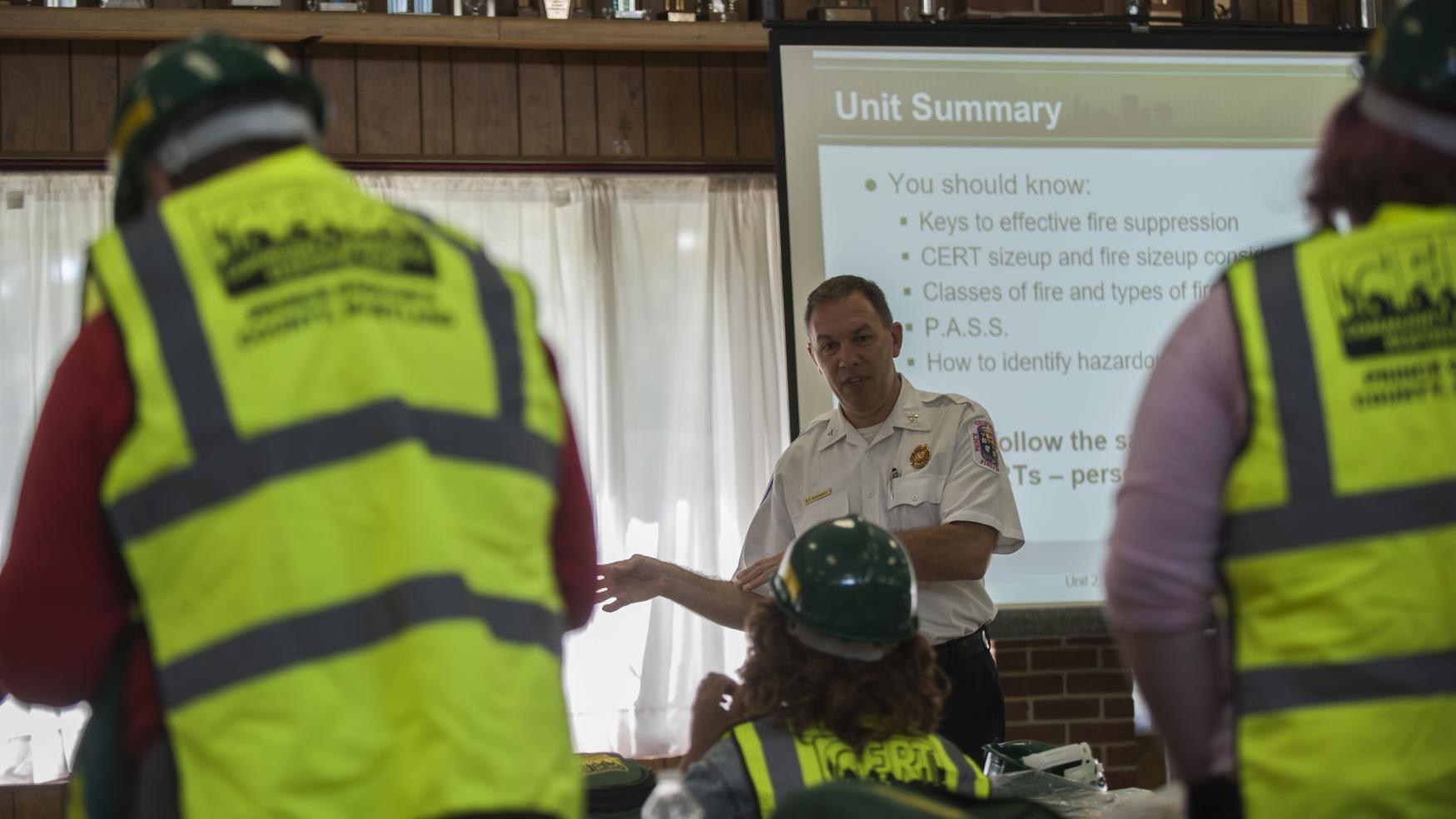
Prince George’s Fire Department Battalion Chief Brian Dougherty introduces CERT trainees to the personal protection items in their free CERT backpacks.
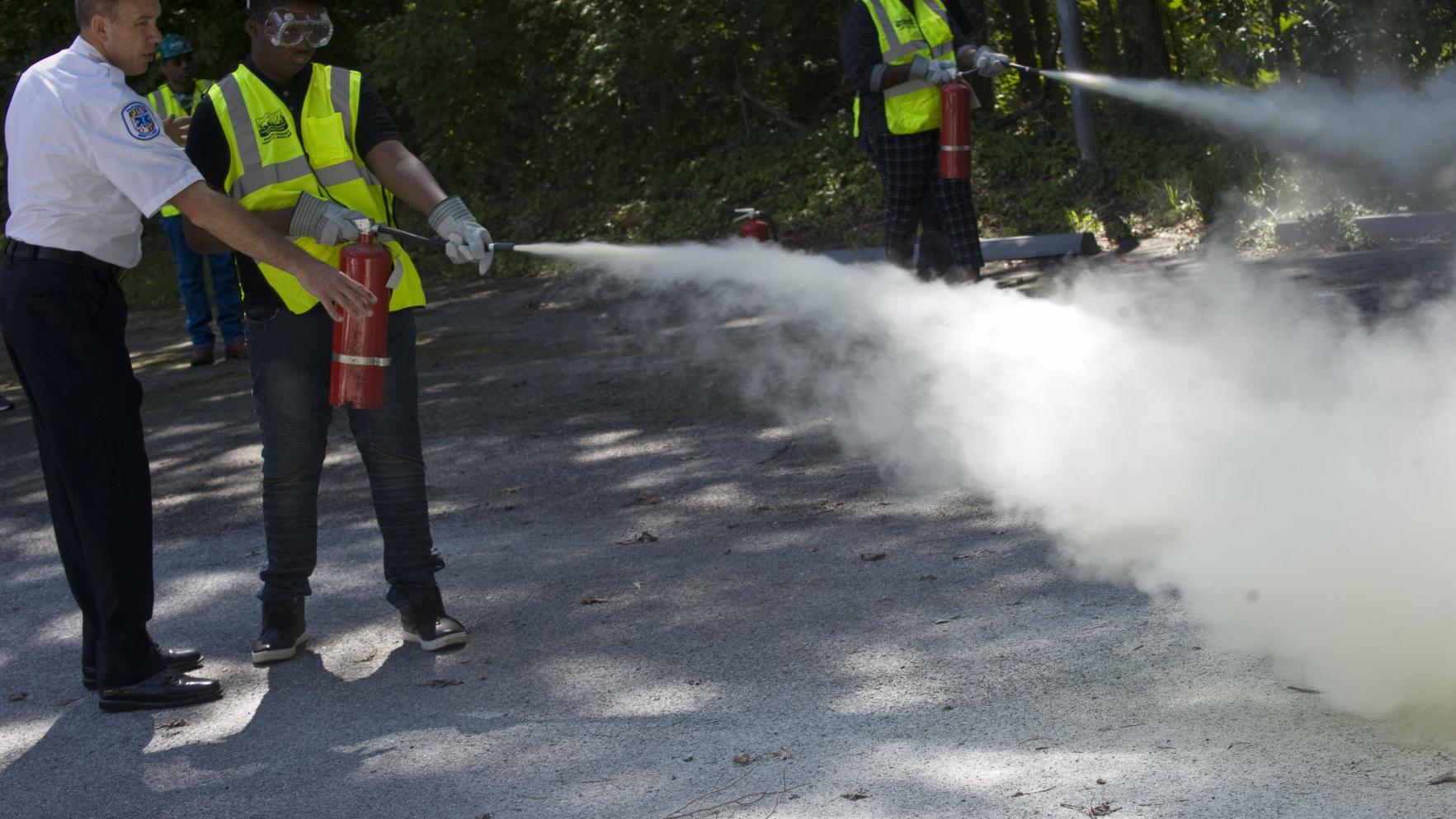
Prince George’s County Fire Department Battalion Chief Brian Dougherty guides CERT trainees on how to suppress a small fire by spraying directing at the base source.
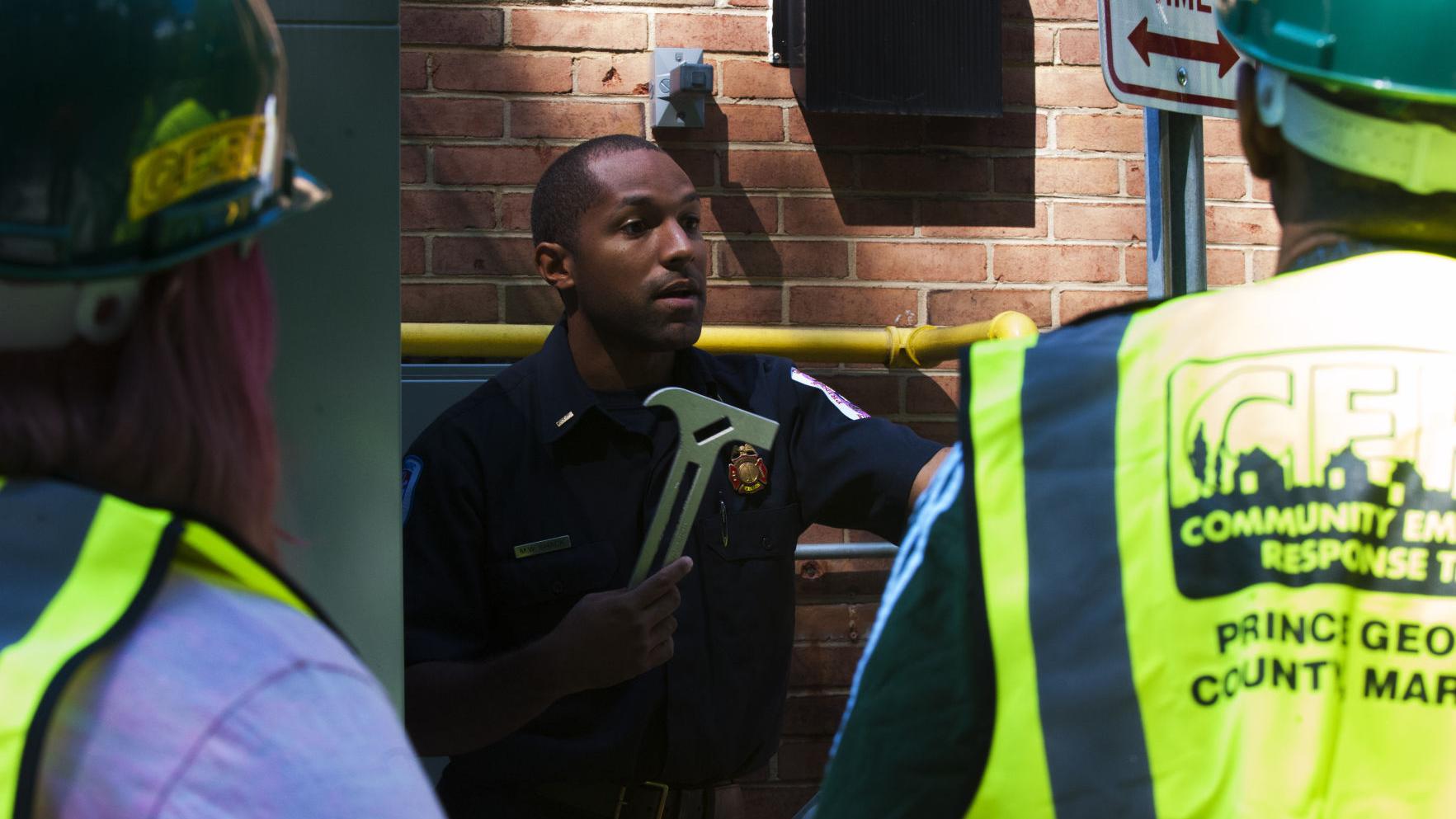
Lt. Michael Shackelford of the Prince George’s County Fire Department Training Academy describes the use of the four-in-one tool, used to turn off a gas supply valve.
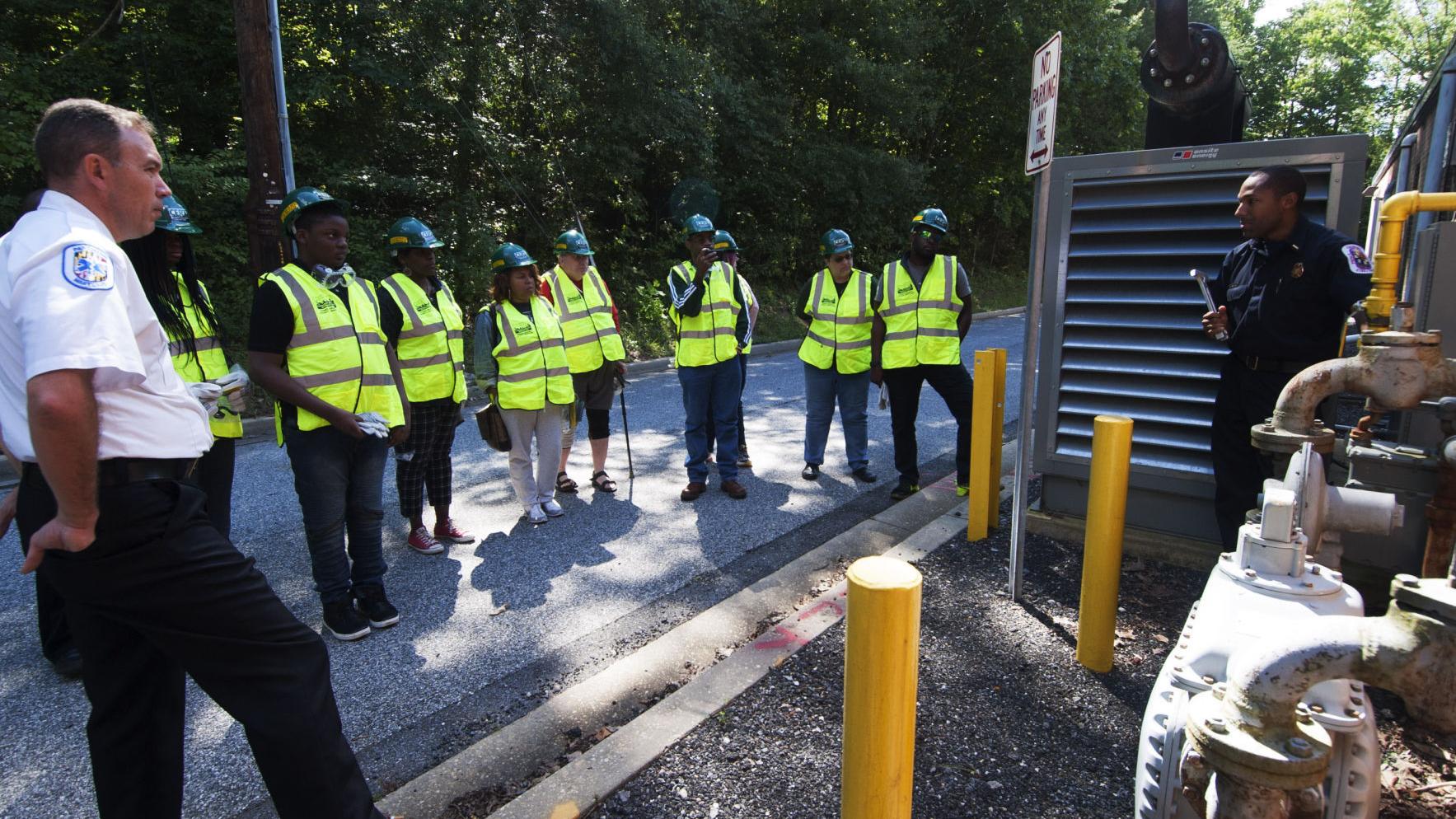
Lt. Michael Shackelford, right, with the Prince George’s Fire Department Training Academy teaches CERT trainees how to shut off a gas valve outside the Greenbelt Volunteer Fire Department and Rescue Squad.
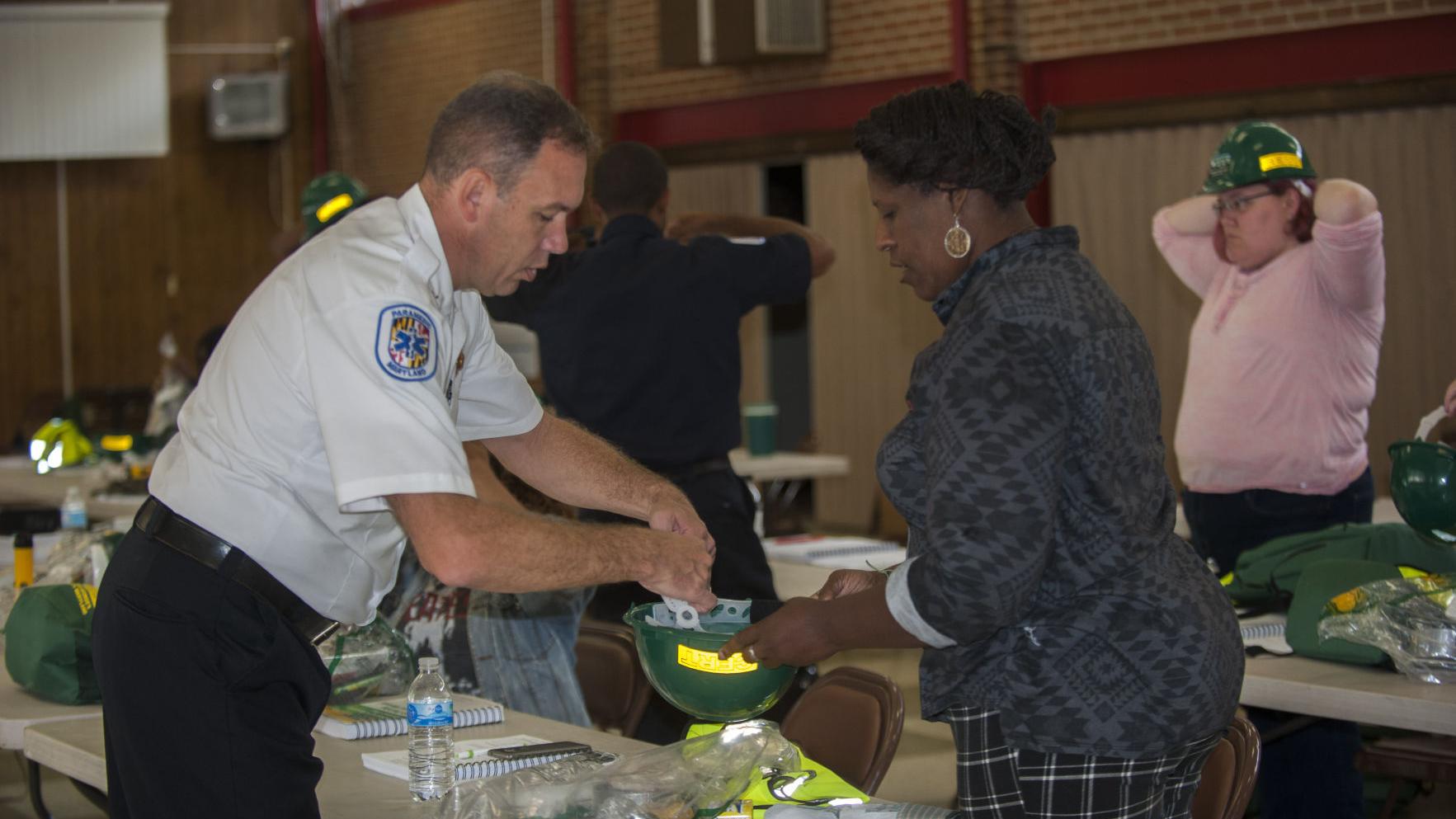
Chief Brian Dougherty with the Prince George’s County Training Academy helps a CERT trainee with a helmet insert.
The concerned citizens of Greenbelt consistently train in the event of any natural disaster or medical emergencies every other month at Community Emergency Response Training (CERT).
On Sept. 9, Greenbelt trainers hosted the basic CERT training and were joined by Calvin Hawkins, Chief of Community Outreach and Education for Prince George’s County Office of Homeland Security, the over-arching sponsor of CERT in the county held at the Greenbelt Volunteer Fire Department and Rescue Squad facility. CERT is sponsored by a federal grant called the Urban Area Security Initiative.
Serving as the Community Emergency Response Team representative, Hawkins coordinated the two-day CERT training course for local community members.
During the 22-hour classroom and hands-on curriculum, led by Greenbelt CERT, trainees learned how to put out small fires using a fire extinguisher, basic first aid, head-to-toe medical assessment of a victim, triage victims during a medical situation, light search and rescue, deal with disaster psychology, identify electrical and gas hazards, and how to shut off the utilities at home.
The CERT participants are provided with CERT backpacks, which include personal protective equipment, hardhats, reflective vest, heavy leather gloves, duck tape, protective goggles, a flashlight, a four-in-one shut off tool that can be used to safely shut off water and gas lines, to help local community companies and/or first responders, first aid kit and a CERT manual.
“This training prepares the citizens to respond to emergencies and disaster weather at home at work or in their community,” Hawkins said. “It enables them to address minor emergencies and major disasters, and the key element they learn is the most important person in any emergency disaster is that individual. They also learned to do the greater good for the greatest amount of people in the preparation,” Hawkins said.
Hawkins elaborated in a disaster situation you’re just doing head-to-toe assessment, determining whether you can help that person or not. “I hate to say it, but you don’t want to [hinder saving others staying] with someone that’s dying or close to death. You can’t make that determination, but by your assessment, you can get those who can walk out or need limited help and then hopefully, the professional first responder will come and deal with those individuals who may have more serious medical situations.”
Veterinarian Dr. Laura Kressler, Greenbelt host CERT trainer noted, “Our responsibility is to make sure our people are well-trained, equipped and ready to go.” Kressler is a former FEMA Veterinary medial assistance team member.
As responder during 9/11, Kressler loaned veterinarian acumen at Ground Zero, taking care of search and rescue dogs. After serving in that capacity Kressler felt it was natural transition to caring and saving human life in her hometown. Finding CERT seemed like a perfect fit for the former Greenbelt Public Safety Advisory Committee member.
Serving as the CERT trainer was rewarding for Kressler, but felt the missing component for Greenbelt was the animal side of emergency response locally.
“A couple of other trainers joined me to create what we call Community Animal Response teams (CART). You see this around the country generally. They’re basically the flip side of the human CERT team. We do all the same things, but with an animal twist and the major driving force behind CART teams was because of Hurricane Katrina, that if you don’t provide a way to evacuate or care for animals during disasters, people won’t leave,” Kressler said. “And if they don’t leave, they tend to either die or get injured and then emergency responders have to go in and try to get them. They tend to have more injuries and problems with them trying to retrieve people. The other way it goes is what happens is people go and leave their pets behind, they get worried, and they go back too soon before evacuation restrictions is lifted and they get hurt, then responders have to go get them again,” Kressler added.
“These were lessons strongly learned associated with Katrina that we had to deal with both sides of the coin. As a result, the Pets Emergency Transportation and Standard ACT (PETS), a FEMA federal law was passed that requires municipalities and local governments to provide in their emergency planning for their government provisions on how to deal with all animals, including people’s pets. Greenbelt now has a city recognized CART Team as well as CERT Team. “There are multiple ways that we deal with emergency response,” said Kressler, Greenbelt CERT and CART Team commander. “Both are very rewarding.”
During the CERT training, Greenbelt Councilmember Silke Pope stopped by to support the citizen-led CERT training. “Doctor Kressler is a friend of mine and we worked closely together on other things,” Pope said. “The Greenbelt CERT Committee actually came out of my time on the public safety committee. That was the original start of Greenbelt’s own CERT group and it is so valuable for to our community,” Pope said. “For this project to have reached this platform is just wonderful, but you have to have valuable and compassionate volunteers; and with Laura taking leadership and her knowledge in keeping things rolling, we have that. We are very blessed to have this program and people who are willing to step up and keep that ball rolling.”
After the CERT training, a Disaster Simulation Drill will be scheduled where live victims with moulage are incorporated. “They get a chance to go and read the information on line, take an Incident Command System courses and then we’ll bring them back and evaluate them to see how well they’ve retained the information and how well they respond in a simulated disaster,” Hawkins said.
Participants can take a myriad of courses including, Shelter Management, Shelter Operations, Red Cross training, and CPR. Some of them go on to take Amateur radio training and become HAM radio operators, some may get involved with rescuing pets in an emergency. In addition, attendees acquire different tools they can take away with more specialized training, included FEMA training inside and outside of the state, where they’ll be compensated to attend.
Hawkins said the biggest selling point in getting citizens engaged is going into their community and provide the training. “This is where we’ve really been effective, because it’s community-based, teaching it within the community, we know that citizens are more inclined to give up some time and participate, because we can come into their church, daycare center or community center, it’s convenient because they don’t have to travel anywhere.”
While the CERT training consists mostly of adults age 18 and up, a Teen CERT is also offered, which starts at age 14. “We’re working with the Prince George’s County School system to bring more of the Teen CERT into the public-school systems, particularly with the JROTC programs to get those young people more involved in understanding emergencies and disasters, and how best to respond if they’re in a situation. We’re just trying to empower as many people as possible.”
Hawkins noted a CERT Conference would be held Sept. 23 and 24, at Charles Flowers High School for the National Capital Region, which includes Prince Williams and Prince George’s Counties.
“Having citizens conduct the training helps to foster the bonds and closeness and that’s what we’ve found to be most effective,” Hawkins said.
To date 11,700 individuals have been trained in Prince George’s County in CERT since 2003. “It’s not a matter of if, it’s a matter of when,” Hawkins said. “Knowing that, the more people you prepare, the better our communities will be.”