



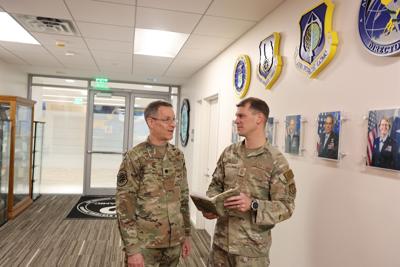


The U.S. Air Force (USAF) Chemical, Biological, Radiological and Nuclear (CBRN) Defense Systems Branch — part of the Human Systems Division (AFLCMC/ROU) within the Combat Readiness Directorate of the Air Force Life Cycle Management Center (AFLCMC/RO) — is headquartered at Aberdeen Proving Ground (APG) South, Maryland.
The branch is staffed by approximately thirty personnel composed of government civilians, active-duty military personnel, and contract support providing program management, engineering and logistics support to execute the portfolio of the Capability Program Executive for Chemical, Biological, Radiological and Nuclear Defense (CPE CBRND).

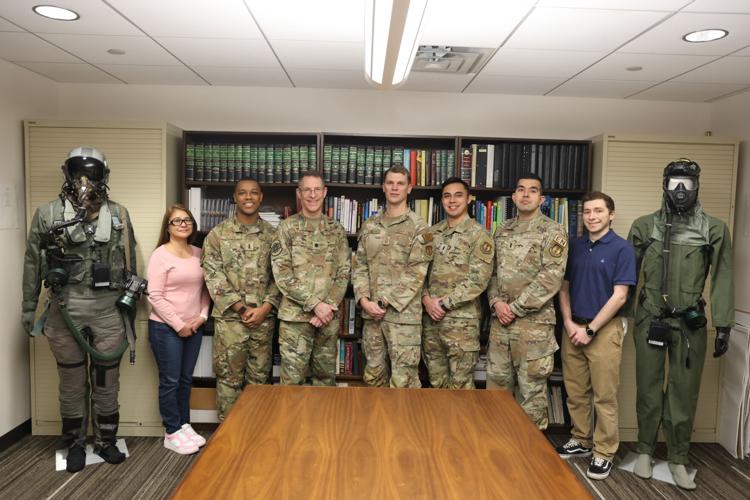
Air Force CBRN Defense Systems Branch personnel, left to right, Rose Roberts, Lt. Leondre Ingram, Lt. Col. Thomas Adams, SMSgt Benjamin Leis, Lt. Justin Hanna, Lt. Arjun Kohli, Rex Weinstein.
Team mission, structure and functions
The mission of the USAF CBRN Defense Systems Branch is to provide Airmen with advanced survival and force-protection capabilities through the development, production and fielding of joint CBRN defense systems. As the Air Force’s materiel developer for these systems, branch personnel ensure Air Force priorities are fully integrated into joint CBRN materiel solutions.
Working alongside the CPE CBRND, the branch is responsible for delivering effective, modernized CBRN defense capabilities that enhance warfighter survivability and mission readiness.They design, develop, test, and sustain CBRN defense systems; lead system development; and establish Air Force Product Supply Strategies, while integrating emerging technologies to deliver innovative, cost-effective solutions. The branch also collaborates closely with its sister organization — the Human System Division’s Operations and Support Branch at Robins Air Force Base, Georgia — to provide sustainment support for fielded CBRN systems.
Together, these efforts enable the branch to deliver full life-cycle acquisition expertise and support to the Air Force and to the joint service CBRN community.

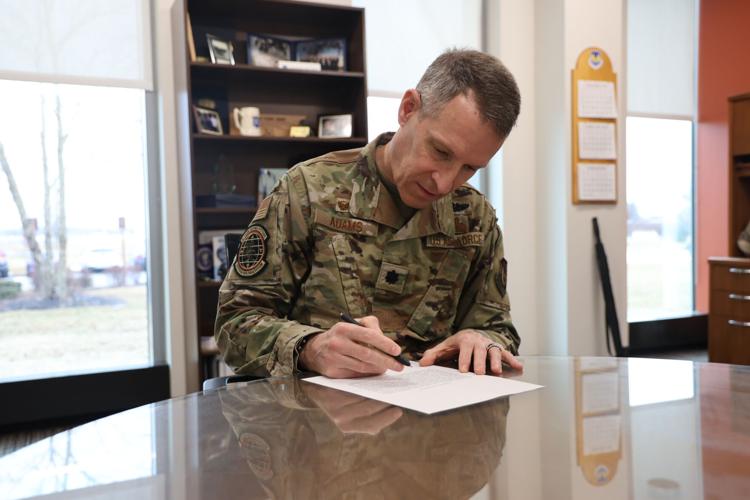
Lt. Col. Thomas Adams
When asked for a simple, straightforward summary of his branch’s role, Lt. Col. Thomas Adams, materiel leader of the Air Force’s CBRN Defense Systems Branch explained, “Our mission is to represent U.S. Air Force interests on joint service CBRN programs and to act as a communication and programmatic conduit between the USAF and the CPE CBRND. Simply put, we’re the Air Force’s eyes, ears and advocates, working in full partnership with the CPE CBRND across their entire portfolio.”
The larger USAF context
Although the branch is collocated with CPE CBRND and is the most visible Air Force organization within the APG CBRN community, it operates within a broader network of USAF CBRN stakeholders. Figure 1 illustrates the branch’s various lines of command and communication across program execution, operational command, and administrative support.
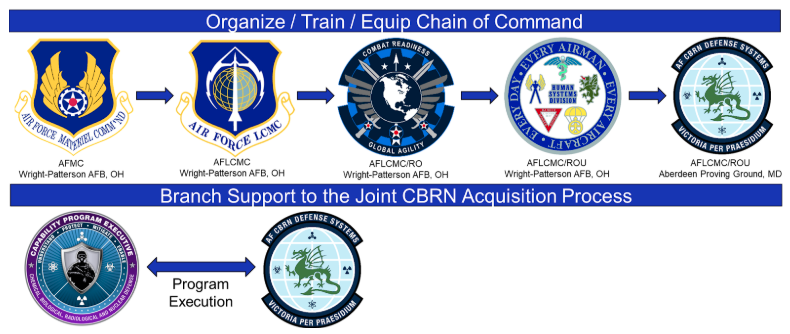
Figure 1. USAF CBRN Defense Systems Branch Organization Structure
Organizationally, the branch belongs to the Human Systems Division within the Combat Readiness Directorate of the Air Force Life Cycle Management Center, a subordinate organization of the Air Force Materiel Command at Wright-Patterson Air Force Base. This Air Force chain of command provides manpower, functional leadership, and acquisition and professional military training for both military and civilian branch personnel.
Figure 2 illustrates the intersection of the joint CBRN community and the Air Force stakeholders. CBRN acquisition programs are executed through the Joint Project Managers (JPMs) and Joint Project Leads (JPLs) within the CPE CBRND, shown in the circle to the left. Branch program managers, logisticians, and engineers are embedded within these JPM/JPLs to support the day- to-day execution of joint service materiel development programs.
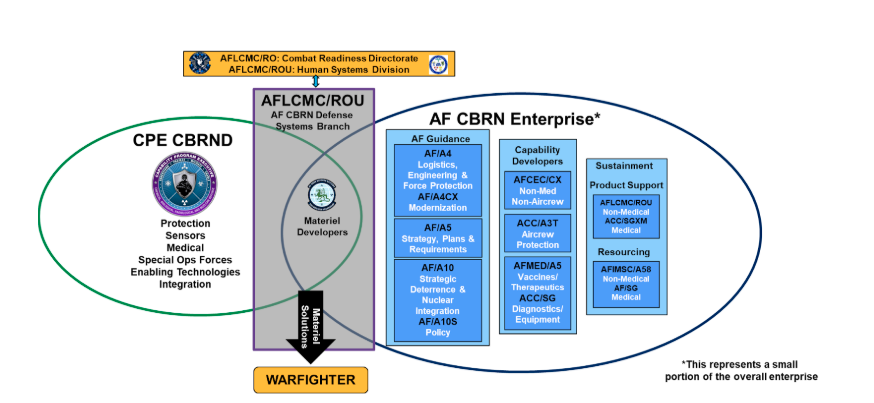
Figure 2. Air Force CBRN Enterprise: CBRN Defense Systems Branch Centric View .
The circle on the right highlights the components of the USAF CBRN enterprise — the community of Air Force stakeholders with responsibilities and authorities related to CBRN equipment modernization, acquisition priorities, system requirements and sustainment. HAF/A10 provides analytical expertise and policy guidance for the Air Force’s employment of CBRN assets; they also chair the Policy Working Group to address service-level CBRN policy issues.
HAF/A4 oversees field preparedness and equipment modernization; they also chair the Modernization Working Group which brings together Air Force stakeholders to define, prioritize and document material needs.
The four capability developers listed are the Air Force Medical (AFMEDCOM)/A5, the AF Civil Engineering Center (AFCEC)/CX and Air Combat Command (ACC)/A3T and ACC/SG. AFMEDCOM’s mission is to provide operational medical capability by organizing, training, and equipping medical forces as integral components of warfighting units.
AFMEDCOM/A5 develops Air Force medical requirements, including CBRN countermeasures, such as vaccines and therapeutics. AFCEC/CX manages Air Force emergency management, consequence management, CBRN air base response, and CBRN training, tactics and procedures, and works with Combatant and Major Commands to develop requirements for non-medical, non-aircrew CBRN needs.
ACC/A3T, in concert with Combatant and Major Commands, develops requirements for aircrew protection, including masks and individual protective ensembles. ACC/SG is responsible for medical requirements related to CBRN diagnostics and devices.
The AF CBRN Enterprise is also responsible for sustaining fielded systems. The CBRN Operations and Support Branch, a part of the Human Systems Division and located at Robins Air Force Base in Georgia, ensures that capabilities remain operational throughout their service life.
Funding for sustainment of fielded, non-medical Air Force CBRN systems is programmed by and through the Air Force Installation Management Support Command. Sustainment funding for fielded, medical Air Force CBRN systems is programmed by AFMEDCOM.
In short, the Air Force CBRN enterprise maintains cradle-to-grave responsibility for CBRN systems used across the service, spanning requirements generation, materiel development and sustainment support.
Air Force leadership at Wright Patterson Air Force Base remains highly supportive of the CBRN Defense Systems Branch’s mission at APG. David McCain, the Human System Division’s senior materiel leader, noted, “I’m proud of the work that my division does in support of joint service acquisition at Aberdeen. Preserving Air Force equities, priorities and requirements while helping the CPE CBRND’s programs meet broader joint service needs can be a delicate balance. Despite that challenge, my military and civilian acquisition professionals get things done in a way that’s collegial, creating and maintaining long-term professional partnerships that benefit both the Air Force and the larger DoW communities.”
Making a real difference, let hard numbers do the talking
In summer of 2024, the USAF CBRN Defense Systems Branch completed fielding of an improved Aircrew Chemical, Biological, Radiological and Nuclear (ACBRN) protective mask for aircrew assigned to mobility and strategic aircraft. The next-generation mask — known as the Joint Service Aircrew Mask – Strategic Aircraft (JSAM SA or M69) — replaces the Aircrew Eye and Respiratory Protection (AERP) system on more than 24 types of strategic aircraft conducting missions such as troop transport, special operations, strategic communications, radiological monitoring, cargo movement, and aerial refueling. Working with and through the CPE CBRND, the branch ultimately fielded over 27,000 masks to protect aircrew deployed worldwide.
The branch continues its mission of putting CBRN defense materiel into the hands of American warfighters. In the past 18 months, branch personnel have successfully fielded more than 700 chemical agent detectors, collective protection shelters, and radiological and nuclear identifiers, in addition to completing the thirty-second delivery of the Uniform Integrated Protective Ensemble Family of Systems Air, Two Piece Undergarment.
More than 32,000 suits have been delivered to date, and once fielding is complete, over 82,000 suits will be provided to Air Force units across the globe.
Nichole Taylor, the Human System Division’s chief engineer, captured the branch’s real-world impact when she noted, “As engineers, we know data speak volumes. Here are the data: we’ve put 27,000 improved masks into the hands of aviators across the Air Force and we’re currently in the process of putting over 82,000 suits with enhanced CBRN protection into the field. I couldn’t be prouder of the work being done by my engineers at Aberdeen.”
Summary
A 30 person team of Air Force acquisition professionals is collocated with the CPE CBRND at the APG South, working side-by-side with joint service colleagues to support the CPE CBRND’s materiel acquisition programs.
Gordon Graham, chief of staff, CPE CBRND, captured the value of the Air Force CBRN Defense Systems Branch when he noted, “’Joint’ isn’t just a syllable in our organizational title. It’s the way we do business. It’s great having day-to-day access and presence of our Air Force partners.”
The branch’s mission and activities have produced measurable, real-world benefits to Air Force units around the globe. By putting improved CBRN defense materiel into the hands of our Airmen, the branch strengthens the nation’s ability to maintain air superiority and to fly, fight and win in a WMD-contested battlespace.