

Work begins on Willow Oaks constructed storm water treatment wetland
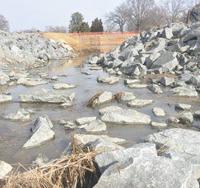
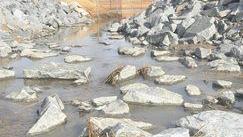
Water flows from the two-acre wetland constructed on the south side of Sampson Road into Upper Machodoc Creek at Naval Support Facility Dahlgren; the second constructed wetland will add approximately six more acres on the northern side of the road. The plan harnesses natural, biological processes to cleanse storm water runoff of pollutants and sediments before it reaches the Chesapeake Bay. - Credit: U.S. Navy photo by Andrew Revelos
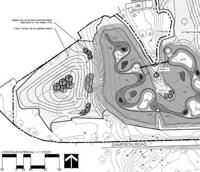
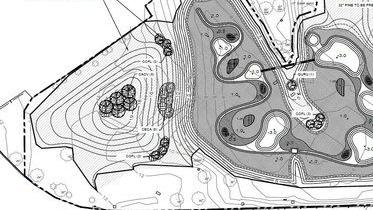
This graphic depicts the soon-to-be constructed Willow Oaks Wetland that will impede storm water runoff from 161 acres from flowing into Upper Machodoc Creek. The wetland will also provide habitat for local plants and wildlife.
The plan to protect local watersheds from polluted storm water runoff takes another leap forward at Naval Support Facility Dahlgren this month with the groundbreaking for an even larger constructed wetland to the North of Sampson Road. The first constructed wetland wrapped up construction on the southern side of Sampson Road, adding two acres of wetland that helps prevent polluted runoff from entering Upper Machodoc Creek. An even more ambitious environmental design project, the Willow Oaks Wetland, will add approximately six acres of marsh, pools and sculpted land features on the north side of Sampson Road.
Both sites will look very different from their historic appearances when the project is completed in June and the wetlands comes to life, filtering and cleaning runoff from 161 acres of land on and off NSF Dahlgren.
Environmental Protection Agency regulations for states in the Chesapeake Bay watershed require reductions in the amount of nutrients and soil sediments that reach the bay as a result of storm water runoff, construction and erosion. Excessive pollutants and sediments in the bay reduce the water’s oxygen content and clarity, which in turn harms wildlife. In Virginia, the goal is for each community to have put measures in place to restore the Chesapeake Bay through overall reductions in nitrogen, phosphorus, and sediments by 2025. With both constructed wetlands installed and operational, Dahlgren will be very close to meeting that reduction.
“This is going to help us achieve some of our Chesapeake Bay [regulatory] requirements,” said Brenna White, storm water program manager for NSF Dahlgren. “The wetland will remove about 85 pounds of phosphorous and 21,000 pounds of sediment from runoff per year. This is a significant percentage of what is leaving the 161 contributing acres that send [runoff] through this constructed wetland.”
While pollution reduction is the project’s main goal, the wetland will also benefit local plants and animals. The greenery, along with microorganisms in the wetland’s water, remove and break down pollutants like nitrogen and phosphorous. The meandering contours of the wetland, known as treatment trains, enhance that process by keeping runoff in the wetland long enough to be cleansed by natural, biological processes.
“We got a lot of our inspiration from local water bodies-marshes and wetlands,” said White. “We try to mimic what nature does right rather than try to make things conform to a cookie cutter design. We want it to be a thriving micro and macro environment.”
Low marsh, high marsh and deep pool zones within the wetland will support a variety of wildlife, such as ducks, turtles and small fish. Native plants, such as salt grass, wildflowers and bald cypress trees, will also feature prominently in the wetland, though cold weather and rain has delayed some planting. A walking trail will allow base residents to enjoy the natural scenery along the southern portion of the wetland.
White hopes to muster students from Dahlgren School to help plant the Willow Oaks Wetland later this spring. “Live stakes,” certain types of plants and trees that can be propagated by cutting off a branch and planting it in the ground, are well-suited for young volunteers. “It’s a great way to establish stability in the wetland quickly,” she said. “Kids love planting live stakes.”
As the Willow Oaks Wetland is constructed, trucks will remove approximately 10,000 cubic yards of soil from the site’s entrance on Sampson Road to B Gate. Traffic impacts are expected to be minimal.
“It’s going to be a nice addition to the community,” said White.
(Editor’s note: The author thanks Brenna White for contributions to this article)