
NSWC Dahlgren Division: Pilotless Test Flights of the 1920s and UAV Testing Today
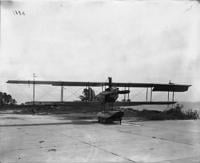
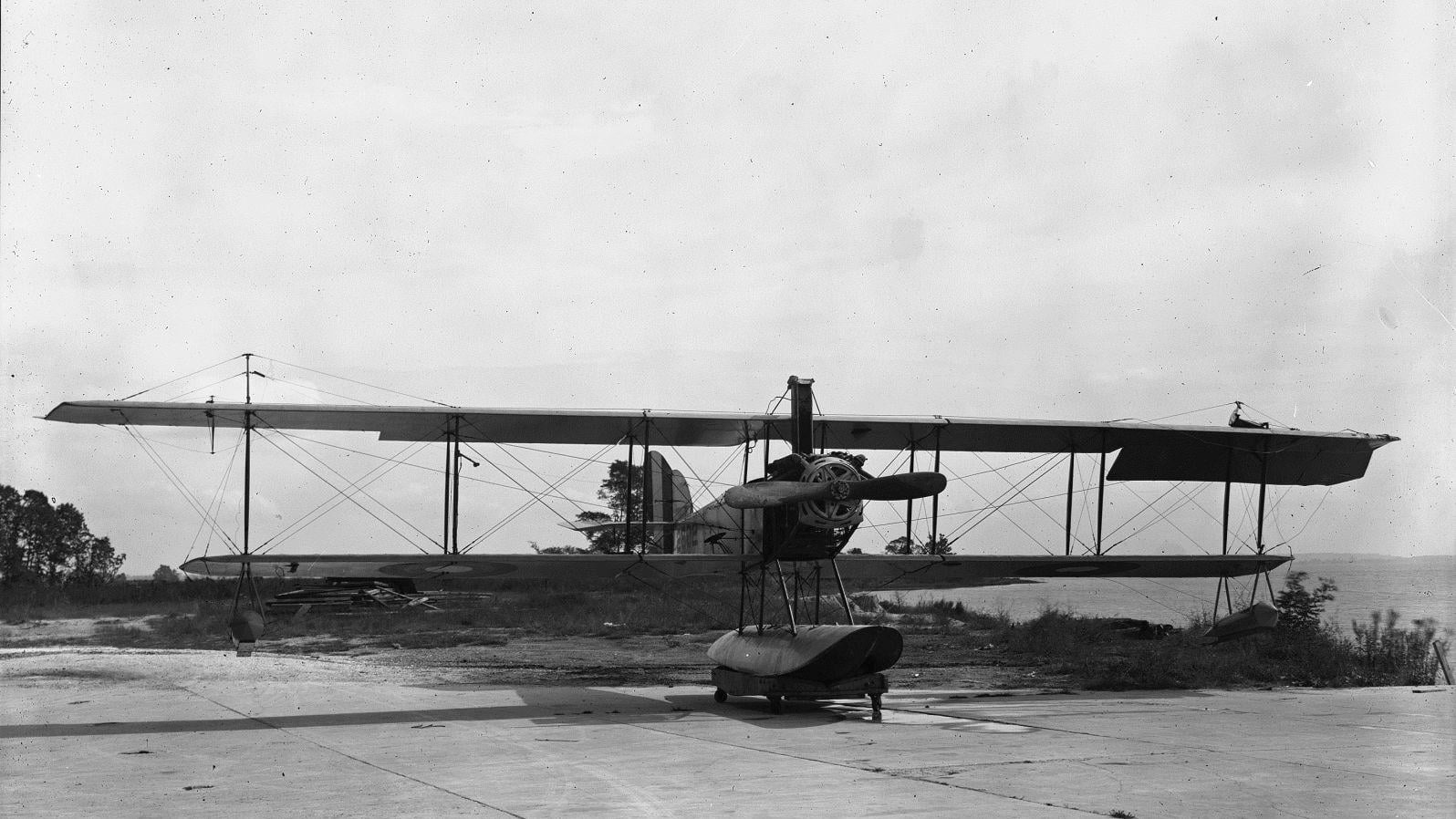
Dated Sept. 16, 1924. NP Radio-controlled Plane, single prop-open cockpit, amphibious landing biplane. A starboard bow view of an NP radio controlled aircraft on the ramp at the NPG, Dahlgren. This is believed to be one of the five N-9 airplanes from Copaigue, Long Island that were sent to Dahlgren, with C. C. Middlebrook, formed the original Naval Air Detail. This particularly aircraft is supposedly the first flown under remote control without a pilot.
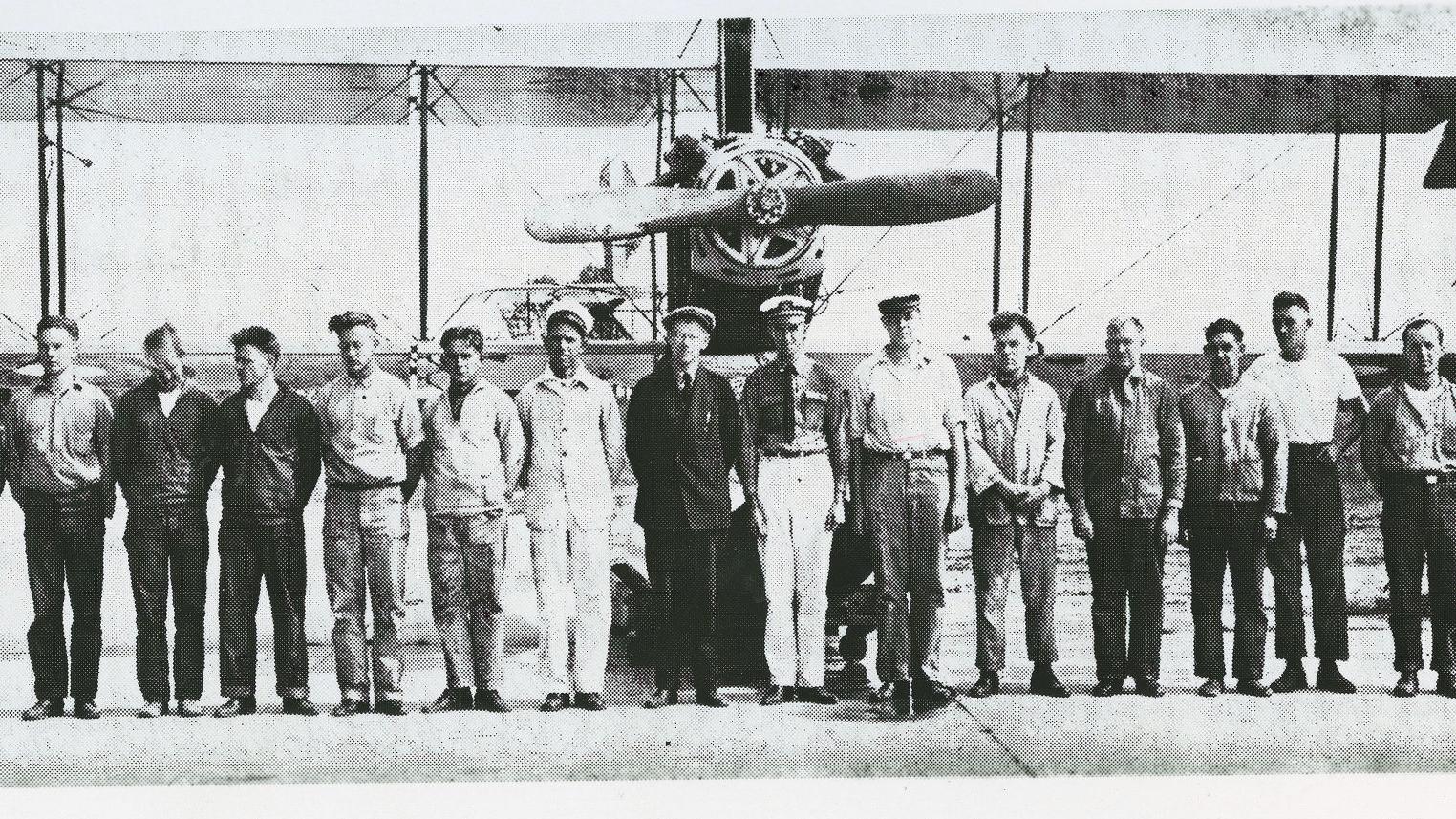
1924: This N-9 was the first Navy plane to take off and land successfully by radio control. Lt. John J. Ballentine, USN, (later Admiral John J. Ballentine, USN (Ret.) directly under the propellar, was the gentleman doing the flying. Fifth from left is L. R. Daniel and sixth from right is Charlie Middlebrook who died in 1965 and who worked on the Norden Bombsight at Dahlgren. Names of all in the picture are, from left: Caldwell, Arnold, Bryant, Spear, Daniel, Pepler, Stone, Mirick, Luke, Middlebrook, Armstrong, Vile, Stansbury, Griffin and Beasley.
Unmanned aerial vehicle (UAV) research, development, and testing throughout the Department of Defense traces its lineage back to Naval Surface Warfare Center Dahlgren Division’s (NSWCDD’s) origins as the Naval Proving Ground.
It was Sept. 15, 1924.
The office-in-charge of Dahlgren’s air detail, Lt. John Ballentine, and Carlo Mirick, an electrical engineer and former reservist, decided to attempt the “first unmanned, radio-controlled flight,” on that afternoon, according to the Dahlgren history book, The Sound of Freedom, Naval Weapons Technology at Dahlgren, Virginia, 1918-2006.
“In preparation, Ballentine’s ground crew lashed a bag of sand into the cockpit to compensate for his weight before cranking the engine, and the flying boat positioned itself over Dahlgren to take control of the unmanned plane if necessary,” The Sound of Freedom recounted. “From the radio-control station near the hangar, Mirick and Ballentine gave the ‘on throttle’ signal, and the crew released the plane into the air. After a 40 minute flight, the controllers landed the plane rather hard and damaged it, but otherwise, the flight was a tremendous success. This was the first time in history that a pilotless aircraft had taken off, was controlled remotely through numerous maneuvers, and landed relatively intact.”
The milestone test spawned a series of successful “pilotless” test flights at Dahlgren in the 1920s. Ballentine conducted more than 28 unmanned flights before rotating to his next assignment on Sept. 14, 1925.
“Flight ranges were increasing so much that NRL (Naval Research Laboratory) had reported on 22 November (1924) that radio control was now feasible beyond the range of vision,” the book points out.
The flights at the Naval Proving Ground – now called Dahlgren’s Potomac River Test Range – were not exclusively aviation-related achievements.
Concepts and technologies overlapped in that early research, leading to progress in the areas of guided munitions, auto piloting capability and radio control, though it took decades for each technology to be fully refined.
Since 2005, the NSWCDD scientists and engineers have been busy with UAV researching, developing, integrating and testing new payloads, to support weapon systems integration and testing on the Potomac River Test Range.
While NSWCDD does not develop new UAV systems, it has an organic in-house capability to integrate new payloads and use the UAV data to integrate these platforms with Navy combat and weapon systems.
Interesting facts: UAV testing and the development of various unmanned systems continue to overlap as new concepts and technologies are evaluated at NSWCDD today. Dahlgren’s Potomac River Test Range, distributed sensors, live weapons, combat system laboratories, fire control laboratories, and UAVs are all connected via fiber optic network and can be configured to emulate ships on the shore. This integrated capability – known as USS Dahlgren— interconnects labs, sensors, weapons, and UAVs to provide a one-of-a-kind test bed for developing surface weapons and engagement systems, including the development of game-changing technologies.
As we begin 2017, the UAV testing at Dahlgren increasingly focuses on integration and interoperability of the USS Dahlgren kill chain with UAVs serving as forward observers.