



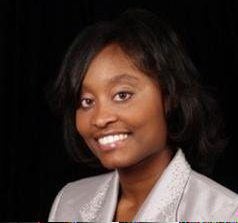
As the Navy celebrates Women's History Month, one Naval Support Activity South Potomac (NSASP)-hosted engineer is speaking out about how she fell in love with a profession that once excluded women. Jessica Kennedy, a test engineer at the Naval Surface Warfare Center (NSWC) Dahlgren Division, has been in her position less than two years, but she is already taking a leadership role in mentoring the next generation of women-engineers.
The theme for this year's National Women's History month is women's education, women's empowerment. The National Women's History Month Project's (NWHP) message for 2012 describes the fight for women's equality. "Although women now outnumber men in American colleges nationwide, the reversal of the gender gap is a very recent phenomenon," according to the NWHP statement. "The fight to learn was a valiant struggle waged by many tenacious women-across years and across cultures-in our country. After the American Revolution, the notion of education as a safeguard for democracy created opportunities for girls to gain a basic education-based largely on the premise that, as mothers, they would nurture not only the bodies but also the minds of (male) citizens and leaders. The concept that educating women meant educating mothers endured in America for many years, at all levels of education."
True to form, an educated mother helped drive Kennedy's success. "My mom is a former chemistry teacher, so in our house, you have to be into science," she said. ""My brother is an engineer. My older sister is an engineer. My dad is an accountant, so yes, math and science kind of run in our family. So I fought it for a long time and it just happened. My younger sister is the only exception; she went the nursing route because she loves helping people."
The key moment in Kennedy's career path came at a summer science, technology and math (STEM) program, the same type of programs sponsored by Dahlgren commands every year. "One summer, I took a robotics class and I knew, from there on, it would be engineering. It was from my junior year of high school to my senior year. We traveled to a local college and took calculus classes, robotics and programming; it was my first time being introduced to that stuff and it was so much fun. I loved it!"
Still, the Mississippi-native wondered how she would fit into a traditionally male-dominated career. "I knew I loved math and science," said Kennedy. "But I won't tell a fib and say I didn't think about how I'd fit in [to a STEM profession because] I like to talk. I like to be around people. I didn't know how I'd fit in to that old image of engineers. So it was great interning."
An internship at Hewlett-Packard opened Kennedy's eyes as she pursued her engineering degree at Jackson State University. "It was very different going to a company like HP and seeing all these women and guys who were so unlike any engineer I had thought of in my mind," she said.
Kennedy took a stab at why inaccurate stereotypes about STEM profession persist, even as society re-evaluates gender roles. We've all heard the jokes about the supposed inability of engineers to possess social skills. "That's the older view," said Kennedy. "Now, the engineers that you see are social. I love people and I love to talk. I think [the STEM stereotypes] have to do with how it's taught in some elementary, middle and high schools. A lot of engineering is taught with idea that [students] have to be quiet, timid. if you're loud and outspoken you won't make it. That's just not how it is now; that's why it's so important for kids to actually see people who are in the industry, because [engineers] have every type of personality you can dream of."
If there is one stereotype about STEM professions that often rings true, it is that engineers are big on being part of solutions. Kennedy drew on her college experiences with the Society of Women Engineers (SWE) and acted. "There wasn't a [SWE] section around when I moved here a year and half ago," she said. "I was involved in SWE in college. I found numerous internships through SWE, job opportunities from SWE, and I wanted to get involved. I probably bugged everyone I could contact when I first moved here."
Kennedy's branch head put her into contact with Amy Settle, federal women's employment program manager at NSWC Dahlgren Division. Through Settle, Kennedy was able to found the Fredericksburg Chapter of SWE. "[Settle] was a great resource," said Kennedy. "She put me in contact with the right people, talked about how I could get started and even now she is a mentor to help the chapter to keep going."
Now, when Kennedy isn't testing the Navy's future combat systems, she mentors the nation's future women engineers. "SWE is a great organization," she said. "[We participate in a] lot of conferences, a lot of partnerships; right now we're getting ready for an event with the Girl Scouts in Fredericksburg and also with a group called PERL at [the University of] Mary Washington. The goal is to promote, encourage, recruit and lead women in technology."
Founding SWE and meeting other like-minded, female STEM professionals in Dahlgren has changed Kennedy's perception of the Navy. "There are so many women on base and that is not necessarily something I expected when I started working here," she said." And uniformed service women. I just didn't expect to see so many in Dahlgren, Virginia. I thought there wouldn't be too many women, but there were. Dahlgren is doing a great job at recruiting a lot of talented women. Every day I meet someone new, someone who I'd love to learn from, someone who is open and willing to teach me. So I think we're doing a great, great job. For that, I commend the recruiters and the branch heads who are going out there and finding talent in all genders. We are priming ourselves to be a powerhouse for diversity."
Learning her way around the Navy has given Kennedy a great respect for the Sailors she serves, especially female Sailors. "I'm in awe of the women serving in the Navy," she said. "I give them all respect because I don't know if I even have the strength to do what they do."
Kennedy offered words of wisdom to the female engineers who will one day be a part of the Navy. "If I could tell them one thing, just hang in there," she said. "I know it gets really tough, especially if you come from a background where engineering is just not encouraged. But the internet is a great resource. There are billions of websites out there that you can learn from; billions of programs that you can get involved with. So just hang in there and use your resources."
So what does the future hold for women in the Navy and in STEM professions? "I don't know if I want to answer that," said a smiling Kennedy. "And I only say that because there is no set future. I think from here to 1,000 years from now, things will change. I don't want to be able to predict the future. I want it to constantly change and give me something to reach for."
