Search
Filter Search
-
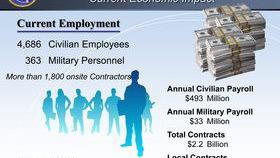
Report examines economic impact of NSFs Dahlgren, Indian HeadFeatures
By Andrew Revelos
2 Min Read
-
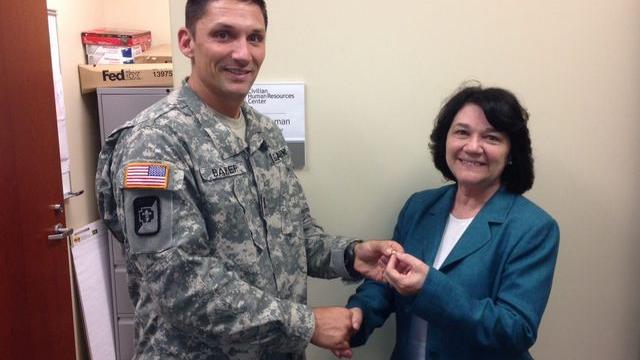
MDW kicks off annual Combined Federal CampaignLocalThe Joint Force Headquarters-National Capital Region and the U.S. Army Military District of Washington officially kicked off the 2014 Combined Federal Campaign (CFC) when Maj. Gen. Jeffrey S. Buchanan, JFHQ-NCR/MDW commanding general, became the first in the command to contribute to the campaign Sept. 5.
By Staff Sgt. Jennifer C. Johnson
JFHQ-NCR/MDW Public Affairs
1 Min Read
-
The Thrift Savings Plan: Are you contributing yet?LocalIf not, what are you waiting for? You are eligible to contribute to the Thrift Savings Plan (TSP) as soon as you begin your military service. Saving for your retirement with the TSP makes sense no matter how many years you plan to serve in the military. If you leave the service before qualifying for a military retirement, the money in your TSP account can help jump start your wealth building. If you go the full 20, you’ll have your TSP income as a supplement to your military retired pay.How do I start my TSP contributions?Check with your service’s payroll office about its procedures for starting your TSP contributions. You must make your request through your service because your payroll office calculates the contribution and deducts the appropriate amount of money from your pay. You may be asked to use your service’s electronic system to begin contributing to a TSP account. If your payroll office allows you to use the paper version of the contribution election form, Form TSP-U-1, you can find it on the TSP website, tsp.gov. You can also request it from your service, or you can call the ThriftLine at 1-TSP-YOU-FRST (1-877-968-3778) and have it sent to you.How can I change my TSP contributions?You can use the same method to change your contributions as you did to start your contributions.What type of pay can I contribute to my TSP account?As a military member, you have four potential sources of employee contributions: basic pay, special pay, incentive pay and bonus pay. You must elect a percentage of contributions from your basic pay in order to also make contributions from your special pay, incentive pay, and/or bonus pay. You cannot make contributions to the TSP from your housing or subsistence allowance.You can make two types of contributions to your TSP account: traditional (tax-deferred) and Roth (after-tax).Traditional contributions come out of your pay before your income is taxed. The money grows in your account tax-deferred, but when you withdraw it, you pay taxes on both the contributions and their earnings. With Roth (after-tax) contributions, you pay the taxes up front, which means you will not pay any taxes on them at withdrawal. In addition, you will not have to pay taxes on the earnings as long as they are considered "qualified" by the Internal Revenue Code (IRC) requirements.1Furthermore, you can make contributions from tax-exempt pay earned in a combat zone, which can really add up if you choose to make Roth contributions. You are not paying taxes on your contributions so why pay taxes on their earnings?Are there limits to how much I can contribute?You can contribute as little as 1 percent of your pay each pay period or as much as the IRC allows each year. The TSP announces the contribution limits on the TSP website tsp.gov and the ThriftLine, as well as through its various publications when the limits become available.If you’ve been putting off contributing to your TSP account, wait no longer. Contact your payroll office to begin making contributions. For more information about the plan and its benefits, visit our YouTube channel: YouTube@TSP4gov and follow us on Twitter @tsp4gov.1The earnings on your Roth contributions become "qualified," and are therefore paid tax-free, as long as 5 years have passed since January 1 of the calendar year when you made your first Roth TSP contribution (also known as the 5-year rule) and you are at least age 59½ or are permanently disabled.
2 Min Read
-
Retiree CornerNewsDigital process reduces VA claims backlog The Department of Veterans Affairs reports that more than 30 percent of its disability claims inventory is now digital. This is a key part of transforming outdated, paper processing into an electronic system. All new claims are transformed into digital records for electronic processing. Tons of paper documents handled each year related to veterans’ claims created a massive backlog in processing. Digital conversion improves processing timeliness by eliminating paper folder transport, reducing manual data entry, streamlining the review of medical records, and standardizing correspondence with veterans and beneficiaries. More than 1 million images are added each day. “Finding a key piece of evidence in a thick paper file folder takes time,” said a claims specialist. “With digital claims records, we can find all the key information related to the claim with a keystroke.” The backlog of claims pending over 125 days has been reduced by nearly 12 percent. Priority is given to disability claims from homeless veterans, those with extreme financial hardship, the terminally ill, former Prisoners of War and Medal of Honor recipients.
Courtesy of the Retiree Activities Office
1 Min Read
-
Pax pros do it againRegional NewsCombined Federal Campaign exceeds last year�s contributions
1 Min Read
-
CFC: It’s Not Too Late to DonateFeaturesAs the Combined Federal Campaign (CFC) reaches its halfway mark, federal employees and service members are reminded there’s still time to make a difference by making a charitable donation through the campaign the world’s largest workplace fundraiser.
By Sarah Marshall WRNMMC Journal staff writer
3 Min Read
-
Combined Federal Campaign kicks off with a runNewsThe Combined Federal Campaign annual drive has begun. Last year, the CFC of the National Capital Area raised $64,542,568.00 in donations to charities. Military and federal employees can choose how much they want to donate through a regularly scheduled payroll deduction and where their money will go. For information, visit www.cfcnca.org.
<1 Min Read