
Volunteers collect 890 lbs. of trash on Clean the Bay Day
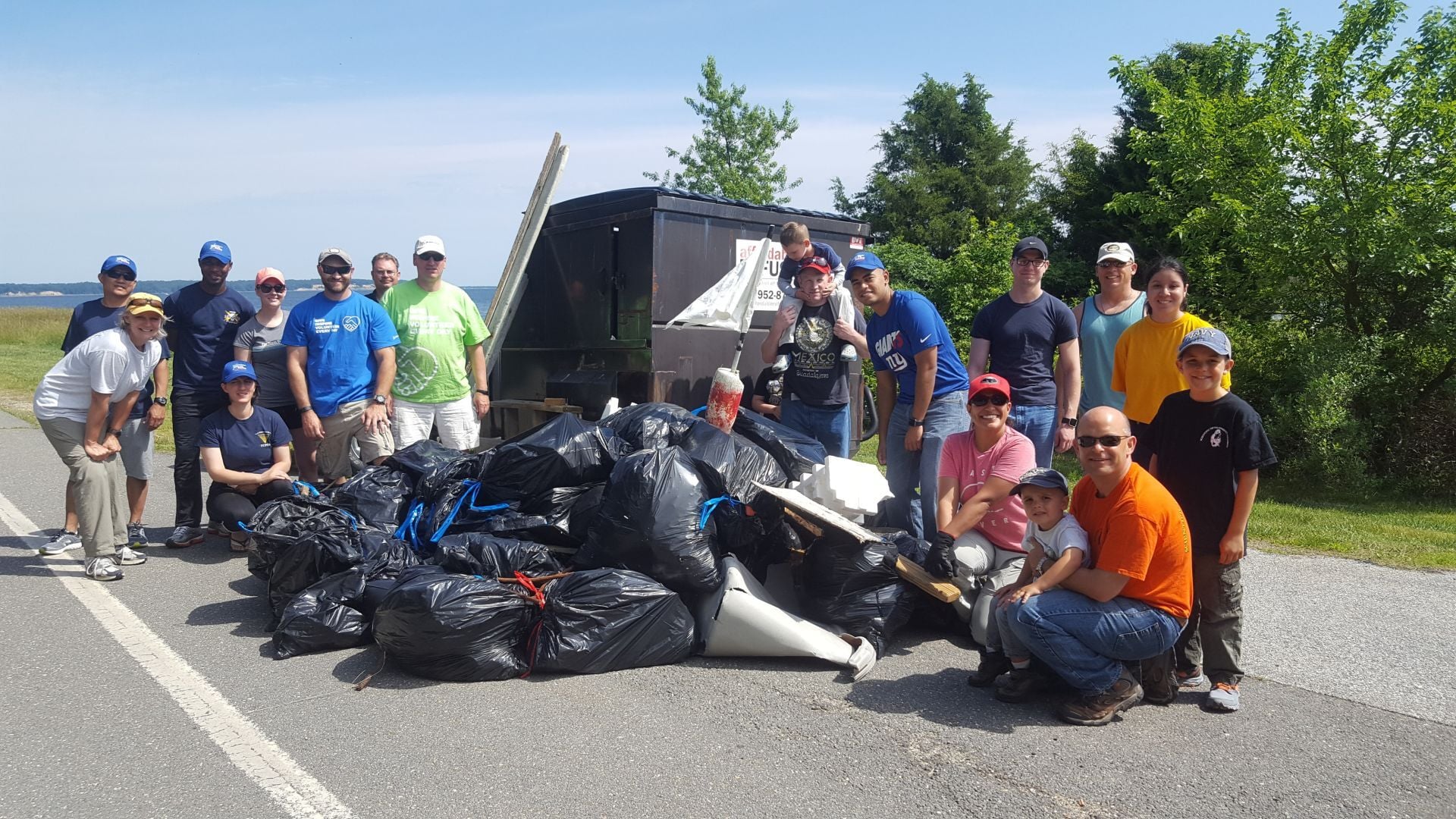
Some of the 92 volunteers who participated in Clean the Bay Day at NAS Patuxent River June 3 pose with a portion of the trash they collected. Approximately 890 lbs. of trash was removed from four miles of Patuxent River and Chesapeake Bay shoreline. People using Pax River’s beaches are reminded to clean up after themselves and leave nothing behind.
Cradled where the Patuxent River meets the Chesapeake Bay, NAS Patuxent River boasts some of the most beautiful shoreline and natural habitat in St. Mary’s County, but trash and litter left behind can quickly ruin that aesthetic.
During Clean the Bay Day(CTBD) June 3, a cadre of volunteers split up into groups and spent three hours scouring the shoreline at East Patuxent Basin, Fishing Point, Hog Point,Cedar Point Beach and the seawall picking up trash and restoring the areas to their natural beauty.
“We covered roughly four miles of waterfront,” said Capt. Molly Boron, P-8A Integrated Product Team co-lead at PMA-290, and coordinator of the CTBD event. “The majority of trash was glass and plastic bottles, shotgun shells, plastic bags, cigarette butts and fishing debris. Plastic buckets, construction debris, Styrofoam, a crab pot and car mats were other items collected.”
While some waste along our beaches may wash ashore, much of it comes from people using the areas who do not bother to clean up after themselves or dispose of their waste properly, and that can pose a very real threat to wildlife.
“You hear about fish, turtles, otters and other marine mammals getting stuck in six-pack rings from soda or beer cans,” said Kyle Rambo, conservation director for Pax River. “A wad of fishing line poses an entanglement hazard when animals get their legs tangled and then cannot escape or fly. Birds, like osprey, might also pick it up to line their nest and then their young get tangled and can’t leave the nest. We’ve already found young osprey dangling beneath nests dead from the struggle.”
Plastics don’t dissolve chemically, but ultraviolet light can render them brittle and more likely to break into smaller, hazardous pieces.
“Bits of colorful plastic floating in a marine environment can resemble little invertebrates, baby crabs or fish and they’ll get gobbled up by fish and birds,” Rambo noted. “Often, we’ll find seabirds starving to death with bloated bellies full of plastic.”
Rambo also said that floating plastic bags resemble jellyfish, which are the primary food of indigenous sea turtles, and after being ingested, can create intestinal blockage which leads to death.
“And even small amounts of chemical toxins – from a discarded tube of sunscreen, insect repellant or cigarette butt, for example – can be poisonous to wildlife,” he added.
Both Boron and Rambo lauded the efforts of the 92 volunteers – a mix of military and civilian employees from across the installation, family members, former base commanding officers, industry partners and Boy Scout Troup #1785 – who spent part of their weekend cleaning up after others.
“Whether they realize it or not, their efforts are keeping seagulls, turtles, fish and people safer from debris and polluted water,” Boron said. “I was inspired by the parents getting their kids involved early in understanding the importance of a clean watershed. Our environment is in a continuous cycle and our actions can have positive or negative consequences on our future needs. We pull our food and water from the watershed, so it makes sense to care for it.”
Rambo agreed, and noted that trash also has an adverse effect on our overall appreciation of nature.
“No one wants to be walking down a beach enjoying a scenic experience and have to step over a dirty diaper,” he said. “As a former scout leader, our rule was ‘always leave an area in better shape than you found it.’ The CTBD volunteers are obviously a group of people who subscribe to that same belief. It wasn’t their trash they were cleaning up; they were making the beaches a nicer, cleaner, better place for others to enjoy and I commend them for that.”