

NHCPR brings awareness to breast cancer

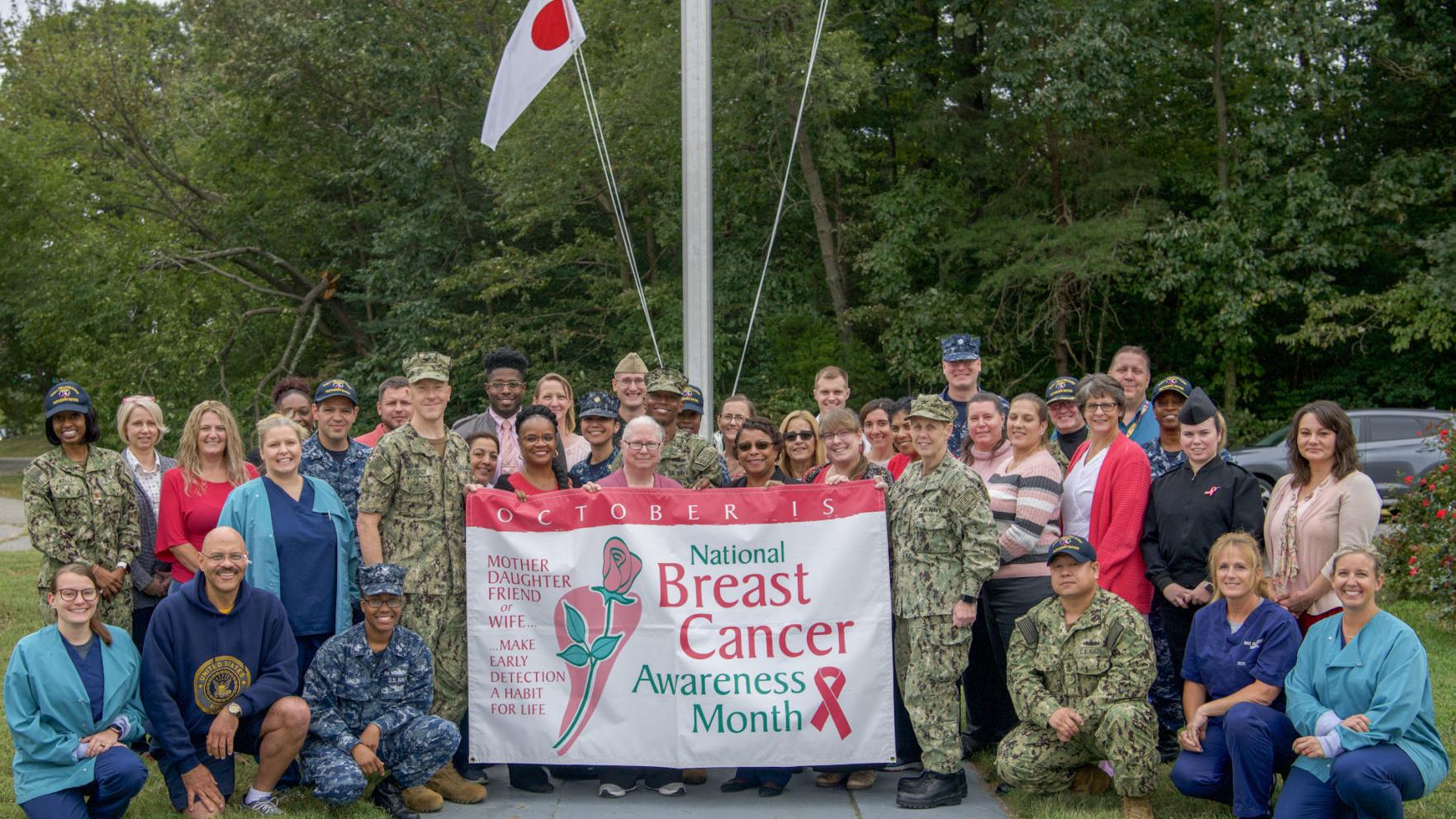
During Breast Cancer Awareness Month, staff at Naval Health Clinic Patuxent River remind you, your mother, daughter, friend or wife to make early detection a habit for life.
The month of October is Breast Cancer Awareness month which seeks to make women and men aware of the symptoms, treatments, counseling, and fundraising associated with breast cancer.
Breast tumors are caused by uncontrolled growth of breast tissue. These tumors can be malignant or benign. A malignant or cancerous tumor is an abnormal growth that can spread to other tissues and parts of the body. A benign tumor is not cancerous and does not spread. A tissue biopsy is usually needed to distinguish between benign and malignant tumors.
Screening mammograms are intended to diagnose breast cancer early, when most responsive to treatment, but may also have negative consequences. The U.S. Preventive Services Task Force recommends biennial screening mammography for women aged 50 to 74 years. The decision to start screening mammography in women before age 50 years should be an individualized decision made by each woman and her care provider. Women with a parent, sibling, or child with breast cancer are at higher risk for breast cancer and are more likely to benefit from mammography beginning in their 40s.
Potential negative consequences of mammography include additional testing and biopsies for conditions that are eventually discovered to be benign. In this case, if the screening mammogram had not been done, there would be no negative consequence if the benign condition were not diagnosed. Beginning mammography screening at a younger age and screening more frequently increases the risk for discovery of benign conditions, additional testing for diagnosis, associated cost and anxiety.
For women at average risk for breast cancer, the greatest benefit of mammography occurs with biennial screening between ages 50 to 74 years. The group with the greatest risk reduction for women aged 60 to 69 years are most likely to reduce risk of death from breast cancer by having routine mammograms. While screening mammography in women aged 40 to 49 years may reduce the risk for breast cancer death, the number of deaths averted is smaller than that in older women and the number of false-positive results and unnecessary biopsies is larger. The balance of benefits vs. risk of unnecessary biopsy is likely to improve as women move from their early to late 40s.
According to the American Cancer Society about 1 out of 5 men who develop breast cancer has a family history of the disease. An estimated 2,550 men in the United States will be diagnosed with breast cancer and an estimated 480 men will die from breast cancer in 2018. Black men have the highest incidence rates (2.7 out of every 100,000 men), followed by Caucasian men (1.9 out of every 100,000 men). Men should be familiar with the feel of their breast and chest wall tissue, so they can talk with their medical service provider if they notice any lump or change. Mammograms are not routinely offered to men and may be difficult to perform because of the small amount of breast tissue. A doctor may recommend screening mammography for men with a genetic mutation that increases the risk of developing the disease.
“Have a discussion with your medical service provider about your individual screening needs,” said Nicole Quinn, Naval Health Clinic Patuxent River’s health promotion and wellness coordinator. “Maintain awareness, it’s up to us to take care of our bodies.”
For more information or to schedule a clinical exam, contact your medical service provider.
Sources: U. S. Preventive Services Task Force (2016, January). Breast Cancer: Screening. Retrieved from (https://www.uspreventiveservicestaskforce.org/Page/Document/UpdateSummaryFinal/breast-cancer-screening1).
Statistics adapted from the American Cancer Society’s (ACS) publications, Cancer Facts and Figures 2018 and Cancer Facts and Figures 2017: Special Section — Rare Cancers in Adults; and the ACS website (January 2018).