

Navy to begin testing drinking water for lead
U.S. Navy photo by Shawn Miller
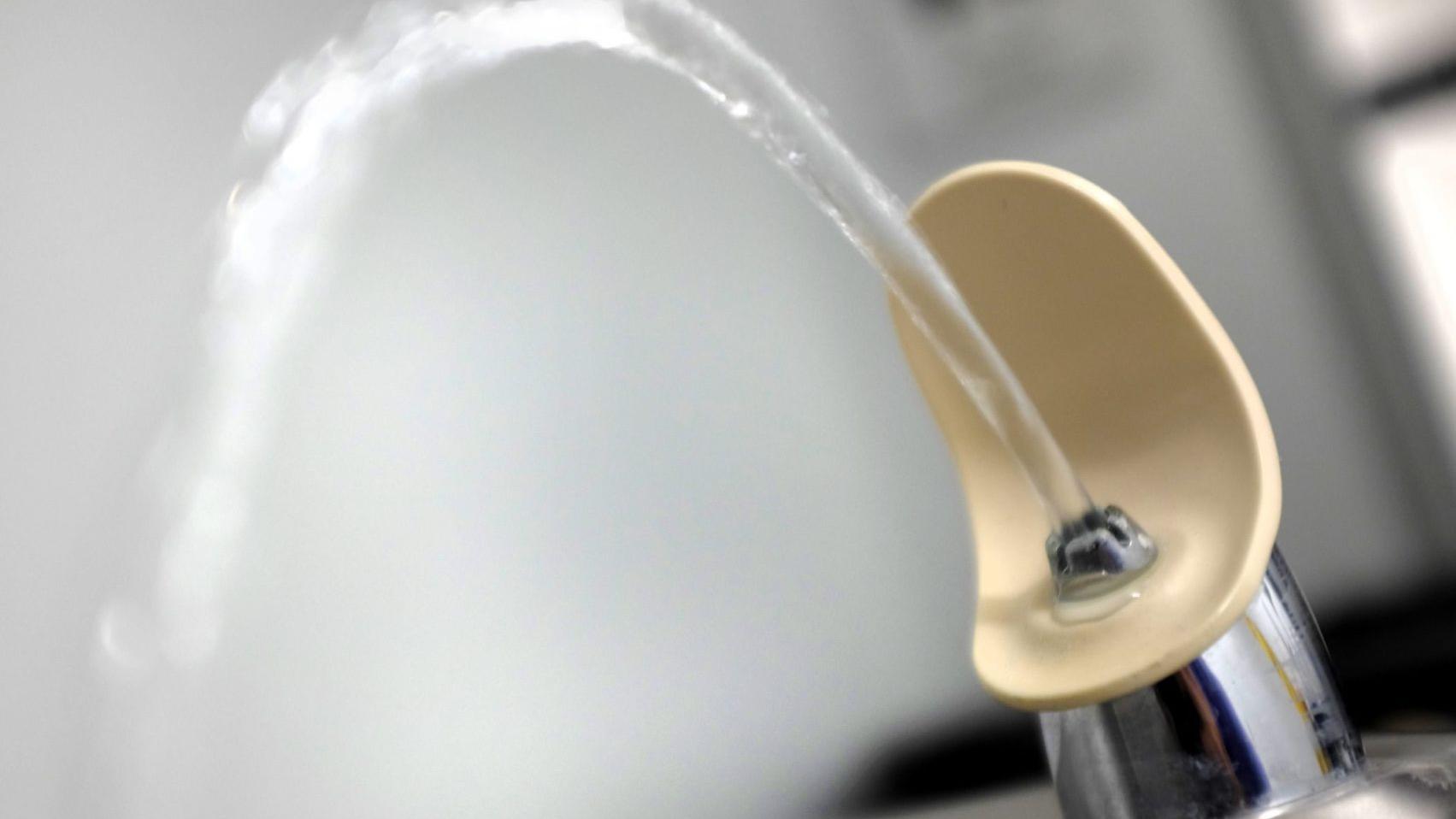
The Navy is preparing to begin testing drinking water for lead in schools and child care centers in each naval region throughout the rest of the year. While there is no federal law or DOD policy requiring the testing, Navy leaders said the safety of service members and their families is a priority.
By Shawn Miller
Naval District Washington Public Affairs
Throughout the end of this year, the Navy is scheduled to conduct water testing for lead contamination in priority areas across each Navy region worldwide.
In a February 2014 policy release, the Office of the Chief of Naval Operations defined those priority areas as primary and secondary schools, Child Development Centers (CDCs), Navy-operated group homes and youth centers, with all potable water outlets set to be tested.
“There is no federal law or DOD policy requiring schools or child care facilities to be so extensively tested for lead. However, the health and safety of our Navy family is a top priority of the Navy’s uniformed and civilian leadership,” the CNO policy stated. “Because children are most susceptible to the effects of lead, it is Navy policy to meet U.S. Environmental Protection Agency (EPA) guidelines for testing and sampling of water from drinking water fountains, faucets, and other outlets from which children may drink.”
Naval Facilities Engineering Command (NAVFAC) Washington is currently in the planning stages of the operation, and is scheduled to begin testing at installations later this year.
“We want to emphasize that this is a CNO initiative that goes above and beyond our already rigorous annual requirements that the EPA and [Maryland Department of the Environment] impose on us in our regular sampling schedule,” said Lance McDaniel, NAS Patuxent River Environmental director, adding that the annual Consumer Confidence Report on the base’s quality of drinking water is published each summer and is available for public viewing.
While water from individual suppliers may meet all regulation requirements, lead may still find its way into the water supply by leaching through plumbing materials or by varied use patterns, and NAVFAC said the best way to determine lead levels is sampling water from the tap.
“Parents, staff and installation stakeholders will be notified prior to sampling, following receipt of sampling results, and following corrective actions, if any are required,” NAVFAC said in a release.
The testing plan calls for a three-step process where officials first secure and flush systems and sample outlets at all the priority installations, then test newly constructed or modified areas, and finally, conduct periodic retesting. If any water outlets contain water with more than 20 parts per billion (ppb) of lead, those outlets will immediately be taken out of service and subjected to further testing. According to NAVFAC, one ppb is roughly equivalent to a drop of water in an Olympic-sized swimming pool.
According to the EPA, homes and buildings constructed prior to 1986 are more likely to have lead piping, although newer pipes may still contain up to eight percent lead. Earlier this year, the EPA amended regulations to reduce allowable lead content in plumbing fixtures to 0.25 percent.
To prevent any possible lead problems on a routine basis, NAVFAC recommends flushing water outlets in homes and buildings with cold water where water may have been sitting in the pipes and exposed to any possible contaminants for long periods of time, such as over long weekends or vacations. They also recommend using cold tap water more often when used for cooking and drinking, and cleaning debris from faucet aerators which may trap sediments.
To learn more about lead issues and effects, visit www.epa.gov/lead. To view NAS Pax River’s 2013 Consumer Confidence Report on the Quality of Drinking Water report, visit http://www.cnic.navy.mil/regions/ndw/installations/nas_patuxent_river/om/environmental_support.html.
Connie Hempel, NAS Patuxent River Public Affairs, contributed to this article.