
African-Americans helped build Patuxent River from the ground up
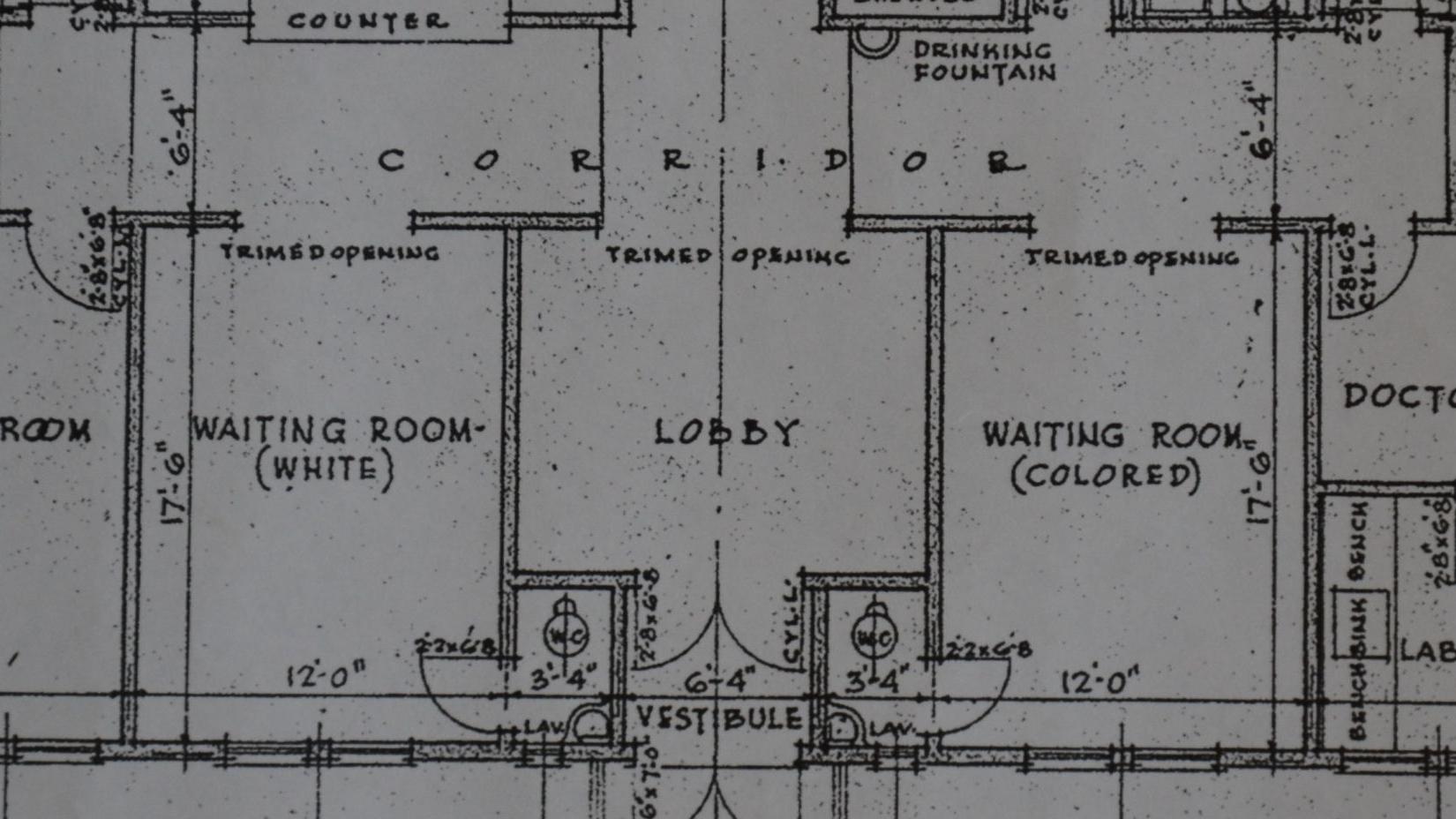
A cross-section of the plans for the first floor of the workman’s temporary sick bay at NAS Patuxent River, dated Dec. 7, 1942, shows segregated waiting rooms for “white” and “colored.”
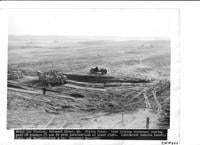
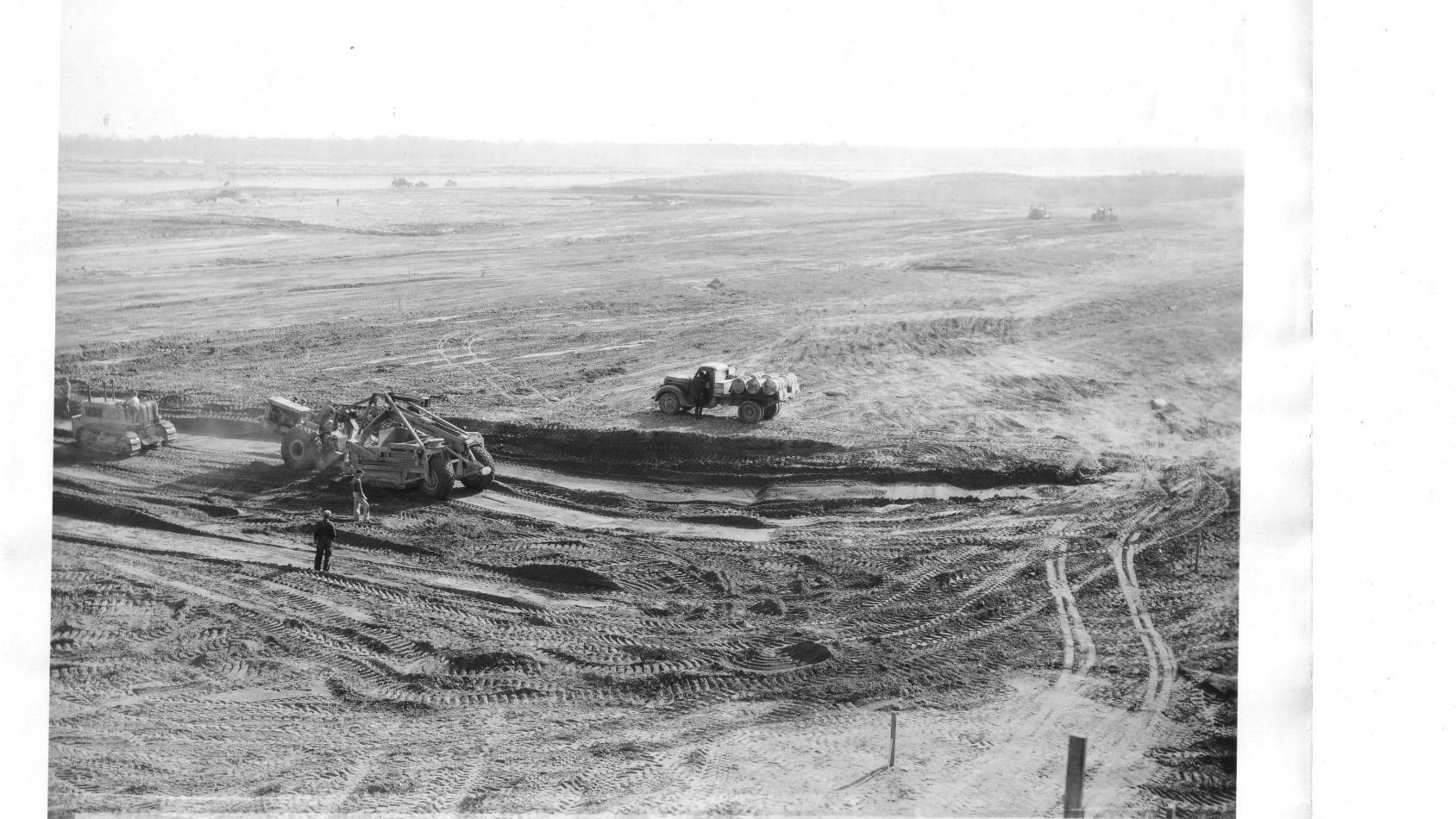
In this construction photo from 1942 or 1943, the caption reads “Naval Air Station Patuxent River. Flying Field. View looking southeast showing part of Runways #3 and #2 with intersection at upper right.”
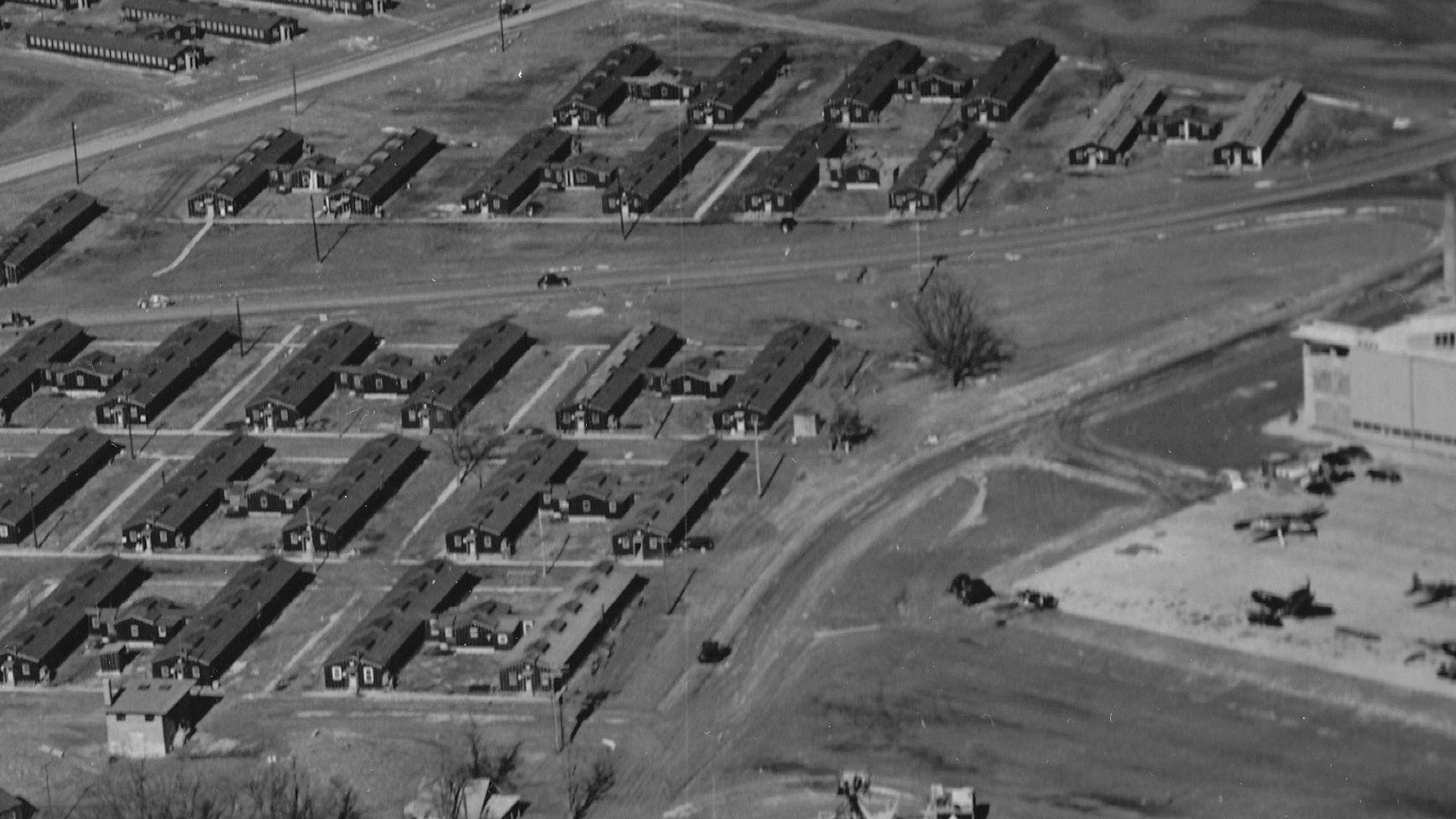
Aerial view of some of the temporary wooden — and segregated — barracks with tar paper roofs that served as much-needed housing for the workers constructing NAS Patuxent River in 1942.
In the beginning of the 1860s, on the eve of the Civil War, the African-American population in St. Mary’s County was greater than 50 percent; and while a chunk of that population was free, the majority was enslaved.
Following the Civil War, that population dropped to about 25 percent as many left the area seeking new opportunities in Baltimore and beyond; but not everyone could afford to go.
“Some formerly enslaved people remained in the area because they didn’t have the resources to leave,” explained Julie King, professor of anthropology at St. Mary’s College. “Southern Maryland remained very poor and the struggle continued for decades until the Navy began construction of the Pax River installation.”
At the time the Navy arrived, the population numbered around 14,000, but would increase two-fold over the next 10 years, King noted.
“For many blacks who remained, the air station became their ticket to prosperity,” she said. “The Navy brought new opportunity for everyone in the area, but especially African-Americans.”
Their own words
The following story and excerpted quotes are taken directly from conversations conducted in 1987 with African-American individuals who lived and worked in this area in 1942, at the time NAS Patuxent River was being constructed.
Their complete transcribed interviews — along with many others covering various topics — can be found online at St. Mary’s College’s SlackWater Center website at www.smcm/edu/archives.
In the beginning
Richard Gray Portee, Joseph Mason Curtis, Joseph Ogden Thomas, and Ester Harris Smith are four individuals whose oral histories paint a vivid picture of Pax River and the surrounding community at its very beginning, and show how its presence provided opportunities for African-Americans that may not have existed otherwise.
Murray E. Jackson, though not African-American, arrived in St. Mary’s County in 1941 as a state trooper and was witness to the changes that would occur when the Navy came to this formerly small, rural area.
People, dirt, dust and noise
“It was war time. The government moved very quickly; everything was being rushed to completion. They immediately started advertising all over the United States for workers, carpenters, builders, plumbers.for skilled labor and unskilled labor.” — M. Jackson
Thousands descended on the area, earning wages of 87-and-a-half cents per hour, plus overtime, which was more money than most men could ever hope to see at that time. Black professionals left their jobs to also work as laborers on base, because their previous wages were paltry in comparison. Some of the higher paying jobs included carpentry work, but black carpenters were not welcome.
“When I went to apply for a job as a carpenter, they told me that it would hardly be any use for me to buy in the union because they wasn’t gonna use any black carpenters. For labor, it was 87-and-a-half cents, and carpentry was great; much more than that. But they told me they wasn’t gonna take me. We was getting 25 cents an hour on the outside, but this price jumped up with the base [as people continued to move here] and I got more work.” — J. Thomas
All described the installation as a bustling, chaotic scene with constant noise from heavy machinery moving the earth, which in turn created a lot of dirt and a lingering cloud of dust.
“[From where I lived,] only when they started to build the road down 235, the road that runs parallel to the fence, could I have seen the dust. But you could always hear the bulldozers, or whatever; the heavy equipment back there.” — E. Smith
“Dust and dirt. Oh, God, I never will forget that. I was a water boy [making $70 per week.] The guys would holler at me to come over when they wanted water and that’s all I did until they built that whole site. I did that for three or four years.” — J. Curtis
“People couldn’t tell what color you were, really, when you finished working. I just had to wash [the dirt] off and look in the mirror to find out who I am.” — R. Portee
“There was overtime; they were working nights. They’d string up lights and have construction crews working around the clock.” — M. Jackson
Living conditions, housing
Housing was very limited, so temporary segregated barracks — known as Tar Paper Alley — were constructed on base to house workers. Crime was prevalent.
“The workers’ barracks were tar paper covered and lots of people were law breakers. Some were draft dodgers, convicts, escapees. You had to be careful because they were cut-throat; they had some of every single thing.” — R. Portee
“They ate and slept [in those wooden barracks], and when the quitting whistle blew and they were off, then they all came out to the bars that sprang up everywhere. It was a boomtown; everybody was having a good time and spending a lot of money.” — M. Jackson
In response to the need, many residents took paying boarders into their homes, and new housing was quickly built across the county.
“The Carver Heights housing project was a housing project for the black civilians and enlisted personnel, too. The Flattops were for the whites. We had a dual system all the way.” — R. Portee
Jobs for black women
“The women that worked on the base, those people had menial jobs, housecleaning; they usually worked for the people who came down here as the officers, or whomever, that had maids and so forth. So that was what the women did. They went to work in the kitchens and the cafeterias, [and working in laundry]; that sort of thing.” — E. Smith
Service members arrive
“Once they brought the Sailors and Marines in, the serenity was gone, totally gone.” — E. Smith
“During that time, no blacks were any higher than a chief cook or something. They worked in the kitchen or worked in the BOQ where the officers lived. Filipinos and the blacks were.I wouldn’t say restricted, but they didn’t rise above the jobs. Some of them were called storekeepers. There is nothing wrong with that, but they were just limited in what they were permitted to do.” — R. Portee
Passing years, community and personal growth
As the population grew to accommodate the base, new businesses began springing up outside in the community to give people — both black and white — the opportunity for socialization, and to meet their needs.
“This infusion of money and the footloose workers who came here to work was a real shock to the county. The old-time residents who’d been here all their lives, I imagine they could hardly believe what they were seeing. And many of them took advantage of this to make a little money.” — M. Jackson
“Because of all the people coming in, they want things done and all they wanted was production. Instead of grabbing you because you were white, if I could do the job, well I got it, see? So that’s where it’s much better. Then we had many more hotels and this meant more jobs.” — J. Thomas
“We didn’t see too many ‘whites only’ signs, but after the people started coming in a whole lot, well, we found more of this.” — R. Portee
After stints on base as a laborer — where he rode only in the back of the lumber delivery truck and never the front — a custodian, and a fireman responsible for stoking the boilers, Portee fell back on his skills as a tailor and opened a concession in the basement of the Bachelor Officers Quarters where he tailored and pressed uniforms. He would go on to open the first tailoring business in Lexington Park. Returning to college years later, he eventually retired as a school teacher.
Thomas opened his own seafood restaurant and then, later, built a larger place called the Two Spot Club, obtained a liquor license and made it a recreational place for dancing. He ran it until the 1980s.
Curtis opened a business — Curtis Tire — which struggled to gain a foothold early on until a Navy contract helped it become a success. It is still in operation today.