
Barracks renovations at Building 247 nearing completion
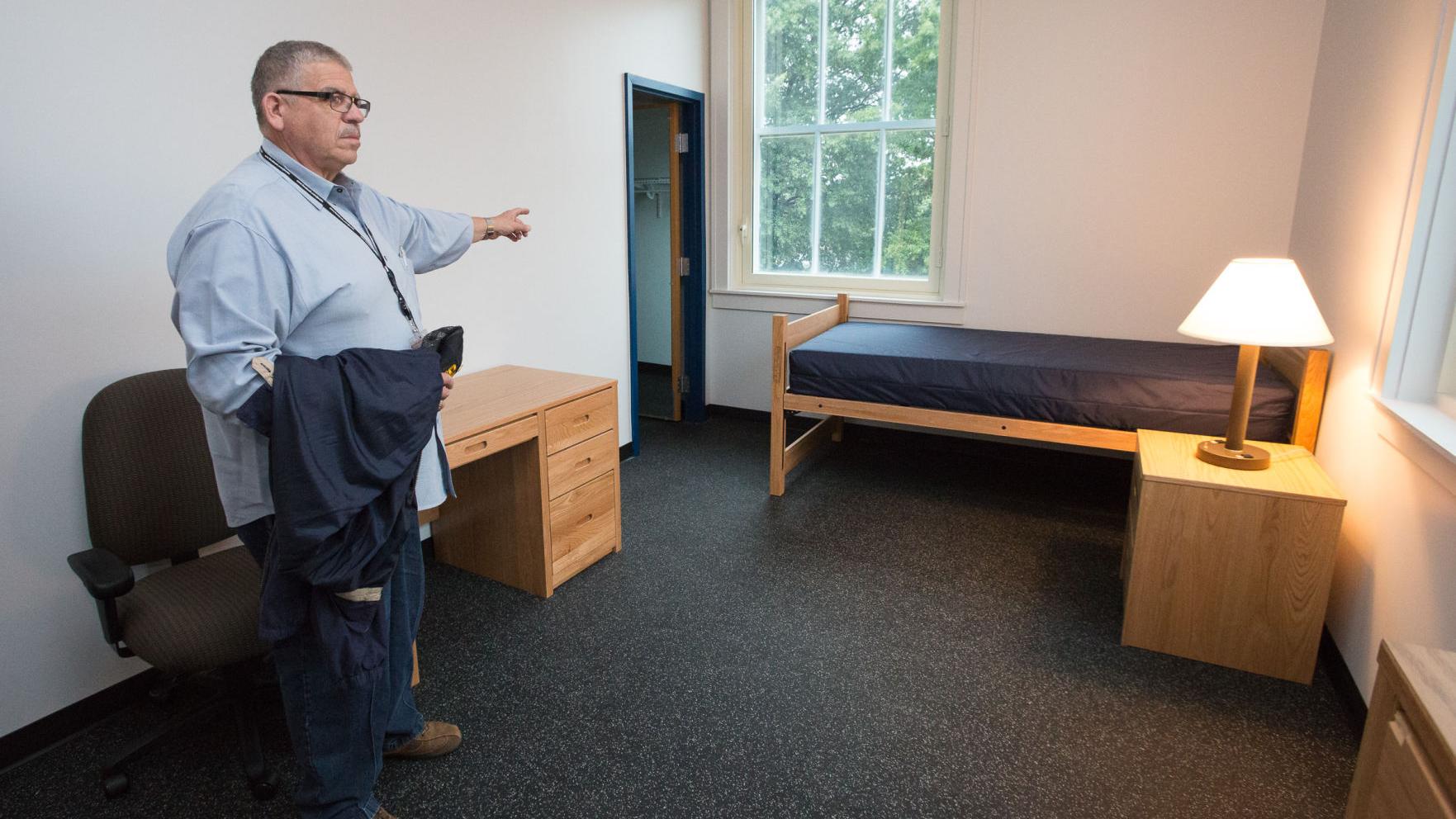
Civil engineer Ramon Nieves of the Joint Base Myer-Henderson Directorate of Public Works discusses renovations nearing completion at The Old Guard barracks in JBM-HH’s Building 247 Aug. 29.
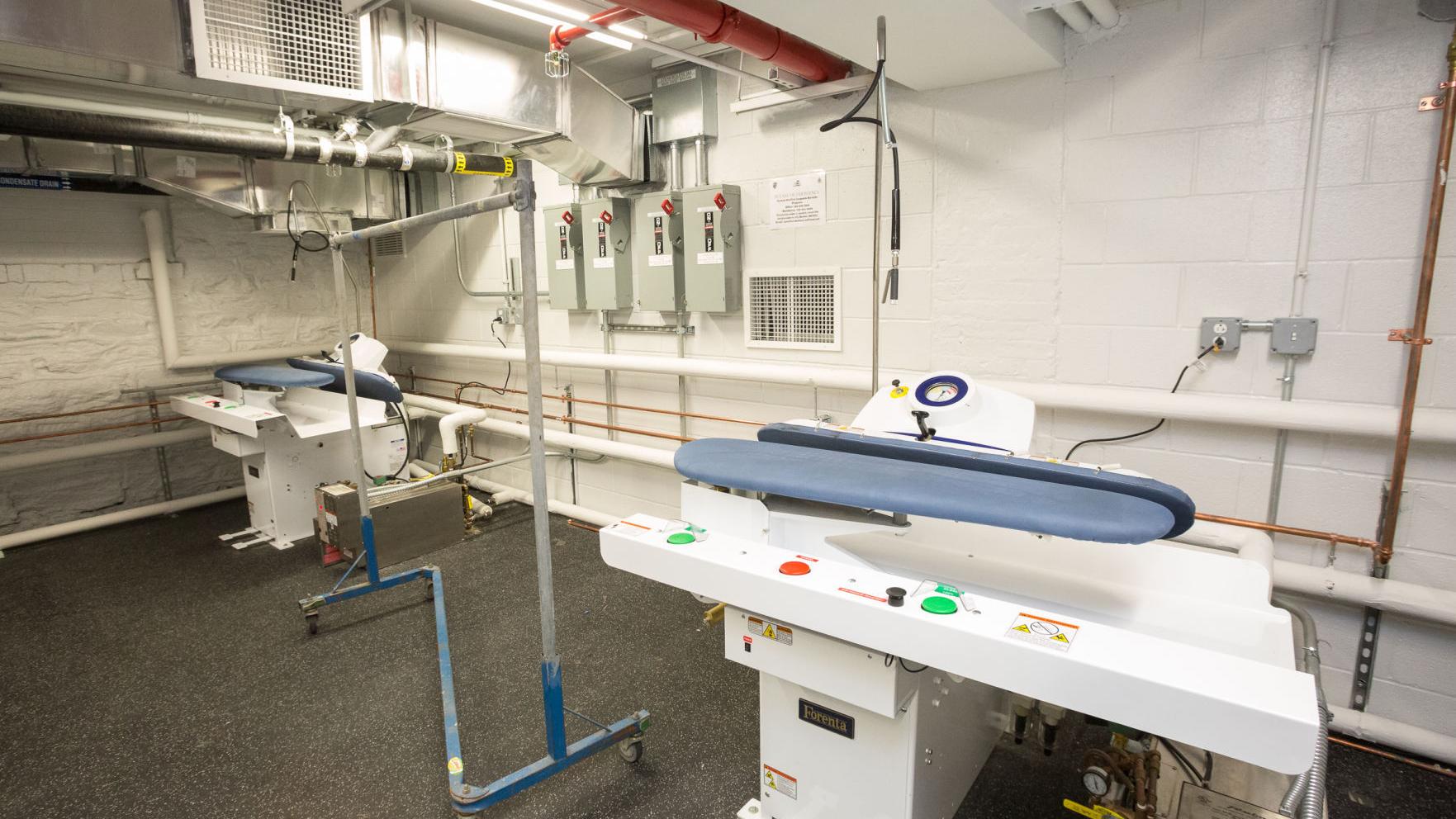
The steam-press room in Joint Base Myer-Henderson Hall’s Building 247 had a new ventilation system added during the barracks renovations currently nearing completion.
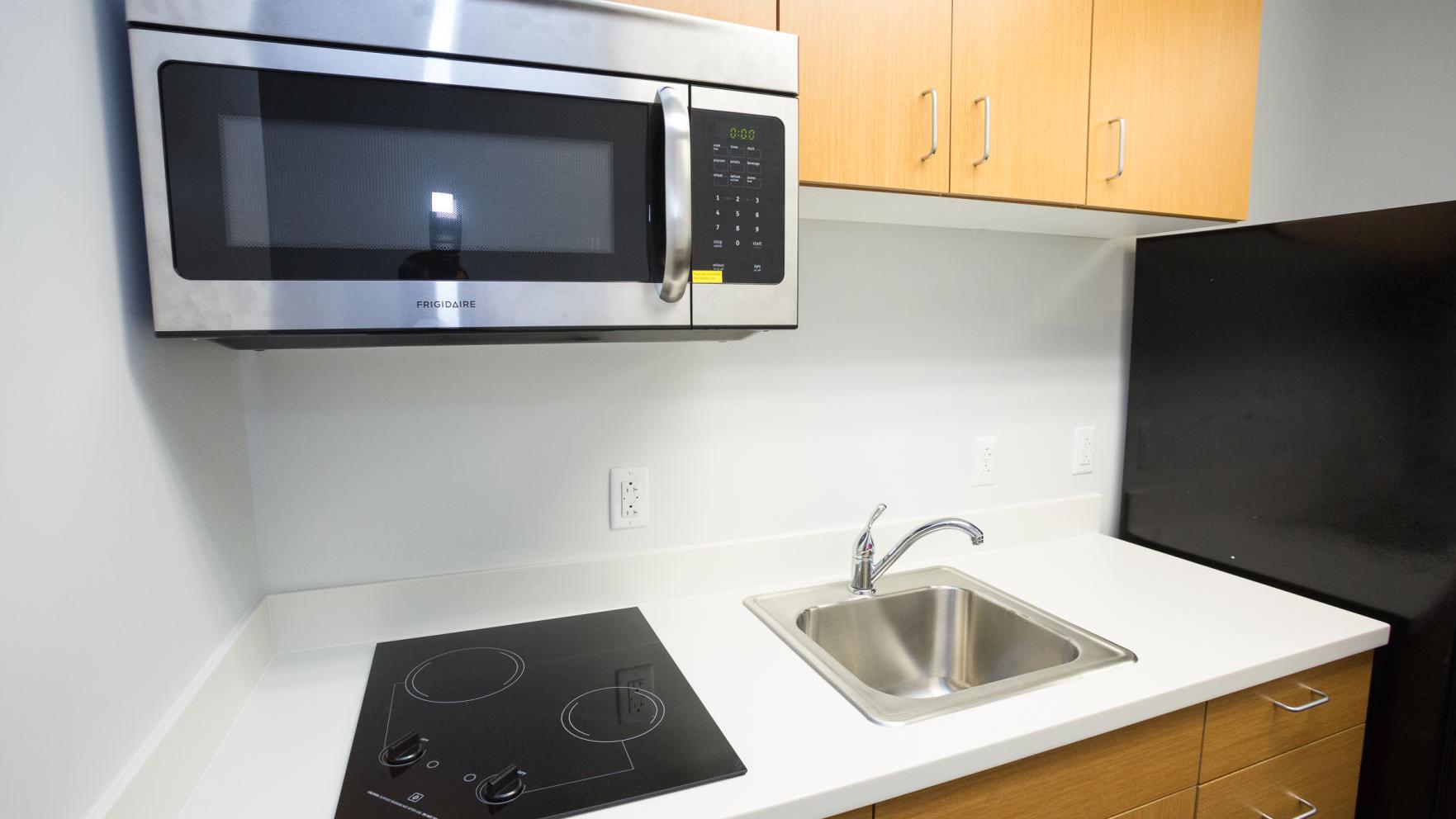
A new microwave oven and electric stovetop are installed in a kitchenette in Joint Base Myer-Henderson Hall’s newly renovated Building 247.
Joint Base Myer-Henderson Hall’s Directorate of Public Works is completing the final stages of a renovation project in the Old Guard barracks in JBM-HH’s Building 247 which will bring improved living conditions for Soldiers stationed at the installation.
A 28-month, $27 million design and construction process at the previously substandard building adds wholesale upgrades while preserving the historical value of the 123-year-old structure.
Tentatively scheduled for late-September, the completion of work at Building 247 will cap the first phase of a sustained barracks-repair campaign that will see all of the barracks along Sheridan Road renovated over the next decade.
“This was a very demanding and complex project,” said JBM-HH Public Works Director Bonsok Escobar. “I’m glad that we were able to make some difference toward the Soldiers’ quality of life.”
Escobar noted that the renovations to the 78,564 square-foot barracks have corrected a wide range of architectural and structural deficiencies.
Each of the building’s 52 rooms has been refurbished with new furniture, appliances and windows. The majority of rooms are arranged in a “1+1” modules in which two adjoining single-occupancy rooms share a common bathroom and a kitchenette equipped with electrical stovetops and microwave ovens.
Laundry rooms have new washers and dryers, and a new ventilation system was installed in the steam-press room to help eliminate the heat and humidity generated as Soldiers maintain their uniforms.
The building’s HVAC system has been converted from a two-pipe system, which allows only one mode of climate control at a given time, to a four-pipe system that enables either heating or cooling at any time on demand.
DPW civil engineer Ramon Nieves noted that, while the four-pipe HVAC infrastructure is in place, it will not be activated until neighboring barracks along Sheridan Road have been similarly retrofitted.
Additionally, the plumbing system has been completely repiped, and the electrical system has been upgraded to improve safety, reliability and energy-efficiency. The barracks’ telecommunications infrastructure has also been brought up to contemporary standards.
Escobar added that Building 247 now meets current anti-terrorism and anti-seismic protection guidelines.
“The repairs were done with the protection of the troops in mind,” he said.
Escobar noted that unit representatives from the Old Guard were consulted on the project, and he expressed gratitude for the support he received from JBM-HH leadership.
Former JBM-HH Command Sgt. Maj. Carolyn Y. Donaldson singled out the barracks renovation as one of the proudest accomplishments of her tenure at the installation.
“To make quality of life better for those Soldiers inside the buildings, and to be able to almost see the end product, to me is just awesome,” she remarked.
Nieves said the renovations accomplish the dual goals of improving living conditions for JBM-HH’s Soldiers, while also extending the lifespan of one of the installation’s historic buildings.
“It’s the showcase of the Army,” he said of Fort Myer. “We’re preserving the history of the installation, while making it better for the Soldiers. We look after them. It’s our goal to do that.”
Pentagram staff photojournalist Francis Chung can be reached at fchung@dcmilitary.com.