
Commander’s Column
Greetings,
In the installation management business, we have two fundamental responsibilities which guide what we do: first, ours is a supporting role - we exist to provide the operations, facilities and services that ensure the success of our mission partners - their success is our success. Second, we have an enduring responsibility, as caretakers of the resources entrusted to us, to ensure the long-term viability of our installations and ranges. As a practical matter, the installations and ranges we manage today must also serve the Navy of the future. This is why good stewardship of our resources is absolutely critical - we aren’t standing up new bases or ranges - we already have what we will have in the future. This month I will address two key areas of stewardship - environment and energy.
Environmental stewardship enables our Sailors to carry out their missions while minimizing impacts on the environment, both afloat and ashore. Here at Naval District Washington (NDW) we are committed to being an environmentally responsible neighbor that operates with public health and safety and protecting the environment in mind. NDW employees, whether military, civilian or private contractor, regardless of rank or grade, are responsible for performing their duties in a manner that protects the environment, prevents pollution and conserves our natural and cultural resources.
Throughout the region we have a legacy of responsible care of the environment as evidenced by several environmental projects that preserve our natural and cultural resources. For example, at Naval Support Activity Annapolis the Navy is proposing to repair and restore approximately 28,000 linear feet of shoreline at the North Severn Complex along Mill Creek, Carr Creek, the Severn River and the Chesapeake Bay. The shoreline erosion in these areas is occurring at a dramatic rate, resulting in vertical embankments, threats to infrastructure and degradation of water quality.
At Naval Support Facility (NSF) Dahlgren construction to the Willow Oaks Constructed Storm Water Wetland (wetland built to filter water that drains from the base to the Potomac River) at NSF Dahlgren, was completed in January to complement the already completed Upper Machodoc Constructed Storm Water Wetland nearby. Its completion brings NSF Dahlgren into compliance with the Environmental Protection Agency’s new maximum daily load rules. The rules, which limit the amount of pollutants that enter the Chesapeake Bay in storm water, came into effect in 2012 and will become progressively stricter until 2028. Dahlgren’s storm water wetlands will put it very close to meeting the 2028 requirement. Once weather permits, replanting will occur on both sides of the wetland. The area will also serve as a successful wildlife habitat with emergent wetland vegetation, shrubs and trees. The site will provide an excellent opportunity for viewing wildlife.
Naval Facilities Engineering Command (NAVFAC) Washington is in the process of moving a historic watchbox from NSF Indian Head to the Washington Navy Yard. The watchbox was constructed circa 1853-1854 at the Washington Navy Yard. The watchbox stood just inside the Latrobe Gate (8th and M Streets SE) and functioned as a sentry post manned by Marines assigned to the Washington Navy Yard. In approximately 1905, the building was moved to the Naval Proving Ground at Indian Head. The watchbox is currently undergoing preparation work at Indian Head and will be moved by barge from Indian Head back to the Washington Navy Yard in March or April. It will be reinstalled in West Leutze Park and will be restored as a display piece with interpretive signage. Region-wide we have completed renovations and upgrades to three waste water treatment plants to control point source discharges over the past three years. The upgrades reduced contaminant discharges of nitrogen and phosphorous releases by 74 percent for nitrogen and 86 percent for phosphorous per year.
We are also aggressively implementing storm water management upgrades to help control and filter non-point source discharges. We have made improvements to shorelines, stream beds, impervious surface reductions and storm water management structures in order to better control rain water runoff to the Chesapeake Bay. Since 2006, in Maryland we have completed projects that are estimated to gain NDW credit for 778 acres of treated impervious surface area with another 1,300 acres of projects in planning or design. This 778 acres of work represents 38 percent of our 2,031 acres of untreated impervious surface area. The combined in-place and planned 2,078 acres of work represents 102 percent of our 2,031 acres of untreated impervious surface area. These projects are just a few examples of projects occurring throughout the region that demonstrate our commitment to environmental responsibility.
Energy is a key priority of the Secretary of the Navy (SECNAV). Energy security is critical to our Navy’s mission. The NDW energy program supports specific SECNAV priorities and is driven by our five pillars: energy culture, energy information, energy efficiency, renewable energy and energy security. Energy security is the bottom line. It means having a resilient and reliable energy supply - sufficient to meet the demands of the mission. The Navy seeks to reduce energy demand and increase alternative and renewable energy supplies. So what have we done? Over the past year we completed renewable energy assessments for all of our installations and are now moving forward with projects from our best opportunities: large solar photovoltaic projects at both Joint Base Anacostia Bolling (JBAB) and Naval Air Station (NAS) Patuxent River. Alternative fuels is another important part of our renewable energy program and we continue to increase integration of alternative fuels vehicles and supporting infrastructure into our transportation fleets to reduce petroleum consumption, increase energy efficiency and reduce emissions.
Any meaningful progress in increasing our energy security requires thinking creatively. Naval Air Station Patuxent River recently launched an energy reduction incentive contest with the goal of reducing annual energy and water usage for every eligible building on station. The top facility winner can win up to $50,000 toward facility improvements next January. NAS Patuxent River’s objective is to achieve greater energy reductions while at the same time raising awareness and improving behavior. At Naval Support Activity Washington a pilot program with the National Renewable Energy laboratory is using customizable off-the-shelf software to produce automated alerts of energy related HVAC building performance issues. The software collects, consolidates, filters and analyzes data to identify energy and operational cost reduction opportunities.
Installation of energy smart devices at Joint Base Anacostia-Bolling is one measure the installation estimates will help reduce energy cost. A $2.3 million investment has included the replacement of incandescent light bulbs with more energy efficient LED bulbs and occupancy sensors in building hallways and rooms, turning lights on only when an area is occupied. JBAB also installed electric meters that provide energy managers with the ability to monitor electric consumption in buildings. The data collected from the meters enables the energy managers to determine the reduction in energy consumption and the amount of savings achieved. As a result of our collective efforts and commitment to continuously improve our energy posture, the NDW/NAVFAC Washington Energy Program was recognized as a 2014 Federal Energy and Water Program Management Award Winner.
Next month’s annual Earth Day celebration is a perfect opportunity for you to get involved and help your command demonstrate positive stewardship practices. Navy and Marine Corps commands worldwide celebrate Earth Day on 22 April and throughout the months of April and May. Earth Day activities allow commands to build relationships across command departments, with sister services and government agencies, and the local communities where we live and work. Installations throughout the region will be holding Earth Day events and I encourage your participation.
Keep Charging Team!
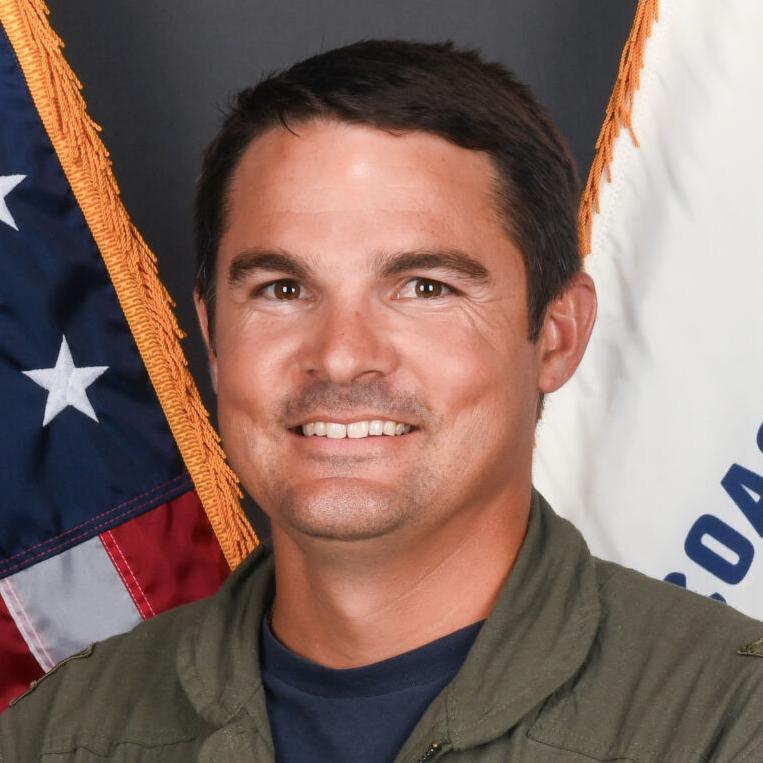
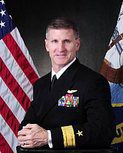
Rear Adm. Markham K. Rich
Commandant, Naval District Washington
Deputy Commander, Joint Forces
Headquarters
National Capital Region