
Colon Cancer Awareness Month: Get Screened!
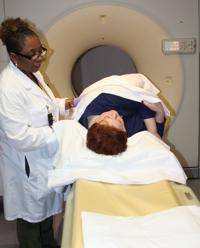

Maria Jordan (left), a CT technologist at Walter Reed National Military Medical Center, demonstrates how a virtual colonoscopy is performed in the hospital. Providers describe the procedure as not only life-saving, but patient-friendly, safe and comfortable for colon screening.
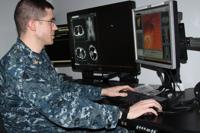
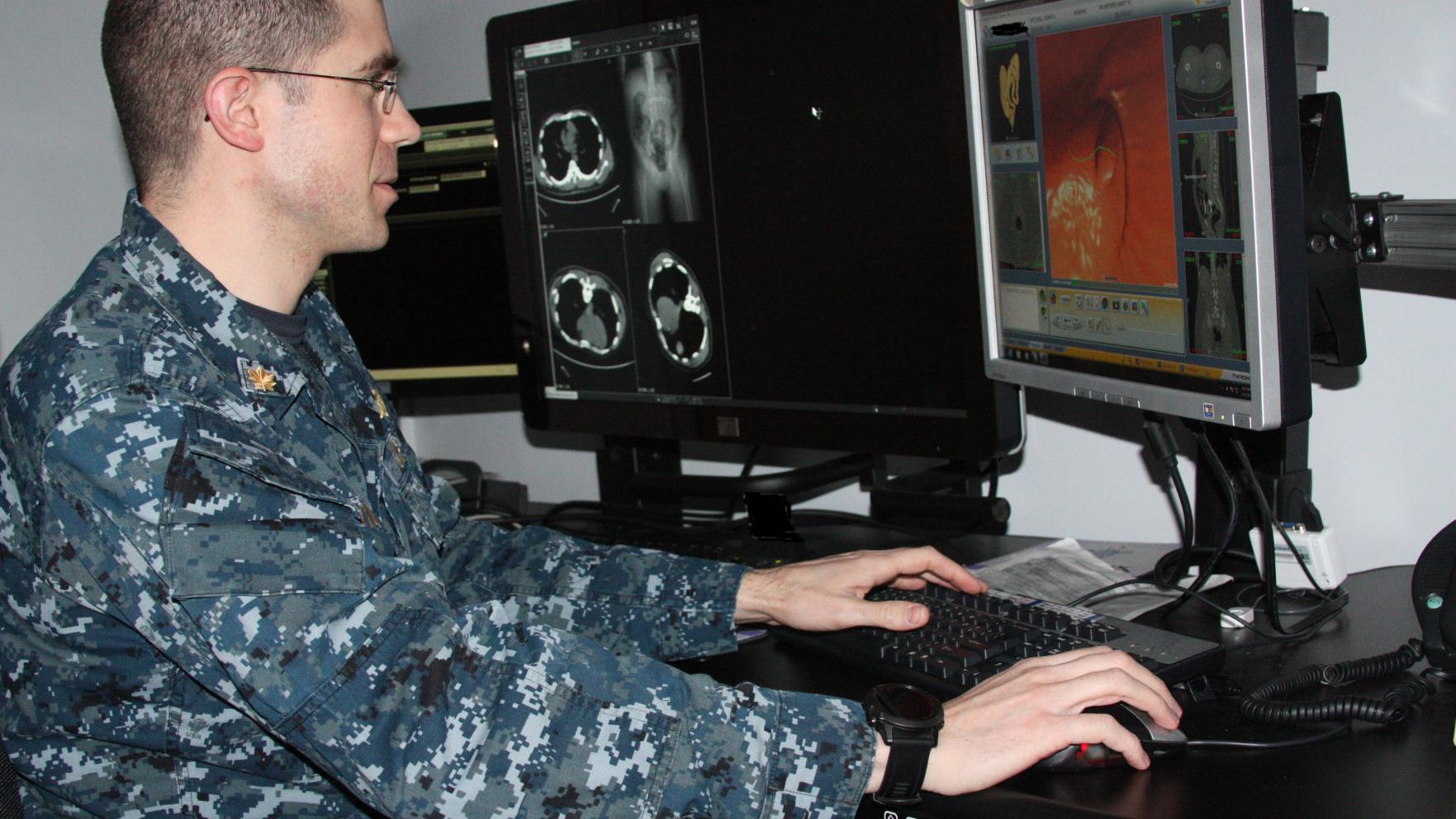
Navy Lt. Cmdr. (Dr.) Matthew Lutynski, a radiologist at Walter Reed National Military Medical Center reads a three-dimensional of the colon on March 15 as part of a virtual colonoscopy, which providers describe as a patient-friendly, safe and comfortable procedure for colon screening.
In observance of Colon Cancer Awareness Month during March, staff members from Walter Reed Bethesda’s Radiology and Gastroenterology departments are providing information to people stressing the importance of getting screened for colorectal cancer (cancer of the colon and rectum).
The information is being provided at a table set up in Building 9’s west mezzanine near The Wedge Tuesday and Thursday from 11 a.m. to 1 p.m. through the end of the month.
“Screening is important because it has the potential to save lives,” explained Priscilla Cullen, CT colonography nurse, and Ida Hopkins, Gastroenterology scheduling nurse manager at Walter Reed Bethesda.
Fear often inhibits people from getting screened, but once they’ve had the procedure many frequently expressed it was easier than they thought it would be, Hopkins and Cullen added.
People should overcome that uneasiness and get screened because colorectal cancer is the second leading cause of cancer deaths in the United States among the cancers that affect both men and women, according to the Centers for Disease Control and Prevention (CDC). Every year, about 140,000 Americans are diagnosed with colorectal cancer, and more than 50,000 people die from it, CDC reports.
Walter Reed Bethesda offers screening with colonoscopy or CT colonography (virtual colonoscopy) and both are effective ways to detect for this potentially deadly cancer, Hopkins and Cullen explained. In addition, the medical center does fecal occult blood testing, sigmoidoscopy and barium enema.
“In most cases, colon cancer begins with polyps in the lining of the colon or rectum. Regular colorectal screenings can increase your chances of finding a polyp before it becomes cancerous,” according to Hopkins and Cullen.
The risk of developing colorectal cancer increases with age (more than 90 percent of all cases occurring in people 50 or older), they added. Other risk factors include a family history of colon cancer, inflammatory bowel disease, obesity and smoking. Some types of diets, such as those high in fat and processed meats, or low in fruit and vegetables, can also increase your risk of colon cancer, Hopkins and Cullen stated. African Americans have the highest incidence rate for getting colorectal cancer, possibly because of access to and attitudes toward prevention and treatment, according to the American Cancer Society.
Colorectal cancer often develops without symptoms; however, if you experience any of the following symptoms, you should see your provider: change in bowel habits; abdominal discomfort; dark stools or blood in stool; stools that are more narrow than usual; and weight loss with no apparent reason,” Hopkins and Cullen added.
Younger people (those younger than 50) are also being diagnosed with colorectal cancer at an increasing rate, according to a recent study led by a researcher from the American Cancer Society. Because routine screening is generally not recommended for most people under 50, these cancers are often found in more advanced stages.
“We have definitely noted this trend at Walter Reed Bethesda, but the cause remains unclear. Young people with symptoms concerning for colorectal cancer should seek medical evaluation,” Hopkins and Cullen stressed.
What can you do to help prevent colorectal cancer?
In addition to regularly screenings, Hopkins and Cullen recommend people eat a diet rich in fruits and vegetables and low in fat and processed meats to lower your risk for colorectal cancer.
The CDC also recommends being physically active, maintaining a healthy weight, not drinking too much alcohol and not smoking.
Hopkins and Cullen explained procedures for the optical colonoscopy and virtual colonoscopy.
“Optical colonoscopy is performed with IV sedation, which is intended to keep the patient comfortable. CT colonography is done on a CT table and is a non-sedated procedure, which takes 10 to 15 minutes,” they stated.
People who should be screened include those 50 to 75 years of age. For African Americans, screening should begin at 45 years of age because of their increased risk for colorectal cancer.
Cullen explained if a virtual colonoscopy/CT Colonography is done, it is on an open scanner. “A small rectal tube is placed in the rectum and the colon is inflated with carbon dioxide. The radiologist is able to build a 3-D computer model of the colon and evaluate for cancers or colon polyps.
No escort is needed, and there are no post-procedure restrictions for the virtual colonoscopy. The appointment takes about 15 minutes. If polyps are detected, generally a second procedure is needed to remove these polyps,” Cullen added.
Hopkins explained if the sedated colonoscopy is done, the patient needs to bring an escort. “An IV is started and sedation is given. A flexible scope is passed through the colon and any polyps detected can be removed at that time. Recovery is brief. The appointment takes about two-and-a-half to three hours. There are 24 hours of post-procedure restrictions.”
They added Walter Reed Bethesda offers a range of treatment options for colorectal cancer, based on the stage of the patient’s disease which may involve surgery, chemotherapy and/or radiation.
“Walter Reed Bethesda has also experience testing for genetic conditions that may predispose other family members to colon cancer and other cancers. This allows family members to undergo earlier screening,” according to Hopkins and Cullen.
For more information call 301-319-8876.