



Throughout the course of human civilization, women have made untold and often underappreciated contributions to society. For the past 20 years, the U.S. has celebrated those contributions each March during National Women’s History Month. Here in the National Capital Region, there are many occasions to commemorate and learn more about the ways in which women have influenced the development of our country.
Experience Harriet Tubman from a Different Perspective
The March 11-12 grand opening of the Harriet Tubman Underground Railroad Visitor Center will provide opportunities to immerse oneself in Tubman’s world through informative, evocative and emotive exhibits. “People will find that there’s far more to explore and learn about Harriet Tubman than they ever realized,” said Beth Parnicza, a public affairs specialist with the National Park Service (NPS). “The more you dig into her story, the more fascinating she becomes.”
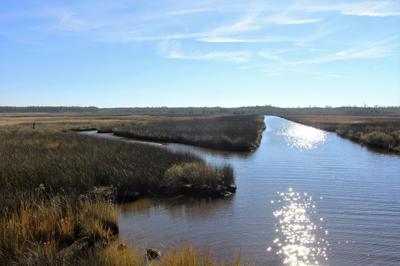
The visitor center is located in Dorchester County, Maryland, where Tubman was born into slavery. There she grew into a young woman determined to gain freedom. After her escape she would return more than a dozen times to rescue her family and friends, bringing them north to freedom. One of about 35 stops along the scenic Harriet Tubman Underground Railroad Byway, the center is a great place to begin one’s exploration of Tubman’s life.
Special events and activities are planned for the grand opening. On both days re-enactor Millicent Sparks will perform her interpretation of Tubman and park rangers will explore the significance and history of the games enslaved children played. Saturday will feature a presentation by NPS Centennial Poet Laureate Sonia Sanchez of her award-winning Harriet Tubman haikus as well as a simulated Underground Railroad journey. On Sunday Kate Clifford Larson, the visitor center’s historical consultant, will discuss her book, Bound for the Promised Land: Portrait of an American Hero, and visitor center architects will share the hidden symbolism in the building and surrounding landscape.
Experience the Railroad through the Eyes of Women
The history of women in the railroading industry is highlighted in an exhibit at Baltimore’s B&O Railroad Museum. The exhibit showcases “what women can do when given the opportunity – especially in the railroad, which was male oriented and dominated,” said Travis Harry, director of museum operations. “Those first women in the shops proved that they could hang with the guys. Their work opened doors to women in the future.”
The exhibit covers more than 100 years of railroad history. “In the mid- to late-1800s, some women began to work as telegraphers…and, in small towns, there might be a husband and wife team running the train depot,” said Harry. As a result of World War I, women began to work in accounting and passenger travel offices. But it was World War II that brought a huge influx of women to the railroad. The exhibit – which costs $18 for adults, $16 for seniors and $12 for children ages 2-12 – runs March 1-31.
Experience Women’s Fight for Equality
Home to the National Woman’s Party (NWP) for nearly 90 years, this Capitol Hill house – now known as the Belmont-Paul Women’s Equality National Monument – was the epicenter of the struggle for women’s rights. It was here that the NWP developed innovative strategies and tactics to advocate for the Equal Rights Amendment and equality for women. “We were the first organization to picket the White House and go on hunger strikes,” said Jennifer Krafchik, NWP’s deputy director and director for strategic initiatives. “The movement for equality is a story that is shared nationally and internationally. Many who come through here find comfort, motivation and inspiration.”
The permanent exhibit galleries feature more than 250 artifacts and tell the story of the NWP. The collection includes books, scrapbooks, political cartoons, textiles, photographs, organizational records, fine arts, decorative arts, and artifacts produced primarily by women, about women. But as fascinating as it is to see Susan B. Anthony’s desk or Elizabeth Cady Stanton’s chair, it is discussions with park rangers that can be most illuminating, according to Krafchik. “One of the lessons we teach is how a group of people can affect change, not only in present times but in the future,” she said.
Experience the American Domestic Interior over Time
Recognizing that women were instrumental in establishing and maintaining the family homestead, the Daughters of the American Revolution Museum in D.C. showcases the decorative arts. “That means we collect furnishings that are both functional and decorative,” said Katie Cannon, the museum’s curator of education. “Our focus is on household objects vital to women’s roles in the early part of our nation’s history.”
The museum’s 31 period rooms tell the story of the American domestic interior from 1690 to 1935, illustrating a wide range of cultures and regional differences. One of Cannon’s favorites is the Texas room, which recreates a bedchamber from the 1860s. “It’s so very cozy and homey. You want to go in and curl up on the bed with a great book,” she said. A new interactive area in the museum allows visitors to design their own period rooms and to mix and match elements from portraits in the museum to create a new one. “You can put the hair of woman on the face of George Washington or, using our webcam, on your own image,” she said. The exhibits are free and open to the public.
Children’s programs on Saturdays and a monthly family program provide hands-on fun and learning, such as candle-making. There also are programs for Girl Scouts, including a new one on the suffragette movement.
Experience the Art of Women
“The National Museum of Women in the Arts (NMWA) is the only major museum in the world dedicated to celebrating the creative contributions of women,” said Amy Mannarino, the museum’s director of communications and marketing. “We bring recognition to the achievements of women artists of all periods and nationalities….” Featuring more than 5,000 works from more than 1,000 artists, the museum’s collection spans from the 16th century to the present. NMWA attracts both domestic and international visitors, “from people specifically interested in the museum as a cause-related organization supporting gender parity to art buffs and tourists,” she said.
“The museum hosts multiple exhibitions each year, featuring art that spans the centuries, much like our collection. These exhibitions bring a wide variety of art by women to the museum, often including artists that are new to our audiences,” said Mannarino. She points to a current exhibit, Border Crossing: Jami Porter Lara, in which the sculptor uses a 2,000-year-old process to create ceramic objects that resemble a ubiquitous icon of modern life, the plastic bottle. “It will be the first time that work by this Albuquerque-based artist will be shown on the East Coast,” she said.
NMWA has special programs and activities throughout National Women’s History Month, including a daily women’s artist scavenger hunt. The Wikipedia Edit-a-thon 2017, on March 11 from 10 a.m.-2 p.m. is designed to improve Wikipedia articles about women artists and encourage more women to become editors.
Admission is $10 for adults, $8 for visitors 65 and older and students, and free for NMWA members and youths age 18 and under. The museum has a Free Community Day on the first Sunday of each month and, as a Blue Star Museum participant, offers free admission to active duty military personnel and their families from Memorial Day through Labor Day.
Experience Music by and for Women
For the 13th consecutive year, the University of Maryland’s Women’s Chorus will kick-off National Women’s History Month with a free program of music for treble voices. The March 4 Celebration of Women’s Voices will begin at 8 p.m. at Memorial Chapel on the College Park campus. The choir’s repertoire spans all styles, from classical to contemporary, and membership includes students from diverse fields of study.
Capital Harmonia’s Women’s Choral Festival on March 26 is designed to highlight the musical contributions of women and bring attention to the continuing challenges that women face around the world, according to Ellen Goldman, the choir’s cofounder and president of the board. “We also will honor the women leaders of the organizations that we perform for and partner with,” she said, such as House of Ruth, N Street Village, and Women Giving Back. The free festival is from 4-6 p.m. at Community of Faith United Methodist Church in Herndon, Virginia. Earlier in the month, on March 11 at 4 p.m., Capital Harmonia will perform with N Street Village’s Ambassadors of Praise at Luther Place Memorial Church in Washington, D.C.
This 23-voice women’s chorus, based in Northern Virginia, performs music written by women composers. Its repertoire ranges from Contemporary to Broadway to Pop. Much of the contemporary music is based on poems, such as Joan Szymko’s The Beauty of Your Dreams, adapted from writings by Eleanor Roosevelt.
Experience National Women’s History Month
Whether you prefer to be educated or entertained during National Women’s History Month, the D.C. region offers a host of options for celebrating and commemorating the role of women in our nation’s history. From music and art to politics and the fight for equality, there is something to capture most anyone’s interest.
