
Stylist offers tips to smooth transition to civilian world
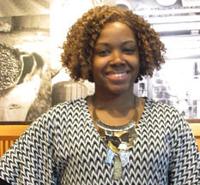

Joneé Coleman is an image consultant/associate who helps people discover their best look. - Credit: Photo/ Leslie C. Smith
You’ve got the resume together; the interview is set – but what are you going to wear? Sometimes making the transition from military to the civilian working life is more than a change of jobs but might even entail a change of wardrobe.
Joneé Coleman, former Army, an image consultant/associate with Image by Rita, offers a few tips to transitioning military to start them on the road in their new career.
When asked, what is something a person can do right away when making the transition, Coleman joked, “Exhale. That would be the first thing.”
“Once I transferred from Fort Gordon in Georgia to the White House, I sat through a class – which my mentor Rita Gworek taught – on how to help us transfer to that duty station. When I saw her and realized she could really help us dress – and I looked around the room and said yes a lot of us of really need some help – I thought, ‘wow she’s doing this for everyone in the military.’ And that’s when it kind of clicked: I’d like to do what she does.”
“Luckily by working at the White House Communication Agency we had uniformed days and civilian days so the transition wasn’t as difficult; but I do know that when other people don’t have that experience it can be very overwhelming.
“When I go to teach a class the first thing I let them know is to just relax, calm down. And I always associate clothing as a civilian uniform not another whole world or wardrobe; and that sort of takes the sting off shifting that mindset.”
Coleman had early inklings of her love to help others find their style. A twin, she was inspired to use her fashion savvy in helping her sister as well as her mother. “I would make it my job to make sure we had our nails manicured, our hair styled, and we were looking good,” Coleman said of her and her sister. “My mom would always ask my opinion on how she looked, too. I think perhaps that is where the training came from – in buying certain cuts, silhouettes and styles for her. And so, I think when I got older, it was just the natural thing for me.”
Coleman offered these quick tips for men and women looking to step up their game when it comes to fashion choices.
“Believe or not, men have more recommendation and guidelines.” Tailoring is number one for men especially pants. Women can benefit with bit of tailoring as well, she also advised.
For women, not only is it important to know the shape of your body but also it is important to work with your body. Coleman, advised, “Not only looking at the silhouettes that fit your body is important but getting the proper undergarments is key; because if your foundation is not correct then everything you layer over top will not be correct.”
Because fashion is always changing, and depending on where you are transitioning to, Coleman advised that about 6 months to even a year, you want to start going to places and looking at people – see what they are wearing and make a mental note or maybe even start to incorporate pieces into your wardrobe.
“Don’t be afraid of color, even if you are minimalist a little pop of color can bring personality to an outfit or suit.”
For women, to wear hosiery or not to wear hosiery often presents a world of questions when transitioning, Coleman offered that a quick call to the human resource department will help to alleviate the anxiety of that question, especially in the DC Area where it can be quite confusing. “It never hurts to at least go into the interview with leggings or stockings, keeping a spare set on you if you can. Pantyhose in certain locations and professions are still required.
“Also, it’s not about I’m going to work in an accounting firm and all accounting firms are the same. An accounting firm in DC is not going to be necessarily like an accounting firm in LA.” Even if you are unsure after speaking with HR, simply go to the location and “people watch” to get an idea, Coleman suggested.
When it comes to accessorizing, statement pieces can add special touches to your outfit but be aware of the amount and the type. “I always like to say when I teach my classes your jewelry shouldn’t have its own theme song when you walk into a room,” Coleman joked. “Be mindful of that; especially in an interview.”
For men and women hair care and grooming are very important. “Make sure they can see your face and it’s presentable and they are not distracted by different types of makeup. I would say clean relatable makeup and simple hairstyles are best because you want the focus on you.”
Shoes are a very important part of the total look as well. Beyond being neat, clean and properly cleaned for, there are some additional guidelines for shoes. “For men, the rules still applies make sure your belt matches your shoes; and wear a sock that is complimentary to the shoe.”
For women, shoes start to get a little more complicated. “Be mindful of the setting you are going into and certain styles and heel types can emote different things, even color as well.” Coleman added that the shoe choices of women can say different things whether they mean to be said or not.
Sometimes “the rules” can seem a bit daunting. How does one find out what is their shape; what silhouettes work best on them; what is their color? Finding the answer to these questions can come from experimenting or trial and error. However, Coleman offered, “It actually depends on the personality of the person; if they are more inclined to research then there are many different websites available. If the person is more visual then, yes, they can go out and try on different things. If a person doesn’t have that time, then maybe they might want to hire a personal stylist or image consultant to either work with them while they are at stores or maybe do the shopping for them, as well as, actually teach them about their body while shopping.”
Coleman advised that pricing and services can vary, with many stylist and image consultants offering ala carte services ranging from body analysis to personal shopping. It’s not uncommon to pay $110 for body analysis alone, “People look at that and think that’s a lot of money but generally that’s something you only have to do one time. It’s a worthwhile investment especially if you are interviewing for a job that can jumpstart your career.”
Coleman’s final tip, “Always feel comfortable and confident in what you are wearing; because, if you do not, it doesn’t matter what you have on. Your emotions, your confidence, can either make or break and outfit. If you don’t have personality to wear something, it will wear you – wear you down, wear you out, but it will wear you.”