
Surgeon Recognized for Work with Joint Trauma System
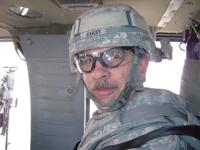
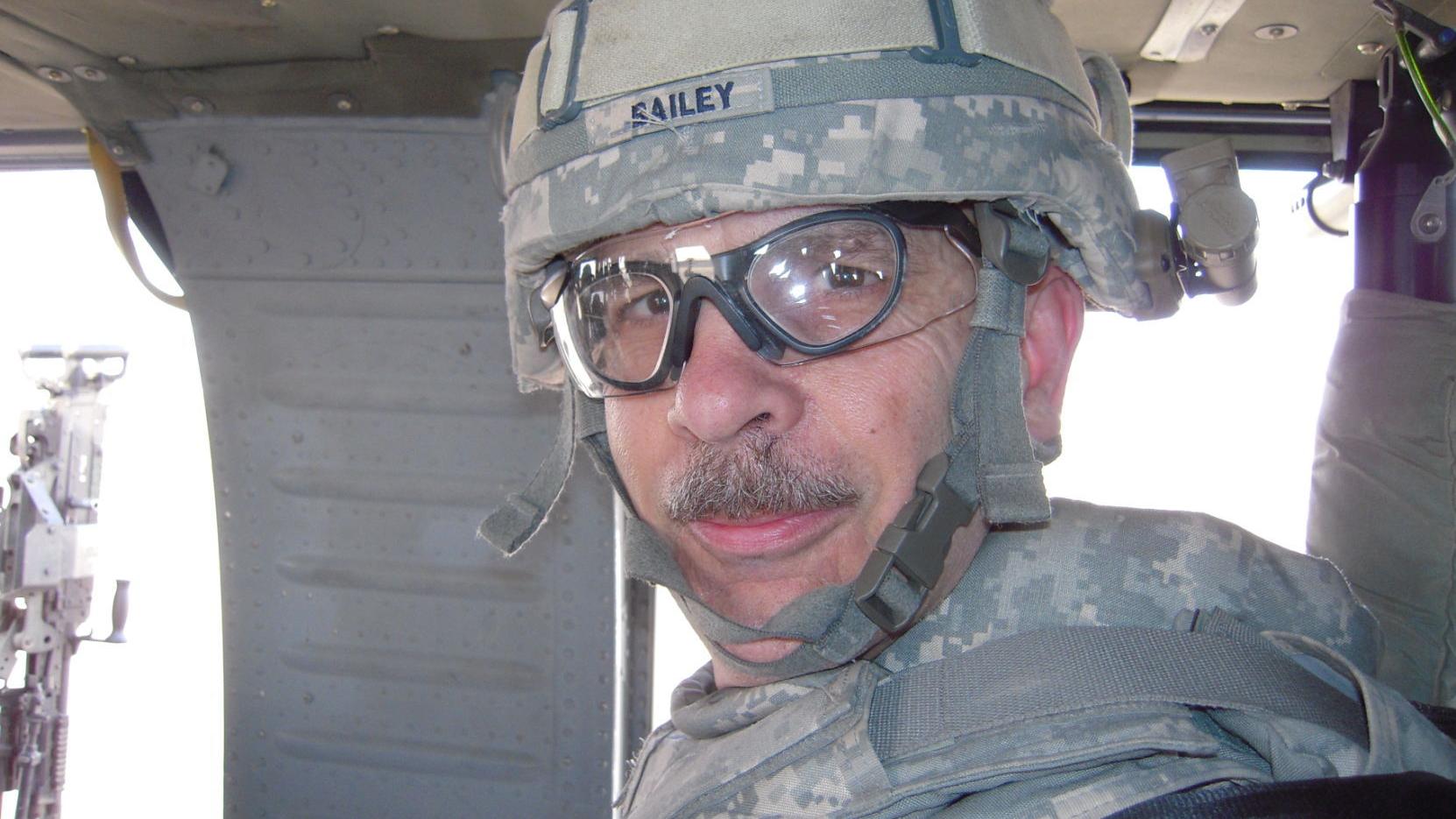
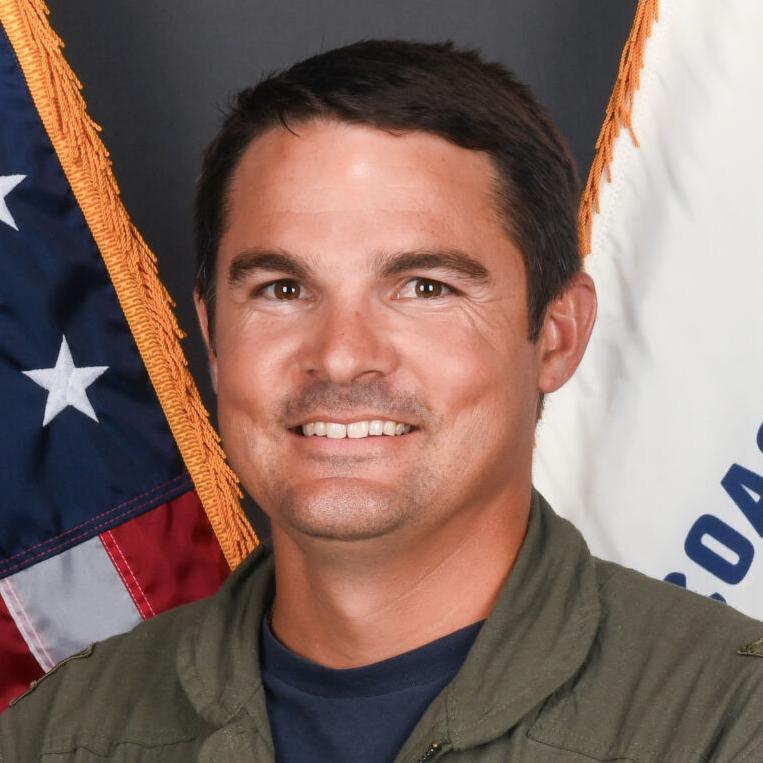
Air Force Col. (Dr.) Jeffrey A. Bailey, Walter Reed National Military Medical Center’s director of surgery, poses for a photo during a deployment as the director of the Department of Defense’s Joint Trauma System.
Air Force Col. (Dr.) Jeffrey A. Bailey, Walter Reed National Military Medical Center (WRNMMC) director of surgery and a professor of surgery at the Uniformed Services University of the Health Sciences (USU), will be honored as a Hero of Military Medicine (HMM) for his contributions to the Department of Defense’s (DoD) Joint Trauma System (JTS) during the 2016 Heroes Dinner in Washington, D.C. on May 5.
“[HMM] honors outstanding contributions of individuals who have distinguished themselves through excellence and selfless dedication to advancing military medicine and enhancing the lives and health of our nation’s wounded, ill and injured service members, veterans and their families,” according to the Center for Public-Private Partnerships of the Henry M. Jackson Foundation for the Advancement of Military Medicine, sponsor of the HMM Awards.
Honorees are chosen by the HMM Advisory Committee comprised primarily of former surgeons general.
“I am motivated to continue my service as a military surgeon because of the everyday opportunity to make a difference where it really counts,” Bailey said.
In 2015, he was assigned as director for surgery at WRNMMC and as a professor in the Department of Surgery in USU, where he is responsible for the operation and direction of all aspects of subspecialty and perioperative surgical care, education, research and readiness for the Surgical Directorate. Prior to that, he served as the U.S. Central Command Joint Theater Trauma System director twice.
Bailey enlisted in the Air Force in 1976 and was trained as a medical laboratory specialist. In 1980, he went to the Air Force Physician Assistant School, graduated from the University of Oklahoma and was commissioned in 1982.
He served as a physician assistant for eight years before attending medical school with assistance from the Health Professions Scholarship Program. He graduated from Saint Louis University in St. Louis, Mo., with a Doctor of Medicine in 1996. He also completed his surgical residency and trauma critical care fellowship training at Saint Louis University.
“I grew up a child of the generation that fought the Second World War before the Air Force was born,” Bailey explained. “I had neighbors who served in the Army Air Corps who shared their stories and medals with me. I think of that group of people who fought the war [and served their nation]; they passed that [dedication and commitment] onto me. The Air Force changed my life.”
Some of Bailey’s accomplishments came from his passion and dedication to being on the front-line of care. He deployed twice in support of Operation Iraqi Freedom as chief of trauma at the Air Force Theater Hospital on Balad Air Base in 2006 and 2007. He also deployed to the Combined Joint Operational Area of Central Command in 2010 to serve as the Joint Theater Trauma System (JTTS) director during which he operationalized a system to capture clinical data from point of injury evacuations into a Tactical Evacuation registry.
In 2011, Bailey served as director of the JTS and its DoD Trauma Registry at Joint Base San Antonio, Texas, where he led the JTS to the designation as a Defense Center of Excellence and oversaw the realignment of the Committee on Tactical Combat Casualty Care) from the Defense Health Board to the JTS. In 2013 he deployed again as the U.S. Central Command JTTS director and implemented the Pre-Hospital Trauma Registry across the expeditionary trauma system.
Recently, Bailey was also one of the recipients of the Military Health System 2015 Battlefield Innovation Award at the Federal Health 2015 Conference hosted by the Association of Military Surgeons of the United States and The Society of Federal Health Professionals in San Antonio. That award citation stated, “It is through the JTS and its history of leadership and passionate commitment to combat care that case fatality rates for combat injury in Afghanistan and Iraq dropped to less than half of Vietnam and one-third of World War II.”
“The advancements made in trauma and combat casualty care during the recent conflicts in Iraq and Afghanistan have, in large part, resulted from the continuous JTS operational cycle of data collection, data analysis, and resultant formulation and adaptation of best evidence-based practice guidelines,” Bailey stated. He added his service with the JTS and US Central Command Joint Theater Trauma System has been his most proudest to date.
Bailey said he will continue to contribute to the JTS and “support and advance the JTS to actualize its full potential as a lead agent for trauma systems and trauma care in DoD.